
The porcupine did not want its quills, nor the cuttlefish its ink, nor the chameleon its colour.
None of them decided anything, and no force decided it for them.
This is the hardest idea on this page, and our language does not help.
The problem is in the grammar
Take the following sentence: this frog developed a poison to protect itself.
It seems perfectly normal. It is wrong.
“To” implies an intention. It implies that someone, somewhere, wanted this result. There is no one.1
The most awkward part is that there is almost no escaping it. Anyone who tries to describe an animal defence without saying what it is for finds that the French language keeps pulling them back to it.
The word manufactures a belief, and this time the push comes from the grammar itself.
The solution we have adopted
This site eventually found a way round it, and we share it because it can be useful well beyond these pages.
Do not say what a trait is for, but what happened to those that did not have it.
Let us go back to the frog.
Wrong version: this frog developed a poison to protect itself.
Right version: among these frogs, those whose skin was the most toxic were eaten less, and left more descendants.2
That is three more words. It attributes intention to no one. Above all, it describes the mechanism instead of naming it: we see what happened, generation after generation, without needing to believe in a plan.
The test can be applied to any textbook sentence: the long version almost always turns out to be clearer.
What this really changes
This is not a linguistic affectation. It has three real consequences.
First consequence: there is no perfecting. One defence is not “better” than another in absolute terms. It worked there, at that time, against those particular predators. If the predators change, it can become useless — or a burden.
Second consequence: there is no lagging behind. An animal that has no venom has not “failed” to develop it. It simply did not follow that path. This is the ladder misconception, which we take apart in our page on classification.
Third consequence: nothing is planned. An adaptation does not prepare for the future. It is the result of a past.
Mimicry: deceiving without knowing it
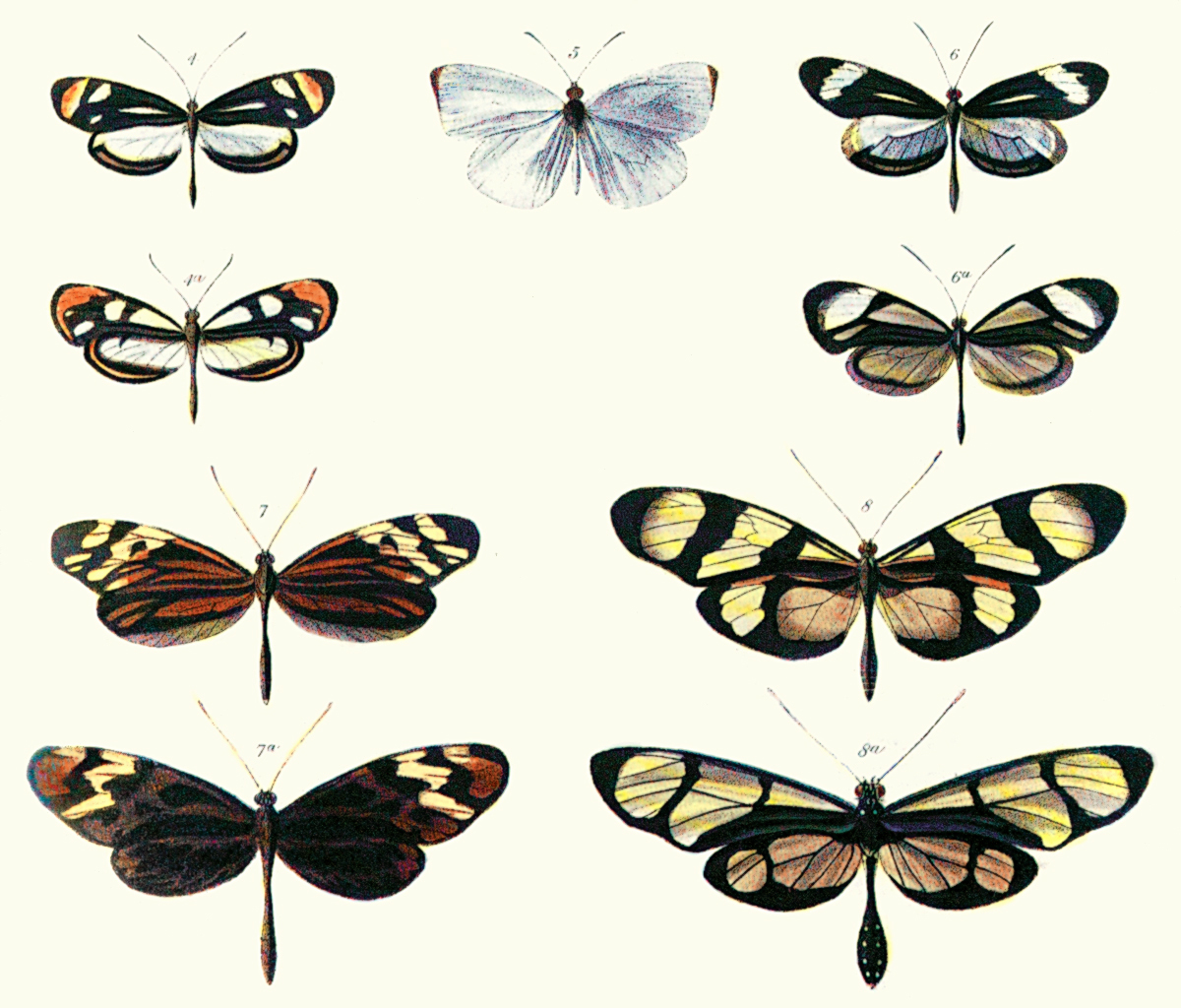
Mimicry is often presented as the height of animal cunning. Yet the rule remains the same: no butterfly decided to look like a leaf, or like a toxic species.
Two major mechanisms that should not be confused
- Batesian mimicry: a harmless species takes on the appearance of a dangerous or toxic species.
- Müllerian mimicry: several genuinely toxic or unpalatable species adopt similar visual patterns (the yellow and black stripes of wasps and bees, for example). The signal is shared, which speeds up predators’ learning at the cost of fewer individuals.3
Testing the hypothesis: the field experiment
For a long time, mimicry remained an appealing story that people told without testing it. How can one show that a visual pattern really protects an animal?
First, the idea has to be turned into a prediction. This one is elegant, because it is risky: if the protection comes from predators having learned to fear the venomous model, then it should disappear where that model does not exist. No model, no learning; no learning, no protection.4
The idea thus becomes testable — and refutable.
To test it, researchers made fake snakes out of plasticine: some painted with the red, yellow and black rings of the coral snake, others with neutral patterns. Placed in the forest, these replicas retain the marks of predators’ beaks or teeth.5
The result is striking. Where the coral snake actually lives, about 8% of the ringed replicas are attacked. Where it is absent, about 65%.6
Eight versus sixty-five. The same pattern, on the same object, with an almost reversed effect — depending on whether the local predators have encountered the model or not.
The researchers went further still: the protective effect diminishes as one moves north and gains altitude — that is, as the coral snake becomes rare. It is not just a matter of present or absent: it is a question of frequency.7
(Researchers took up the idea of plasticine replicas, with fake caterpillars, to measure predator attacks on six continents.) The signal works only where predators have already learned to fear it.8
“Useless” organs are not useless
One sometimes hears of “vestigial” organs, presented as useless leftovers that evolution forgot to remove.
That is not what the word means.
In biology, a vestigial organ is an organ that has lost its ancestral function — which is not the same as being useless: it may perfectly well retain another.9
That is where the whole difference lies, and the two were long confused.
The case of the appendix
The appendix long served as the textbook example of a useless organ.
Work published in 2007 proposes a function: it may serve as a reservoir for beneficial bacteria, making it possible to recolonise the intestine after an episode that has emptied it.10
The hypothesis rested in particular on a clinical comparison, whose figures circulated widely.11
This page at first refused to give them, because they could only be found in activist retellings. On checking them, we discovered something else: they have not been confirmed.
A 2012 study of 257 patients found the opposite of what was expected: people who tested positive for the bacterium Clostridioides difficile had more often kept their appendix. Another, of 1,580 patients, found no difference in mortality according to the presence or absence of the organ — but its authors report more severe forms in those who had had the operation, which points in yet a third direction. Finally, a 2023 systematic review, bringing together eight studies and more than four thousand patients, concludes that a previous appendectomy increases neither severity, nor recurrence, nor mortality — while noting more frequent recourse to removal of the colon among those who had had the operation.12
Three studies, three results that do not point in the same direction. This is what a genuinely open question looks like — and that is why none of them can settle it alone.
This, then, is the honest state of the question. The bacterial reservoir hypothesis remains an interesting and debated idea. The clinical support attributed to it, however, does not hold up.
What remains true nonetheless: “useless” is no longer the accepted description of this organ. It contains immune tissue, and a 2017 study rejects the idea of a functionless vestige. But between “it is not useless” and “here is its function, demonstrated”, there is a gap that this page will not bridge.13
The reversal
This hypothesis implies something unexpected.
If the appendix serves as a reserve of bacteria for cases where the intestine is emptied, then its usefulness depends on how frequent these episodes are. In countries with good water supply and sanitation, these episodes have become rare.
In other words: the appendix may perhaps be becoming vestigial — now. Not in a distant past.
An organ is not useful or useless in absolute terms. It is useful in a given world; let the world change, and the answer changes.
Our editorial safeguards
Because this subject touches on notions that are often misinterpreted, this page imposes three strict safeguards on itself:
- No medical advice: this page gives no health recommendations and does not discuss clinical indications (such as appendectomy). These are subjects for a health professional, not for an encyclopaedia.
- Refusing polemical opportunism: the subject of vestigial organs is regularly exploited in debates outside biology. This page is not structured in reaction to these controversies. Writing in order to answer an opponent means letting them choose the subject.
- Refusing reintroduced finalism: not falling into the trap of replacing the animal’s will with a “will of nature” or “of selection”. Natural selection is not a conscious force that chooses: it is a statistical result.
What fossilisation hides from us
One last thing, about what we can know of ancient defences.
Hard parts are preserved: bones, teeth, shells, carapaces. Soft parts, almost never: skin, venom, colours, behaviours.14
The defences we know from the distant past are therefore mainly hard defences.
This does not mean that ancient animals had no venom, camouflage or alarm calls. It means that we would not see them.
It is the same caution we apply to objects made by humans ten thousand years ago: what remains is not what existed. It is what has survived.
Note 1
[…] the same ridicule that Voltaire heaped on Dr. Pangloss: […] Everything is made for the best purpose. Our noses were made to carry spectacles, so we have spectacles. Legs were clearly intended for breeches, and we wear them.
Gould, Stephen Jay and Lewontin, Richard C., “The Spandrels of San Marco and the Panglossian Paradigm”, Proceedings of the Royal Society B, vol. 205, 1979, p. 581-598
Note 3
Batesian mimicry evolves when a palatable species, the "mimic," resembles a dangerous species, the "model," because both receive protection from predation.
Pfennig, David W., Harcombe, William R. and Pfennig, Karin S., “Frequency-Dependent Batesian Mimicry”, Nature, vol. 410, 2001, p. 323
Many distasteful species which occur in the same habitats have therefore evolved similar colour patterns, which is called Müllerian mimicry.
Montgomery, Stephen, “Mimicry”, Darwin 200, Christ’s College, University of Cambridge, page accessed in 2026
Note 4
But this protection should break down where the dangerous model is absent, when predators would not be under selection to recognize the model or any other species resembling it as dangerous.
Pfennig, David W., Harcombe, William R. and Pfennig, Karin S., “Frequency-Dependent Batesian Mimicry”, Nature, vol. 410, 2001, p. 323
Note 5
Many coral snakes and non-venomous kingsnakes possess red, yellow (or white), and black ringed markings, which predators avoid […] We exposed plasticine replicas
Pfennig, David W., Harcombe, William R. and Pfennig, Karin S., “Frequency-Dependent Batesian Mimicry”, Nature, vol. 410, 2001, p. 323
Note 6
In sympatric sites, only 0.083 of ringed replicas were attacked compared to 0.654 in allopatry.
Pfennig, David W., Harcombe, William R. and Pfennig, Karin S., “Frequency-Dependent Batesian Mimicry”, Nature, vol. 410, 2001, p. 323
Note 7
The proportion of carnivore attacks on ringed replicas […] increased with latitude […] Selection to avoid mimics diminishes with increasing latitude and elevation due to coral snake rarity.
Pfennig, David W., Harcombe, William R. and Pfennig, Karin S., “Frequency-Dependent Batesian Mimicry”, Nature, vol. 410, 2001, p. 323
Note 8
We tested the hypothesis that biotic interaction strength increases toward the equator, using a global experiment with model caterpillars to measure predation risk. Across an 11,660-kilometer latitudinal gradient spanning six continents, we found increasing predation toward the equator […] These caterpillars were molded from green plasticine
Roslin, Tomas et al., “Higher Predation Risk for Insect Prey at Low Latitudes and Elevations”, Science, vol. 356, 2017, p. 742-744
Note 9
A vestigial structure is a biological structure that has lost a major ancestral function and is usually drastically reduced in size. […] The term “vestigial” does not imply a complete lack of any function. Although some biologists maintain that it does (e.g., Prothero, 2007; Bergstrom & Dugatkin, 2012), most reject that strict view and follow Darwin (1859) in accepting that a vestigial structure has lost a salient function but may retain some other function
Senter, Phil and Moch, John G., “A Critical Survey of Vestigial Structures in the Postcranial Skeletons of Extant Mammals”, PeerJ, vol. 3, e1439, 2015, open access
Note 10
DURHAM, NC -- Long denigrated as vestigial or useless, the appendix now appears to have a reason to be -- as a "safe house" for the beneficial bacteria living in the human gut. Drawing upon a series of observations and experiments, Duke University Medical Center investigators postulate that the beneficial bacteria in the appendix that aid digestion can ride out a bout of diarrhea that completely evacuates the intestines and emerge afterward to repopulate the gut. Their theory appears online in the Journal of Theoretical Biology.
Duke Health, “Appendix Isn’t Useless at All: It’s a Safe House for Bacteria”, communiqué de Duke University Medical Center, 8 October 2007
Note 11
the appendix may be able to repopulate the large intestine with commensal organisms […] Previous reports have corroborated a similar claim. Im et al[8], demonstrated the protective role of the appendix in CDI recurrences in 254 patients.
Shaikh, Danial Haris et al., “Patients with Clostridium difficile Infection and Prior Appendectomy May Be Prone to Worse Outcomes”, World Journal of Gastrointestinal Surgery, vol. 13, no. 11, 2021, p. 1436-1447
Note 12
We enrolled 257 patients. […] These results suggest that rather than being protective, an intact appendix appears to promote C. difficile acquisition, carriage, and disease.
Merchant, Rashida et al., “Association Between Appendectomy and Clostridium difficile Infection”, Journal of Clinical Medicine Research, vol. 4, no. 1, 2012, p. 17-19
We retrospectively reviewed data of 1580 patients with CDI, admitted to our hospital between 2008 to 2018. […] There was no statistical difference in mortality between patients with a prior appendectomy or without […] Prior appendectomy may affect the severity of CDI, development of toxic megacolon and the eventual need for colectomy.
Shaikh, Danial Haris et al., “Patients with Clostridium difficile Infection and Prior Appendectomy May Be Prone to Worse Outcomes”, World Journal of Gastrointestinal Surgery, vol. 13, no. 11, 2021, p. 1436-1447
The odds ratio of mortality due to Clostridioides difficile infection in patients with a prior appendectomy was 0.92 (95% CI 0.62–1.37, p = 0.68). […] Patients with appendectomy are not at increased risk for developing severe Clostridioides difficile infection or recurrence.
Naga, Yassin S. E. et al., “A Systematic Review and Meta-Analysis: A Prior Appendectomy Does Not Increase the Risk of Severe Clostridioides difficile Infection or Recurrence”, Digestive Diseases and Sciences, vol. 68, no. 9, 2023, p. 3714-3720
Note 13
A correlation between appendix presence and concentration of cecal lymphoid tissue supports the hypothesis of an adaptive immune function for this complex. […] Thus, we can confidently reject the hypothesis that the appendix is a vestigial structure with little adaptive value or function among mammals.
Smith, Heather F. et al., “Morphological Evolution of the Mammalian Cecum and Cecal Appendix”, Comptes Rendus Palevol, vol. 16, 2017, p. 39-57
Note 14
Fossil deposits that preserve soft-bodied organisms provide critical evidence of the history of life. Usually, only more decay resistant materials, e.g., cuticles, survive as organic remains as a result of selective preservation and subsequent diagenesis to more resistant biopolymers.
Briggs, Derek E. G., “The Role of Decay and Mineralization in the Preservation of Soft-Bodied Fossils”, Annual Review of Earth and Planetary Sciences, vol. 31, 2003, p. 275-301
Notes and sources
- ↑
Passage “To” implies an intention. It implies that someone, somewhere, wanted this result. There is no one.
[…] the same ridicule that Voltaire heaped on Dr. Pangloss: […] Everything is made for the best purpose. Our noses were made to carry spectacles, so we have spectacles. Legs were clearly intended for breeches, and we wear them.
Source Gould, Stephen Jay and Lewontin, Richard C., “The Spandrels of San Marco and the Panglossian Paradigm”, Proceedings of the Royal Society B, vol. 205, 1979, p. 581-598, § 1 (“Introduction”), p. 2 of the online reproduction.
Open access open the source · checked on 27 October 2026
- ↑
Passage among these frogs, those whose skin was the most toxic were eaten less, and left more descendants
Source Mayr, Ernst, What Evolution Is, Basic Books, 2001, chapters on adaptation and selection.
In libraries · checked on 9 September 2026
- ↑
Passage Batesian mimicry: a harmless species takes on the appearance of a dangerous or toxic species.
Batesian mimicry evolves when a palatable species, the "mimic," resembles a dangerous species, the "model," because both receive protection from predation.
Source Pfennig, David W., Harcombe, William R. and Pfennig, Karin S., “Frequency-Dependent Batesian Mimicry”, Nature, vol. 410, 2001, p. 323, presentation of the article.
Paywalled open the source · checked on 9 September 2026
Passage Müllerian mimicry: several genuinely toxic or unpalatable species adopt similar visual patterns
Many distasteful species which occur in the same habitats have therefore evolved similar colour patterns, which is called Müllerian mimicry.
Source Montgomery, Stephen, “Mimicry”, Darwin 200, Christ’s College, University of Cambridge, page accessed in 2026, section “Types of Mimicry”, 3rd paragraph.
Open access open the source · checked on 27 October 2026
- ↑
Passage if the protection comes from predators having learned to fear the venomous model, then it should disappear where that model does not exist
But this protection should break down where the dangerous model is absent, when predators would not be under selection to recognize the model or any other species resembling it as dangerous.
Source Pfennig, David W., Harcombe, William R. and Pfennig, Karin S., “Frequency-Dependent Batesian Mimicry”, Nature, vol. 410, 2001, p. 323, presentation of the article.
Paywalled open the source · checked on 9 September 2026
- ↑
Passage fake snakes out of plasticine: some painted with the red, yellow and black rings of the coral snake
Many coral snakes and non-venomous kingsnakes possess red, yellow (or white), and black ringed markings, which predators avoid […] We exposed plasticine replicas
Source Pfennig, David W., Harcombe, William R. and Pfennig, Karin S., “Frequency-Dependent Batesian Mimicry”, Nature, vol. 410, 2001, p. 323, body of the article.
Paywalled open the source · checked on 9 September 2026
- ↑
Passage Where the coral snake actually lives, about 8% of the ringed replicas are attacked. Where it is absent, about 65%.
In sympatric sites, only 0.083 of ringed replicas were attacked compared to 0.654 in allopatry.
Source Pfennig, David W., Harcombe, William R. and Pfennig, Karin S., “Frequency-Dependent Batesian Mimicry”, Nature, vol. 410, 2001, p. 323, results.
Paywalled open the source · checked on 9 September 2026
- ↑
Passage the protective effect diminishes as one moves north and gains altitude — that is, as the coral snake becomes rare
The proportion of carnivore attacks on ringed replicas […] increased with latitude […] Selection to avoid mimics diminishes with increasing latitude and elevation due to coral snake rarity.
Source Pfennig, David W., Harcombe, William R. and Pfennig, Karin S., “Frequency-Dependent Batesian Mimicry”, Nature, vol. 410, 2001, p. 323, figure 1 and discussion.
Paywalled open the source · checked on 9 September 2026
- ↑
Passage Researchers took up the idea of plasticine replicas, with fake caterpillars, to measure predator attacks on six continents.
We tested the hypothesis that biotic interaction strength increases toward the equator, using a global experiment with model caterpillars to measure predation risk. Across an 11,660-kilometer latitudinal gradient spanning six continents, we found increasing predation toward the equator […] These caterpillars were molded from green plasticine
Source Roslin, Tomas et al., “Higher Predation Risk for Insect Prey at Low Latitudes and Elevations”, Science, vol. 356, 2017, p. 742-744, abstract (2nd and 3rd sentences); main text, paragraph beginning “To test these hypotheses”.
Paywalled · checked on 25 October 2026
- ↑
Passage a vestigial organ is an organ that has lost its ancestral function […] it may perfectly well retain another
A vestigial structure is a biological structure that has lost a major ancestral function and is usually drastically reduced in size. […] The term “vestigial” does not imply a complete lack of any function. Although some biologists maintain that it does (e.g., Prothero, 2007; Bergstrom & Dugatkin, 2012), most reject that strict view and follow Darwin (1859) in accepting that a vestigial structure has lost a salient function but may retain some other function
Source Senter, Phil and Moch, John G., “A Critical Survey of Vestigial Structures in the Postcranial Skeletons of Extant Mammals”, PeerJ, vol. 3, e1439, 2015, open access, introduction, first paragraph and paragraph on the meaning of the term.
Open access open the source · checked on 27 October 2026
- ↑
Passage Work published in 2007 proposes a function: it may serve as a reservoir for beneficial bacteria
DURHAM, NC -- Long denigrated as vestigial or useless, the appendix now appears to have a reason to be -- as a "safe house" for the beneficial bacteria living in the human gut. Drawing upon a series of observations and experiments, Duke University Medical Center investigators postulate that the beneficial bacteria in the appendix that aid digestion can ride out a bout of diarrhea that completely evacuates the intestines and emerge afterward to repopulate the gut. Their theory appears online in the Journal of Theoretical Biology.
Source Duke Health, “Appendix Isn’t Useless at All: It’s a Safe House for Bacteria”, communiqué de Duke University Medical Center, 8 October 2007, first two paragraphs of the press release.
Open access open the source · checked on 9 September 2026
- ↑
Passage The hypothesis rested in particular on a clinical comparison
the appendix may be able to repopulate the large intestine with commensal organisms […] Previous reports have corroborated a similar claim. Im et al[8], demonstrated the protective role of the appendix in CDI recurrences in 254 patients.
Source Shaikh, Danial Haris et al., “Patients with Clostridium difficile Infection and Prior Appendectomy May Be Prone to Worse Outcomes”, World Journal of Gastrointestinal Surgery, vol. 13, no. 11, 2021, p. 1436-1447, INTRODUCTION, 4th paragraph.
Open access open the source · checked on 9 September 2026
- ↑
Passage A 2012 study of 257 patients found the opposite of what was expected
We enrolled 257 patients. […] These results suggest that rather than being protective, an intact appendix appears to promote C. difficile acquisition, carriage, and disease.
Source Merchant, Rashida et al., “Association Between Appendectomy and Clostridium difficile Infection”, Journal of Clinical Medicine Research, vol. 4, no. 1, 2012, p. 17-19, abstract: “Results” then “Conclusions”.
Open access open the source · checked on 24 October 2026
Passage Another, of 1,580 patients, found no difference in mortality […] but its authors report more severe forms in those who had had the operation
We retrospectively reviewed data of 1580 patients with CDI, admitted to our hospital between 2008 to 2018. […] There was no statistical difference in mortality between patients with a prior appendectomy or without […] Prior appendectomy may affect the severity of CDI, development of toxic megacolon and the eventual need for colectomy.
Source Shaikh, Danial Haris et al., “Patients with Clostridium difficile Infection and Prior Appendectomy May Be Prone to Worse Outcomes”, World Journal of Gastrointestinal Surgery, vol. 13, no. 11, 2021, p. 1436-1447, abstract (METHODS, RESULTS, CONCLUSION).
Open access open the source · checked on 24 October 2026
Passage a 2023 systematic review […] concludes that a previous appendectomy increases neither severity, nor recurrence, nor mortality
The odds ratio of mortality due to Clostridioides difficile infection in patients with a prior appendectomy was 0.92 (95% CI 0.62–1.37, p = 0.68). […] Patients with appendectomy are not at increased risk for developing severe Clostridioides difficile infection or recurrence.
Source Naga, Yassin S. E. et al., “A Systematic Review and Meta-Analysis: A Prior Appendectomy Does Not Increase the Risk of Severe Clostridioides difficile Infection or Recurrence”, Digestive Diseases and Sciences, vol. 68, no. 9, 2023, p. 3714-3720, abstract, “Results” (last sentence) and “Conclusion”.
Paywalled open the source · checked on 25 October 2026
- ↑
Passage It contains immune tissue, and a 2017 study rejects the idea of a functionless vestige.
A correlation between appendix presence and concentration of cecal lymphoid tissue supports the hypothesis of an adaptive immune function for this complex. […] Thus, we can confidently reject the hypothesis that the appendix is a vestigial structure with little adaptive value or function among mammals.
Source Smith, Heather F. et al., “Morphological Evolution of the Mammalian Cecum and Cecal Appendix”, Comptes Rendus Palevol, vol. 16, 2017, p. 39-57, abstract (English), p. 39; p. 55, section 4.2.1.
Paywalled · checked on 25 October 2026
- ↑
Passage Hard parts are preserved […] Soft parts, almost never
Fossil deposits that preserve soft-bodied organisms provide critical evidence of the history of life. Usually, only more decay resistant materials, e.g., cuticles, survive as organic remains as a result of selective preservation and subsequent diagenesis to more resistant biopolymers.
Source Briggs, Derek E. G., “The Role of Decay and Mineralization in the Preservation of Soft-Bodied Fossils”, Annual Review of Earth and Planetary Sciences, vol. 31, 2003, p. 275-301, abstract.
Paywalled · checked on 25 October 2026
Bibliography
15
- Bollinger, R. Randal et al., “Biofilms in the Large Bowel Suggest an Apparent Function of the Human Vermiform Appendix”, Journal of Theoretical Biology, vol. 249, 2007, p. 826-831, paywalled.
- Briggs, Derek E. G., “The Role of Decay and Mineralization in the Preservation of Soft-Bodied Fossils”, Annual Review of Earth and Planetary Sciences, vol. 31, 2003, p. 275-301, paywalled (what fossilisation preserves and what it erases).
- Duke Health, “Appendix Isn’t Useless at All: It’s a Safe House for Bacteria”, communiqué de Duke University Medical Center, 8 October 2007, open access (the 2007 hypothesis, published in the Journal of Theoretical Biology: the appendix as a refuge for beneficial bacteria that recolonise the intestine after diarrhoea). https://corporate.dukehealth.org/news/appendix-isnt-useless-all-its-safe-house-bacteria
- Gould, Stephen Jay and Lewontin, Richard C., “The Spandrels of San Marco and the Panglossian Paradigm”, Proceedings of the Royal Society B, vol. 205, 1979, p. 581-598, open access (the critique of “to” and of reintroduced finalism).
- Im, Gene Y. et al., “The Appendix May Protect Against Clostridium difficile Recurrence”, Clinical Gastroenterology and Hepatology, vol. 9, 2011, p. 1072-1077, paywalled.
- Mayr, Ernst, What Evolution Is, Basic Books, 2001, in libraries (adaptation, selection, and the definition of the term “vestigial”).
- Merchant, Rashida et al., “Association Between Appendectomy and Clostridium difficile Infection”, Journal of Clinical Medicine Research, vol. 4, no. 1, 2012, p. 17-19, open access (the 257 patients; the result opposite to the reservoir hypothesis). https://doi.org/10.4021/jocmr770w
- Montgomery, Stephen, “Mimicry”, Darwin 200, Christ’s College, University of Cambridge, open access (Müllerian mimicry: unpalatable species with similar patterns). https://darwin200.christs.cam.ac.uk/mimicry
- Naga, Yassin S. E. et al., “A Systematic Review and Meta-Analysis: A Prior Appendectomy Does Not Increase the Risk of Severe Clostridioides difficile Infection or Recurrence”, Digestive Diseases and Sciences, vol. 68, no. 9, 2023, p. 3714-3720, paywalled (eight studies; no effect on severity, recurrence or mortality, but more frequent recourse to colectomy). https://doi.org/10.1007/s10620-023-07998-y
- Pfennig, David W., Harcombe, William R. and Pfennig, Karin S., “Frequency-Dependent Batesian Mimicry”, Nature, vol. 410, 2001, p. 323, paywalled (the prediction tested: protection should disappear in the absence of the model; the plasticine replicas; about 8% of attacks where the model is present against 65% where it is absent; the effect decreasing with latitude and altitude). https://doi.org/10.1038/35066628
- Roslin, Tomas et al., “Higher Predation Risk for Insect Prey at Low Latitudes and Elevations”, Science, vol. 356, 2017, p. 742-744, paywalled (the plasticine fake caterpillars on a global scale).
- Ruxton, Graeme D. et al., Avoiding Attack: The Evolutionary Ecology of Crypsis, Aposematism, and Mimicry, Oxford University Press, 2018, in libraries (Batesian and Müllerian mimicry).
- Senter, Phil and Moch, John G., “A Critical Survey of Vestigial Structures in the Postcranial Skeletons of Extant Mammals”, PeerJ, vol. 3, e1439, 2015, open access (the definition of a vestigial structure: loss of a major ancestral function, without necessarily lacking any function). https://doi.org/10.7717/peerj.1439
- Shaikh, Danial Haris et al., “Patients with Clostridium difficile Infection and Prior Appendectomy May Be Prone to Worse Outcomes”, World Journal of Gastrointestinal Surgery, vol. 13, no. 11, 2021, p. 1436-1447, open access (the retrospective study of 1,580 patients). https://doi.org/10.4240/wjgs.v13.i11.1436
- Smith, Heather F. et al., “Morphological Evolution of the Mammalian Cecum and Cecal Appendix”, Comptes Rendus Palevol, vol. 16, 2017, p. 39-57, paywalled (the appendix having appeared several times independently in mammals).
Spotted an error or have a doubt? Write to us.