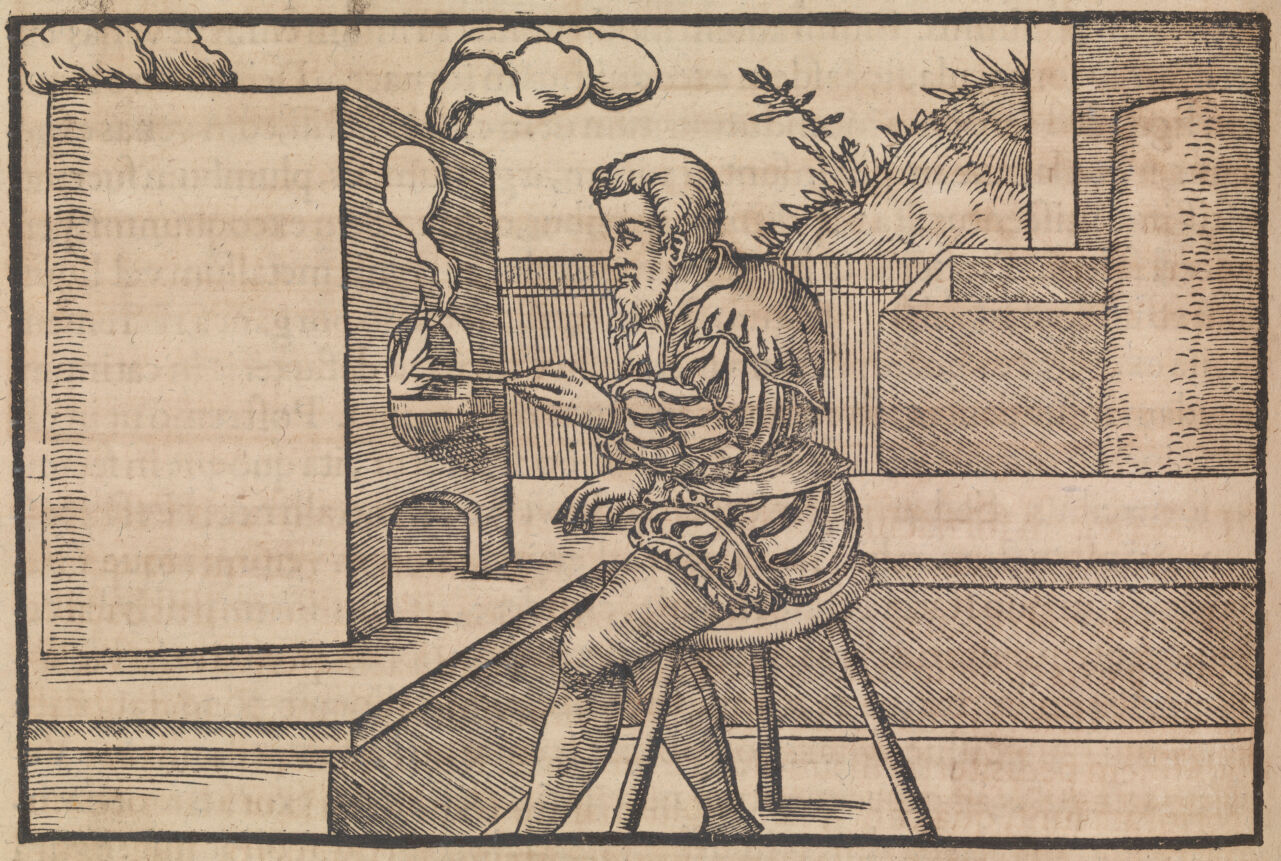
This whole page comes down to a single question: how hot can you get?
At a hundred degrees, water boils. At nine hundred, clay becomes as hard as stone. At eleven hundred, copper flows. At fifteen hundred, iron melts. Each threshold opens up a world. Each threshold took centuries.
Fire, and a date that cannot be fixed
When did humans begin to control fire? No one can say precisely.
The difficulty is not finding traces of fire: they are everywhere. It is proving that this particular fire was lit or kept going by someone, and not started by lightning or a bushfire.
Two sites come up again and again in the discussion:
- Wonderwerk Cave (South Africa): burned bone and plant ash about a million years old have been found there. But the cave lies in a region where bushfires are frequent, and fire may have entered it naturally.
- Gesher Benot Ya’aqov (Israel): burned seeds, wood and flint about 790,000 years old have been unearthed there. Clusters of burned flint are found throughout the sequence of occupation, which suggests an ability to rekindle fire at will. But neither burned bone nor a built hearth has been found there.1
The argument that settles it — an elegant one
How can a fire lit by someone be told apart from a natural blaze? The excavators of this site found an answer, whose reasoning can be followed step by step.
A bushfire sweeps across a piece of land. So it burns more or less everything, everywhere.
Yet that is not what is observed. By recording the position of each burned flint fragment, the researchers find that the burning is concentrated in patches, in specific spots, while the rest of the site bears no traces.2
Localised fire, surrounded by intact material. A wildfire does not do that. A hearth does.
This is the reasoning used throughout this website: instead of asking “is this compatible with what I believe?”, ask “if the other explanation were true, what would be different?” Here, the answer is clear: everything would be burned.
Another detail points the same way. Six kinds of burned wood have been identified — and at least three of them bear edible plants: olive, wild barley and wild grape.3
From about 400,000 years ago, traces of fire become much more numerous in several regions of the world. Before that date, the question remains open.4
Even when a hearth is identified, its exact use often eludes researchers: heating, cooking or keeping predators away? The ashes do not tell. This is not a gap in archaeology, but the difficulty inherent in searching for a gesture rather than an object.
Earth that becomes stone
It was long taught that pottery appeared with agriculture: populations supposedly settled down, grew cereals and made vessels to store them.
Discoveries in East Asia have disproved this account. In Xianrendong Cave, in southern China, pottery sherds 20,000 years old have been discovered. At that time, the Earth was going through the Last Glacial Maximum. Agriculture did not exist: the makers of these pots were nomadic hunter-gatherers.5
The presence of soot on these fragments attests to their use in cooking. Pottery therefore precedes agriculture by at least 10,000 years. The old model — first the fields, then the pots — rested on data from the Near East and Europe alone.
Getting hotter
An open fire can reach 800 to 900 °C, but cools as soon as the supply of fuel stops.6
The invention of the kiln changes these constraints: it encloses the heat, concentrates it and maintains it. Adding a bellows forces in oxygen, raising the temperature further.
Each thermal threshold crossed allows new materials to be transformed:
- Between 650 and 1,000 °C: clay turns into solid ceramic.
- Between 1,050 and 1,200 °C: vitrification produces stoneware and glazed ceramics.
- From 1,300 °C: the vitrification of kaolin produces porcelain, dense, resonant and translucent.7
In China, this progression can be observed over the long term. From 1500 BCE, glazed ceramics fired at around 1,200 °C appear.8
The exact date of the appearance of “true” porcelain is debated. This disagreement is not about the archaeological pieces, but about the very definition of the material: should one take the firing temperature, the proportion of kaolin, the translucency or the resonance of the piece? Depending on the criteria chosen, the chronology varies by several centuries.
The secret of making porcelain was long closely guarded. It was not until 1712 that Father d’Entrecolles, a Jesuit based in Jingdezhen, sent a detailed description of it to France. Ten years later, a second letter was accompanied by samples.9
Getting metal out of rock
Some metals occur in nature in native form. They can be cold-hammered: copper, gold, platinum and meteoritic iron (recognisable by its high nickel content).
Around the Great Lakes, in North America, native copper has been hammered for at least 8,500 years. That is the age of the oldest securely dated object, a projectile point from Wisconsin; the tradition itself probably goes back about 9,600 years. It peaks between 7,000 and 5,000 years before the present, then declines.10
All this without ever melting the metal or making an alloy: it is gathered in native form, hammered and annealed. It is one of the oldest metalworking traditions in the world, perhaps the oldest. By contrast, in South America, metallurgy developed from the reduction of ores and the making of complex alloys.
Most metals are trapped in the form of ores. Extracting them requires reduction by heat in the presence of carbon (charcoal).
This invention was long dated to about 8,500 years ago, on the strength of a fragment of slag found at Çatalhöyük, in Anatolia. A reanalysis published in 2017 overturned this interpretation: the fragment is only half-fired, and it results from a house fire that accidentally melted green copper minerals used as pigment. It was not a smelting slag. The oldest established traces of copper extracted from its ore now go back to about 5000 BCE, in South-East Europe and in Iran — and in several places at roughly the same time, which weakens the idea of a single centre from which the technique supposedly spread.11
The making of alloys followed:
- Arsenical copper: since pure copper is soft, adding arsenic hardens it. Naturally present in some ores, this alloy was exploited very early.
- Bronze: an alloy of about 90% copper and 10% tin. It flows better in the liquid state and is harder in the solid state.
A historical problem remains: Anatolia, rich in copper ore, lacks significant tin deposits. The exact origin of the tin used to make Anatolian bronzes 4,000 years ago remains an open question.
Iron requires much higher temperatures (melting point 1,538 °C). At first, metalworkers do not reach melting point: they obtain a spongy iron bloom that has to be shingled and hot-hammered to squeeze out the slag.12
In China, the development of high-temperature furnaces, blown by bellows, made it possible to melt iron and pour cast iron from the fifth century BCE, favouring the mass production of farming tools. In Europe, the blast furnace and cast iron only became widespread from the thirteenth century.13
This chronology calls for several clarifications:
- China did not get ahead of the other centres across metallurgy as a whole: ironworking by direct reduction began earlier in Western Asia.
- The production of liquid iron is also documented in several African technical traditions.
- European blast furnaces resulted from local innovations and not from a transfer of technology from Asia.
A lost recipe: wootz
In southern India and in Sri Lanka, a technique of crucible steelmaking developed. Reduced iron is sealed in a closed earthenware crucible with organic matter (wood, leaves) supplying carbon, then brought to a high temperature and cooled slowly.14
The material obtained, called wootz, is a high-carbon steel. The slow cooling favours the separation of phases (iron carbides), drawing a characteristic wavy pattern on the surface of the polished metal.
These ingots were exported to the Middle East, notably to Damascus, where they were forged into renowned blades, known in Europe as “Damascus steel”.
In the eighteenth century, this production came to a halt. The exhaustion of deposits of ores containing traces of specific elements (such as vanadium) essential to the formation of the patterns, combined with the breakdown of craft networks, led to the loss of the original process. Modern metallurgical analyses make it possible to understand the structure of wootz, but reconstructing the historical process exactly remains difficult.
Stories claiming that these blades could cut a silk veil in mid-air belong to myth. The quality of wootz weapons varied and depended on skill at the forge.
Iron metallurgy in sub-Saharan Africa
In sub-Saharan Africa, iron metallurgy is attested from at least the first millennium BCE. The techniques rely mainly on the bloomery furnace, producing a solid iron that was then worked by forging.
In 2018, near the Falémé valley (Senegal), excavations uncovered an iron-smelting workshop used from the fourth century BCE to the fourth century CE. The site revealed that the bottoms of the furnaces were wedged with palm-nut shells.15
The origin of ferrous metallurgy in sub-Saharan Africa is the subject of two hypotheses: an independent invention or a spread from North Africa or the Nile valley. Uncertainties linked to radiocarbon calibration for certain periods call for caution, and archaeometric research is continuing.
Technical choices shaped by culture
To say of a civilisation that it had not mastered iron assumes a single pattern of technical evolution. The metalworkers of the Andes developed complex skills directed not towards the pursuit of hardness, but towards working with colours and surface finishes.
They created alloys of copper and gold (tumbaga). Through successive thermal and chemical treatments (depletion gilding), the copper was removed from the surface, revealing a layer of pure gold.
According to the archaeologist Heather Lechtman, this technique probably reflected not so much a wish to save precious metal as a conception in which the essence of the material had to emerge at its surface.16
The environmental and human cost
Reducing and working metals requires massive quantities of fuel.
Before mineral coal became widespread, metallurgy relied exclusively on charcoal. In Europe, the location of forges was frequently dictated by proximity to forests rather than to ore deposits, as transporting wood was more costly.
The impact of metallurgy on forests varies by region: while some areas suffered local deforestation, others were subject to rigorous forest management (coppice-with-standards) to guarantee a lasting supply of charcoal.
Mining also relied on forced labour. In the Andes, the mita system — a pre-Columbian rotating communal labour — was redirected by the Spanish colonial administration in the 1570s to supply the silver mines of Potosí. Sixteen provinces had to provide thousands of workers (the mitayos) every year. The working conditions in the tunnels and during the processing of ore by mercury amalgamation led to significant excess mortality.17
Summary of thermal thresholds
| Temperature | Materials & Processes | Equipment required |
|---|---|---|
| 600 – 700 °C | Simple firing of clay, open fire | Hearth |
| 900 – 1,000 °C | Fired ceramic, dense terracotta | Simple kiln |
| 1,100 °C | Melting of copper, reduction of simple ores | Furnace with air supply |
| 1,200 – 1,300 °C | Stoneware, vitrification, porcelain | High-performance kiln |
| 1,500 °C | Melting of iron, production of cast iron | Blast furnace / Powerful blowing apparatus |
🔍 Archaeological methods and historiographical revisions
Metallographic analysis (examination of polished sections of metal under the optical or electron microscope) makes it possible to reconstruct the thermal and mechanical treatments an object has undergone: hammering, quenching, annealing.
Chronological advances also rest on the re-examination of known sites. The reassessment of the dating of the Xianrendong pottery by Xiaohong Wu’s team was achieved by taking samples of charcoal and bone from strata already identified, then analysing them by accelerator mass spectrometry (AMS).
Note 1
Here we show that micromorphological and Fourier transform infrared microspectroscopy (mFTIR) analyses of intact sediments at the site of Wonderwerk Cave, Northern Cape province, South Africa, provide unambiguous evidence--in the form of burned bone and ashed plant remains--that burning took place in the cave during the early Acheulean occupation, approximately 1.0 Ma.
Berna, Francesco et al., “Microstratigraphic Evidence of In Situ Fire in the Acheulean Strata of Wonderwerk Cave, Northern Cape Province, South Africa”, Proceedings of the National Academy of Sciences, vol. 109, no. 20, 2012, p. E1215-E1220
The presence of burned seeds, wood, and flint at the Acheulian site of Gesher Benot Ya'aqov in Israel is suggestive of the control of fire by humans nearly 790,000 years ago.
Goren-Inbar, Naama, Alperson, Nira, Kislev, Mordechai E. et al., “Evidence of Hominin Control of Fire at Gesher Benot Ya’aqov, Israel”, Science, vol. 304, no. 5671, 2004, p. 725-727
Note 2
The distribution of the site's small burned flint fragments suggests that burning occurred in specific spots, possibly indicating hearth locations.
Goren-Inbar, Naama, Alperson, Nira, Kislev, Mordechai E. et al., “Evidence of Hominin Control of Fire at Gesher Benot Ya’aqov, Israel”, Science, vol. 304, no. 5671, 2004, p. 725-727
Note 3
Wood of six taxa was burned at the site, at least three of which are edible—olive, wild barley, and wild grape.
Goren-Inbar, Naama, Alperson, Nira, Kislev, Mordechai E. et al., “Evidence of Hominin Control of Fire at Gesher Benot Ya’aqov, Israel”, Science, vol. 304, no. 5671, 2004, p. 725-727
Note 4
From around 400 000 years ago, traces of fire become much more numerous on many sites, including numbers in Europe and the Middle East as well as Africa and Asia.
Gowlett, J. A. J., “The Discovery of Fire by Humans: A Long and Convoluted Process”, Philosophical Transactions of the Royal Society B, vol. 371, no. 1696, 2016, art. 20150164
Note 5
The radiocarbon ages of the archaeological contexts of the earliest sherds are 20,000 to 19,000 calendar years before the present, 2000 to 3000 years older than other pottery found in East Asia and elsewhere.
Wu, Xiaohong, Zhang, Chi, Goldberg, Paul et al., “Early Pottery at 20,000 Years Ago in Xianrendong Cave, China”, Science, vol. 336, no. 6089, 2012, p. 1696-1700
Note 6
As can be seen in table 1, there is not a substantial difference in maximum temperatures achieved with bone instead of wood fuels in experimental fires, with high temperatures of 800°–900°C reached in bone fires as in wood (see also Joly and March 2003).
Aldeias, Vera, “Experimental Approaches to Archaeological Fire Features and Their Behavioral Relevance”, Current Anthropology, vol. 58, no. S16, 2017, p. S191-S205
Note 7
These were earthenware, which means they were made from clay and fired at the kind of low temperatures reached by a wood fire or simple oven, between 1202°F (650° C) and 1832°F (1000°). […] Porcelain was first made in China in the 6th and 7th centuries AD from porcelain clay (known as kaolin, after the Gaoling Mountains of southeastern China). […] It is fired at very high temperatures above 2372°F(1300°C), which causes the surface of the clay to melt and become smooth as glass.
USC Pacific Asia Museum, “Earthenware, Stoneware, Porcelain: What’s the Difference?”, University of Southern California, undated page
Note 8
Proto-porcelain was not fully understood and defined as a specific category until the 1950s, when larger quantities of it were unearthed from Erligang (16th-14th century BC) at Zhengzhou, Henan province. […] The firing temperature for most of this proto-porcelain glaze is around 1200 to 1250 °C, the maturing temperature for lime glazes, which shows that the potters were able to attain the high temperature necessary for such glazes in the kilns from such an early time.
Yin, Min, Rehren, Thilo and Zheng, Jianming, “The Earliest High-Fired Glazed Ceramics in China: The Composition of the Proto-Porcelain from Zhejiang during the Shang and Zhou Periods (c. 1700-221 BC)”, Journal of Archaeological Science, vol. 38, no. 9, 2011, p. 2352-2365, author’s manuscript open access on UCL Discovery
Proto-porcelain was not fully understood and defined as a specific category until the 1950s, when larger quantities of it were unearthed from Erligang (16th-14th century BC) at Zhengzhou, Henan province. […] The firing temperature for most of this proto-porcelain glaze is around 1200 to 1250 °C […]
Yin, Min, Rehren, Thilo and Zheng, Jianming, “The Earliest High-Fired Glazed Ceramics in China: The Composition of the Proto-Porcelain from Zhejiang during the Shang and Zhou Periods (c. 1700-221 BC)”, Journal of Archaeological Science, vol. 38, no. 9, 2011, p. 2352-2365, author’s manuscript open access on UCL Discovery
Note 9
Although the would-be spy made it to Jingdezhen around 1700, over a decade had passed before he was able to mail a description of his findings to France. This first letter, sent to the treasurer of the Jesuit missions to China in September of 1712, makes the author's intentions clear immediately. […] D'Entrecolles's second letter, sent ten years after the first, contains even more instructions—on how to restore gilt finishes, mix a mirrored black glaze, and fortify edges so they won't chip. He also sent samples.
Giaimo, Cara, “One of the Earliest Industrial Spies Was a French Missionary Stationed in China”, Atlas Obscura, 28 April 2017, open access
Note 10
Excluding three anomalously young samples, the ages of embedded organic material associated with 15 OCC copper artifacts range from 8500 to 3580 cal BP, confirming that the OCC is among the oldest known metalworking societies in the world.
Pompeani, David P., Steinman, Byron A., Abbott, Mark B. et al., “On the Timing of the Old Copper Complex in North America: A Comparison of Radiocarbon Dates from Different Archaeological Contexts”, Radiocarbon, 2021
Sediments from seven lakes in the Michigan Copper District indicate that emissions from copper mining occurred from 9600 to 5000 yr BP when the archeological record suggests that hunter-gatherer societies known as the Old Copper Complex inhabited the region.
Pompeani, David P., Human Impacts on the Environment over the Holocene in Michigan and Illinois Using Lake Sediment Geochemistry, thèse de doctorat, University of Pittsburgh, 2015
Note 11
Hence, the ‘slag’ sample (CHM 11) is best termed as a partially vitrified mixture of minerals and soil, which happened to be the most heat-exposed specimen in the contextually associated collection of samples (CHM 9-12). […] In the light of the analytical and contextual evidence, we interpret this material as the result of accidental copper reduction when some crushed green minerals in a burial context were baked in a post-depositional fire in dwelling E.VI.1 in Çatalhöyük, whose thermal effect reached not only these minerals/pigments, but also the bodies and burial items to a depth of at least 90 cm (see Mellaart, 1964; Angel, 1971; Burnham, 1965).
Radivojević, Miljana, Rehren, Thilo, Farid, Shahina et al., “Repealing the Çatalhöyük Extractive Metallurgy: The Green, the Fire and the ’Slag’”, Journal of Archaeological Science, vol. 86, 2017, p. 101-122, paywalled (manuscrit accepté en accès libre sur UCL Discovery)
The earliest securely documented evidence for copper smelting falls at around the transition of the 6th to the 5th millennium cal BC in the Balkans (Radivojević et al., 2010), and probably around that time in the Near East (Dougherty and Caldwell, 1966); the latter is still debated due to uncertainty concerning the archaeological and chronological evidence (cf. Frame, 2012; Thornton, 2014).
Radivojević, Miljana, Rehren, Thilo, Farid, Shahina et al., “Repealing the Çatalhöyük Extractive Metallurgy: The Green, the Fire and the ’Slag’”, Journal of Archaeological Science, vol. 86, 2017, p. 101-122, paywalled (manuscrit accepté en accès libre sur UCL Discovery)
Note 12
Melting point 1538°C, 2800°F, 1811 K
Royal Society of Chemistry, “Iron”, Periodic Table, fact box
Note 13
Since at least the 5th century BC, cast iron was used widely in China in agriculture, warfare and craft production. […] three major factors were involved in the technological shift from bloomery to cast iron: furnace structure, the use of bellows to produce a forced air blast through the furnace and bronze casting technology.
Han Rubin and Chen Jianli, “Casting iron in ancient China”, p. 168-177, text distributed by the School of Archaeology and Museology, Peking University
Note 14
The high carbon, slag free homogenous alloy was a revolutionary innovation of alloying iron with carbon in closed crucibles […] Elsewhere, the historical accounts consistently refer to the carburisation of low-carbon or bloomery iron through the addition of organic plant matter to the crucible charge – the Mysore Process.
Jaikishan, S., Desai, M. and Rehren, Th., “A Journey of Over 200 Years: Early Studies on Wootz Ingots and New Evidence from Konasamudram, India”, Advances in Archaeomaterials, vol. 2, 2021, p. 15-23
The charged crucible was fired in a long (24-hour) single cycle at high temperature […] The charcoal fire in the furnace died down and the crucibles were removed to cool slowly
Lowe, T. L., Merk, N. and Thomas, G., “An Historical Mullite Fiber-Reinforced Ceramic Composite: Characterization of the ’Wootz’ Crucible Refractory”, Lawrence Berkeley Laboratory, report LBL-29769, 1990
Note 15
At the site of Didé West 1 (DDW1), near the Falémé River valley in eastern Senegal, archaeologists uncovered an exceptionally well-preserved iron-smelting workshop in 2018 that was in use from the 4th century BCE to the 4th century CE.
Université de Genève, “Tracking the footsteps of West Africa’s prehistoric metalworkers”, communiqué de presse, 31 March 2026
Note 16
As Lechtman posited, this process probably responded not so much to a concern with saving metals or reducing their melting temperatures, but rather to a cultural norm dictating that the golden 'essence' of the metal must be exhibited on the objects' surfaces.
Sáenz-Samper, Juanita and Martinón-Torres, Marcos, “Depletion Gilding, Innovation and Life-Histories: The Changing Colours of Nahuange Metalwork”, Antiquity, vol. 91, no. 359, 2017, p. 1253-1267
Note 17
The Potosí mita was a state-coordinated form of draft labour, systematically organized since 1573. […] Toledo's mining mita had pre-Hispanic precedents: the system was inspired by how the Incas had organized labour.
Gil Montero, Raquel and Zagalsky, Paula C., “Colonial Organization of Mine Labour in Charcas (Present-Day Bolivia) and Its Consequences (Sixteenth to the Seventeenth Centuries)”, International Review of Social History, vol. 61, no. S24, 2016, p. 71-92
Notes and sources
- ↑
Passage burned bone and plant ash about a million years old have been found there
Here we show that micromorphological and Fourier transform infrared microspectroscopy (mFTIR) analyses of intact sediments at the site of Wonderwerk Cave, Northern Cape province, South Africa, provide unambiguous evidence--in the form of burned bone and ashed plant remains--that burning took place in the cave during the early Acheulean occupation, approximately 1.0 Ma.
Source Berna, Francesco et al., “Microstratigraphic Evidence of In Situ Fire in the Acheulean Strata of Wonderwerk Cave, Northern Cape Province, South Africa”, Proceedings of the National Academy of Sciences, vol. 109, no. 20, 2012, p. E1215-E1220, abstract, 2nd sentence.
Open access · checked on 24 October 2026
Passage burned seeds, wood and flint about 790,000 years old have been unearthed there
The presence of burned seeds, wood, and flint at the Acheulian site of Gesher Benot Ya'aqov in Israel is suggestive of the control of fire by humans nearly 790,000 years ago.
Source Goren-Inbar, Naama, Alperson, Nira, Kislev, Mordechai E. et al., “Evidence of Hominin Control of Fire at Gesher Benot Ya’aqov, Israel”, Science, vol. 304, no. 5671, 2004, p. 725-727, abstract.
Paywalled open the source · checked on 9 September 2026
- ↑
Passage the burning is concentrated in patches, in specific spots
The distribution of the site's small burned flint fragments suggests that burning occurred in specific spots, possibly indicating hearth locations.
Source Goren-Inbar, Naama, Alperson, Nira, Kislev, Mordechai E. et al., “Evidence of Hominin Control of Fire at Gesher Benot Ya’aqov, Israel”, Science, vol. 304, no. 5671, 2004, p. 725-727, abstract.
Paywalled open the source · checked on 9 September 2026
- ↑
Passage Six kinds of burned wood have been identified — and at least three of them bear edible plants: olive, wild barley and wild grape
Wood of six taxa was burned at the site, at least three of which are edible—olive, wild barley, and wild grape.
Source Goren-Inbar, Naama, Alperson, Nira, Kislev, Mordechai E. et al., “Evidence of Hominin Control of Fire at Gesher Benot Ya’aqov, Israel”, Science, vol. 304, no. 5671, 2004, p. 725-727, abstract.
Paywalled open the source · checked on 9 September 2026
- ↑
Passage From about 400,000 years ago, traces of fire become much more numerous in several regions of the world
From around 400 000 years ago, traces of fire become much more numerous on many sites, including numbers in Europe and the Middle East as well as Africa and Asia.
Source Gowlett, J. A. J., “The Discovery of Fire by Humans: A Long and Convoluted Process”, Philosophical Transactions of the Royal Society B, vol. 371, no. 1696, 2016, art. 20150164, § 6 (“Fire origins in the archaeological record”), 4th paragraph.
Open access open the source · checked on 27 October 2026
- ↑
Passage In Xianrendong Cave […] pottery sherds 20,000 years old have been discovered.
The radiocarbon ages of the archaeological contexts of the earliest sherds are 20,000 to 19,000 calendar years before the present, 2000 to 3000 years older than other pottery found in East Asia and elsewhere.
Source Wu, Xiaohong, Zhang, Chi, Goldberg, Paul et al., “Early Pottery at 20,000 Years Ago in Xianrendong Cave, China”, Science, vol. 336, no. 6089, 2012, p. 1696-1700, abstract.
Paywalled · checked on 25 October 2026
- ↑
Passage An open fire can reach 800 to 900 °C
As can be seen in table 1, there is not a substantial difference in maximum temperatures achieved with bone instead of wood fuels in experimental fires, with high temperatures of 800°–900°C reached in bone fires as in wood (see also Joly and March 2003).
Source Aldeias, Vera, “Experimental Approaches to Archaeological Fire Features and Their Behavioral Relevance”, Current Anthropology, vol. 58, no. S16, 2017, p. S191-S205, section 2.2 “Bone as Fuel Source” (and table 1, “Fuel types and maximum temperatures recorded in experimental fires”).
Open access open the source · checked on 27 October 2026
- ↑
Passage Between 650 and 1,000 °C: clay turns into solid ceramic. […] From 1,300 °C: the vitrification of kaolin produces porcelain
These were earthenware, which means they were made from clay and fired at the kind of low temperatures reached by a wood fire or simple oven, between 1202°F (650° C) and 1832°F (1000°). […] Porcelain was first made in China in the 6th and 7th centuries AD from porcelain clay (known as kaolin, after the Gaoling Mountains of southeastern China). […] It is fired at very high temperatures above 2372°F(1300°C), which causes the surface of the clay to melt and become smooth as glass.
Source USC Pacific Asia Museum, “Earthenware, Stoneware, Porcelain: What’s the Difference?”, University of Southern California, undated page, paragraphs on earthenware and on porcelain.
Open access open the source · checked on 27 October 2026
- ↑
Passage From 1500 BCE, glazed ceramics fired at around 1,200 °C appear.
Proto-porcelain was not fully understood and defined as a specific category until the 1950s, when larger quantities of it were unearthed from Erligang (16th-14th century BC) at Zhengzhou, Henan province. […] The firing temperature for most of this proto-porcelain glaze is around 1200 to 1250 °C, the maturing temperature for lime glazes, which shows that the potters were able to attain the high temperature necessary for such glazes in the kilns from such an early time.
Source Yin, Min, Rehren, Thilo and Zheng, Jianming, “The Earliest High-Fired Glazed Ceramics in China: The Composition of the Proto-Porcelain from Zhejiang during the Shang and Zhou Periods (c. 1700-221 BC)”, Journal of Archaeological Science, vol. 38, no. 9, 2011, p. 2352-2365, author’s manuscript open access on UCL Discovery, author’s manuscript, p. 2 (introduction) and pp. 22-23 (conclusion).
Open access open the source · checked on 27 October 2026
Passage From 1500 BCE, glazed ceramics fired at around 1,200 °C appear
Proto-porcelain was not fully understood and defined as a specific category until the 1950s, when larger quantities of it were unearthed from Erligang (16th-14th century BC) at Zhengzhou, Henan province. […] The firing temperature for most of this proto-porcelain glaze is around 1200 to 1250 °C […]
Source Yin, Min, Rehren, Thilo and Zheng, Jianming, “The Earliest High-Fired Glazed Ceramics in China: The Composition of the Proto-Porcelain from Zhejiang during the Shang and Zhou Periods (c. 1700-221 BC)”, Journal of Archaeological Science, vol. 38, no. 9, 2011, p. 2352-2365, author’s manuscript open access on UCL Discovery, manuscript, p. 2 (introduction) and p. 22 (conclusion).
Open access open the source · checked on 27 October 2026
- ↑
Passage It was not until 1712 that Father d’Entrecolles […] sent a detailed description of it to France. Ten years later, a second letter was accompanied by samples.
Although the would-be spy made it to Jingdezhen around 1700, over a decade had passed before he was able to mail a description of his findings to France. This first letter, sent to the treasurer of the Jesuit missions to China in September of 1712, makes the author's intentions clear immediately. […] D'Entrecolles's second letter, sent ten years after the first, contains even more instructions—on how to restore gilt finishes, mix a mirrored black glaze, and fortify edges so they won't chip. He also sent samples.
Source Giaimo, Cara, “One of the Earliest Industrial Spies Was a French Missionary Stationed in China”, Atlas Obscura, 28 April 2017, open access, body of the article.
Open access open the source · checked on 25 October 2026
- ↑
Passage Around the Great Lakes, in North America, native copper has been hammered for at least 8,500 years.
Excluding three anomalously young samples, the ages of embedded organic material associated with 15 OCC copper artifacts range from 8500 to 3580 cal BP, confirming that the OCC is among the oldest known metalworking societies in the world.
Source Pompeani, David P., Steinman, Byron A., Abbott, Mark B. et al., “On the Timing of the Old Copper Complex in North America: A Comparison of Radiocarbon Dates from Different Archaeological Contexts”, Radiocarbon, 2021, abstract.
Paywalled · checked on 25 October 2026
Passage the tradition itself probably goes back about 9,600 years
Sediments from seven lakes in the Michigan Copper District indicate that emissions from copper mining occurred from 9600 to 5000 yr BP when the archeological record suggests that hunter-gatherer societies known as the Old Copper Complex inhabited the region.
Source Pompeani, David P., Human Impacts on the Environment over the Holocene in Michigan and Illinois Using Lake Sediment Geochemistry, thèse de doctorat, University of Pittsburgh, 2015, abstract.
Open access open the source · checked on 9 September 2026
- ↑
Passage A reanalysis published in 2017 overturned this interpretation: the fragment is only half-fired, and it results from a house fire
Hence, the ‘slag’ sample (CHM 11) is best termed as a partially vitrified mixture of minerals and soil, which happened to be the most heat-exposed specimen in the contextually associated collection of samples (CHM 9-12). […] In the light of the analytical and contextual evidence, we interpret this material as the result of accidental copper reduction when some crushed green minerals in a burial context were baked in a post-depositional fire in dwelling E.VI.1 in Çatalhöyük, whose thermal effect reached not only these minerals/pigments, but also the bodies and burial items to a depth of at least 90 cm (see Mellaart, 1964; Angel, 1971; Burnham, 1965).
Source Radivojević, Miljana, Rehren, Thilo, Farid, Shahina et al., “Repealing the Çatalhöyük Extractive Metallurgy: The Green, the Fire and the ’Slag’”, Journal of Archaeological Science, vol. 86, 2017, p. 101-122, paywalled (manuscrit accepté en accès libre sur UCL Discovery), accepted manuscript, section 4.1 “CHM 11: Metallurgical slag?” (p. 36) and section 5 “Conclusions” (p. 38).
Open access open the source · checked on 24 October 2026
Passage The oldest established traces of copper extracted from its ore now go back to about 5000 BCE
The earliest securely documented evidence for copper smelting falls at around the transition of the 6th to the 5th millennium cal BC in the Balkans (Radivojević et al., 2010), and probably around that time in the Near East (Dougherty and Caldwell, 1966); the latter is still debated due to uncertainty concerning the archaeological and chronological evidence (cf. Frame, 2012; Thornton, 2014).
Source Radivojević, Miljana, Rehren, Thilo, Farid, Shahina et al., “Repealing the Çatalhöyük Extractive Metallurgy: The Green, the Fire and the ’Slag’”, Journal of Archaeological Science, vol. 86, 2017, p. 101-122, paywalled (manuscrit accepté en accès libre sur UCL Discovery), accepted manuscript, section 1.1 of the introduction (p. 4).
Open access open the source · checked on 24 October 2026
- ↑
Passage Iron requires much higher temperatures (melting point 1,538 °C)
Melting point 1538°C, 2800°F, 1811 K
Source Royal Society of Chemistry, “Iron”, Periodic Table, fact box, fact box (“Melting point”).
Open access open the source · checked on 27 October 2026
- ↑
Passage In China, the development of high-temperature furnaces, blown by bellows, made it possible to melt iron […] from the fifth century BCE
Since at least the 5th century BC, cast iron was used widely in China in agriculture, warfare and craft production. […] three major factors were involved in the technological shift from bloomery to cast iron: furnace structure, the use of bellows to produce a forced air blast through the furnace and bronze casting technology.
Source Han Rubin and Chen Jianli, “Casting iron in ancient China”, p. 168-177, text distributed by the School of Archaeology and Museology, Peking University, p. 168 (abstract) and p. 171.
Open access open the source · checked on 27 October 2026
- ↑
Passage Reduced iron is sealed in a closed […] crucible
The high carbon, slag free homogenous alloy was a revolutionary innovation of alloying iron with carbon in closed crucibles […] Elsewhere, the historical accounts consistently refer to the carburisation of low-carbon or bloomery iron through the addition of organic plant matter to the crucible charge – the Mysore Process.
Source Jaikishan, S., Desai, M. and Rehren, Th., “A Journey of Over 200 Years: Early Studies on Wootz Ingots and New Evidence from Konasamudram, India”, Advances in Archaeomaterials, vol. 2, 2021, p. 15-23, p. 15 (introduction) and p. 20.
Open access open the source · checked on 27 October 2026
Passage then brought to a high temperature and cooled slowly.
The charged crucible was fired in a long (24-hour) single cycle at high temperature […] The charcoal fire in the furnace died down and the crucibles were removed to cool slowly
Source Lowe, T. L., Merk, N. and Thomas, G., “An Historical Mullite Fiber-Reinforced Ceramic Composite: Characterization of the ’Wootz’ Crucible Refractory”, Lawrence Berkeley Laboratory, report LBL-29769, 1990, abstract and introduction (“Introduction to the ’Wootz’ Crucible and Process”), pp. 1-2.
Open access open the source · checked on 27 October 2026
- ↑
Passage near the Falémé valley (Senegal), excavations uncovered an iron-smelting workshop
At the site of Didé West 1 (DDW1), near the Falémé River valley in eastern Senegal, archaeologists uncovered an exceptionally well-preserved iron-smelting workshop in 2018 that was in use from the 4th century BCE to the 4th century CE.
Source Université de Genève, “Tracking the footsteps of West Africa’s prehistoric metalworkers”, communiqué de presse, 31 March 2026, body of the press release, presentation of the site.
Open access open the source · checked on 24 October 2026
Passage In 2018, near the Falémé valley (Senegal), excavations uncovered an iron-smelting workshop
At the site of Didé West 1 (DDW1), near the Falémé River valley in eastern Senegal, archaeologists uncovered an exceptionally well-preserved iron-smelting workshop in 2018 that was in use from the 4th century BCE to the 4th century CE.
Source Université de Genève, “Tracking the footsteps of West Africa’s prehistoric metalworkers”, communiqué de presse, 31 March 2026, body of the press release, presentation of the site.
Open access open the source · checked on 24 October 2026
- ↑
Passage this technique probably reflected not so much a wish to save precious metal as a conception in which the essence of the material had to emerge at its surface
As Lechtman posited, this process probably responded not so much to a concern with saving metals or reducing their melting temperatures, but rather to a cultural norm dictating that the golden 'essence' of the metal must be exhibited on the objects' surfaces.
Source Sáenz-Samper, Juanita and Martinón-Torres, Marcos, “Depletion Gilding, Innovation and Life-Histories: The Changing Colours of Nahuange Metalwork”, Antiquity, vol. 91, no. 359, 2017, p. 1253-1267, introduction.
Open access open the source · checked on 9 September 2026
- ↑
Passage the mita system […] was redirected by the Spanish colonial administration in the 1570s to supply the silver mines of Potosí
The Potosí mita was a state-coordinated form of draft labour, systematically organized since 1573. […] Toledo's mining mita had pre-Hispanic precedents: the system was inspired by how the Incas had organized labour.
Source Gil Montero, Raquel and Zagalsky, Paula C., “Colonial Organization of Mine Labour in Charcas (Present-Day Bolivia) and Its Consequences (Sixteenth to the Seventeenth Centuries)”, International Review of Social History, vol. 61, no. S24, 2016, p. 71-92, text of the article (read on Cambridge Core; also deposited at ri.conicet.gov.ar/handle/11336/26691).
Open access open the source · checked on 27 October 2026
Bibliography
23
- Aldeias, Vera, “Experimental Approaches to Archaeological Fire Features and Their Behavioral Relevance”, Current Anthropology, vol. 58, no. S16, 2017, p. S191-S205, open access (the maximum temperatures of experimental fires, of the order of 800 to 900 °C for wood as for bone). https://doi.org/10.1086/691210
- Bakewell, Peter J., Miners of the Red Mountain: Indian Labor in Potosí, 1545-1650, University of New Mexico Press, 1984, in libraries (the pre-Columbian mita redirected by the colonial administration in the 1570s, and the excess mortality of the mitayos).
- Berna, Francesco et al., “Microstratigraphic Evidence of In Situ Fire in the Acheulean Strata of Wonderwerk Cave, Northern Cape Province, South Africa”, Proceedings of the National Academy of Sciences, vol. 109, no. 20, 2012, p. E1215-E1220, open access (the burned bone and plant ash of about a million years).
- Giaimo, Cara, “One of the Earliest Industrial Spies Was a French Missionary Stationed in China”, Atlas Obscura, 28 April 2017, open access (Father d’Entrecolles’s first letter on porcelain, sent to France in September 1712; the second, ten years later, accompanied by samples). https://www.atlasobscura.com/articles/porcelain-corporate-espionage-china-missionary-dentrecolles
- Gil Montero, Raquel and Zagalsky, Paula C., “Colonial Organization of Mine Labour in Charcas (Present-Day Bolivia) and Its Consequences (Sixteenth to the Seventeenth Centuries)”, International Review of Social History, vol. 61, no. S24, 2016, p. 71-92, open access (the Potosí mita systematically organised from 1573; its Inca precedents). https://www.cambridge.org/core/product/4593AB08DA6ECBA3A1F9DDA27233B6F1/core-reader
- Goren-Inbar, Naama, Alperson, Nira, Kislev, Mordechai E. et al., “Evidence of Hominin Control of Fire at Gesher Benot Ya’aqov, Israel”, Science, vol. 304, no. 5671, 2004, p. 725-727, paywalled (the burned seeds, wood and flint of about 790,000 years; the concentration of burning in patches, a sign of hearths rather than wildfire; the six kinds of wood, three of them edible: olive, wild barley, wild grape). https://doi.org/10.1126/science.1095443
- Gowlett, J. A. J., “The Discovery of Fire by Humans: A Long and Convoluted Process”, Philosophical Transactions of the Royal Society B, vol. 371, no. 1696, 2016, art. 20150164, open access (traces of fire, rare and debated before, become much more numerous from about 400,000 years ago, in Europe, the Middle East, Africa and Asia). https://doi.org/10.1098/rstb.2015.0164
- Han Rubin and Chen Jianli, “Casting iron in ancient China”, p. 168-177, text distributed by the School of Archaeology and Museology, Peking University, open access (cast iron in use in China since at least the fifth century BCE; bellows and forced air among the factors in the shift to cast iron). https://archaeology.pku.edu.cn/2013Casting-iron-in-ancient-China.pdf
- Jaikishan, S., Desai, M. and Rehren, Th., “A Journey of Over 200 Years: Early Studies on Wootz Ingots and New Evidence from Konasamudram, India”, Advances in Archaeomaterials, vol. 2, 2021, p. 15-23, open access (steel alloyed with carbon in closed crucibles; the carburisation of bloomery iron by adding plant matter, the so-called Mysore process). https://doi.org/10.1016/j.aia.2021.04.002
- Kerr, Rose and Wood, Nigel, Science and Civilisation in China, vol. V : Chemistry and Chemical Technology, partie 12 : Ceramic Technology, Cambridge University Press, 2004, in libraries (Chinese clay bodies, glazes, kilns and thermal thresholds).
- Lechtman, Heather, “Pre-Columbian Surface Metallurgy”, Scientific American, vol. 250, no. 6, 1984, p. 56-63, paywalled.
- Lowe, T. L., Merk, N. and Thomas, G., “An Historical Mullite Fiber-Reinforced Ceramic Composite: Characterization of the ’Wootz’ Crucible Refractory”, Lawrence Berkeley Laboratory, report LBL-29769, 1990, open access (the closed crucible fired at about 1,150-1,250 °C in a 24-hour cycle, then cooled slowly). https://escholarship.org/content/qt21m5f4q3/qt21m5f4q3.pdf
- Pompeani, David P., Steinman, Byron A., Abbott, Mark B. et al., “On the Timing of the Old Copper Complex in North America: A Comparison of Radiocarbon Dates from Different Archaeological Contexts”, Radiocarbon, 2021, paywalled (the reassessment of the dates of the native copper of the Great Lakes).
- Pompeani, David P., Human Impacts on the Environment over the Holocene in Michigan and Illinois Using Lake Sediment Geochemistry, thèse de doctorat, University of Pittsburgh, 2015, open access (the traces of copper extraction in the sediments of Michigan’s lakes, from 9,600 to 5,000 years before the present). https://d-scholarship.pitt.edu/24951/
- Radivojević, Miljana, Rehren, Thilo, Farid, Shahina et al., “Repealing the Çatalhöyük Extractive Metallurgy: The Green, the Fire and the ’Slag’”, Journal of Archaeological Science, vol. 86, 2017, p. 101-122, paywalled, open-access accepted version on UCL Discovery (the half-fired fragment resulting from a house fire; the oldest established smelting around 5000 BCE in South-East Europe and in Iran).
- Royal Society of Chemistry, “Iron”, Periodic Table, fact box, open access (the melting point of iron, 1,538 °C, to be compared with copper’s 1,084.62 °C on the same site). https://periodic-table.rsc.org/element/26/iron
- Sáenz-Samper, Juanita and Martinón-Torres, Marcos, “Depletion Gilding, Innovation and Life-Histories: The Changing Colours of Nahuange Metalwork”, Antiquity, vol. 91, no. 359, 2017, p. 1253-1267, open access (Heather Lechtman’s hypothesis: depletion gilding served to show the golden “essence” of the metal on the surface rather than to save metal). https://doi.org/10.15184/aqy.2017.97
- Srinivasan, Sharada and Ranganathan, Srinivasa, India’s Legendary Wootz Steel: An Advanced Material of the Ancient World, National Institute of Advanced Studies, Bangalore, 2004, in libraries (the crucible process and the structure of wootz).
- Université de Genève, “Tracking the footsteps of West Africa’s prehistoric metalworkers”, communiqué de presse, 31 March 2026, open access (the iron-smelting workshop of Didé West 1, near the Falémé valley, excavated in 2018, used from the fourth century BCE to the fourth century CE, and the wedging of the furnace bottoms with palm nuts; study published in African Archaeological Review, doi:10.1007/s10437-026-09653-z). https://www.unige.ch/medias/en/2026/sur-les-traces-des-metallurgistes-prehistoriques-dafrique-de-louest
- USC Pacific Asia Museum, “Earthenware, Stoneware, Porcelain: What’s the Difference?”, University of Southern California, undated page, open access (earthenware, fired between 650 and 1,000 °C; kaolin porcelain, fired above 1,300 °C). https://pacificasiamuseum.usc.edu/?p=2495
- Wagner, Donald B., Iron and Steel in Ancient China, E. J. Brill, Leiden, 1993, in libraries (high-temperature furnaces and cast iron in ancient China).
- Wu, Xiaohong, Zhang, Chi, Goldberg, Paul et al., “Early Pottery at 20,000 Years Ago in Xianrendong Cave, China”, Science, vol. 336, no. 6089, 2012, p. 1696-1700, paywalled (pottery earlier than agriculture and the dating method).
- Yin, Min, Rehren, Thilo and Zheng, Jianming, “The Earliest High-Fired Glazed Ceramics in China: The Composition of the Proto-Porcelain from Zhejiang during the Shang and Zhou Periods (c. 1700-221 BC)”, Journal of Archaeological Science, vol. 38, no. 9, 2011, p. 2352-2365, author’s manuscript open access on UCL Discovery (proto-porcelain, a low-porosity glazed ceramic attested at Erligang from the 16th-14th centuries BCE, fired at around 1,200 to 1,250 °C). https://discovery-pp.ucl.ac.uk/id/eprint/1321956/7/Rehren_Yin%20et%20al%202011%20JAS%20raw%20manuscript.pdf
Spotted an error or have a doubt? Write to us.