
In 2011, a trial in London forced the British government to admit that it held twenty thousand files from thirty-seven former colonies.
Throughout this domain, the same question keeps coming back: who wrote this document, and for whom?
The story that follows is the one in which this question becomes an event.
What happened at the time of independence
When a colonised territory became independent, the departing administration left behind offices, buildings — and archives. Decades of registers, reports and correspondence.
It did not leave everything.
Officials sorted through them. Some files were left in place. Others were taken to London. Others were destroyed.1
This operation had a name, notably in the British Empire: Operation Legacy.2
Documents found since then show that, in Kenya, the administration took steps at the time of independence, in December 1963, to remove files, so that they would not be handed over to the Kenyan government that was about to take office.3
How it came to light
Not through an archivist’s discovery, but through a trial.
In 2011, a trial was held before the High Court in London: five Kenyans accused the British government of torture suffered in the colonial era. The British Foreign Office was then asked whether it held documents relevant to the case. It replied that it did not.4
It did.
Pressed by the court, the Foreign Office first admitted to unlawfully holding fifteen hundred Kenyan files at a site called Hanslope Park. Then twenty thousand, concerning thirty-seven former colonies.5
These twenty thousand files were then transferred to the National Archives, where anyone can consult them today. There they form a series with an innocuous-looking name: the “Migrated Archives” — as if they had drifted of their own accord into the Foreign Office’s basements.6
One important clarification runs counter to expectations. The content of these files is very mixed: it covers a wide range of subjects relating to colonial administration. What makes it a scandal is not so much what they contain as the fact that they were hidden.7
In 2013, the British government expressed regret before Parliament and agreed to pay compensation to 5,228 former Kenyan detainees — nearly twenty million pounds, legal costs included.8
The wording deserves careful attention, since that is the subject of this page. The minister stated that his Government “sincerely regret” that these abuses took place. To regret is not to apologise, and the text also states that the government continues to dispute its legal liability.9
He added a decisive sentence: this settlement does not establish a precedent in relation to any other former British colonial administration.10
In other words: the settlement applies to this one case alone. A comparable step nevertheless followed in 2019: an out-of-court settlement with thirty-three Cypriots who said they had been tortured.11
Two details
They are anything but anecdotal: they reveal something about the way traces are, or are not, preserved.
The first. In 2011, the British Foreign Office published an official report to account for the affair and to demonstrate its new transparency. The minister then promised to release “every part of every paper of interest subject only to legal exemptions”. Yet this report was itself redacted: some of its passages were blacked out before publication.12
The second. A small batch of Kenyan files has never been found. A list from the 1980s records a run of Kenya boxes as destroyed, probably in London around 1980-1981, according to the archivist Mandy Banton.13
It should be added that the twenty thousand files made public are only part of what the Foreign Office held. It was later learnt that it was also unlawfully withholding hundreds of thousands of other historical documents, kept out of public view.14
What the new states did with their sovereignty
Decolonisation does not end with the departure of the former coloniser. The new governments immediately had to choose what they would keep, modify or invent.
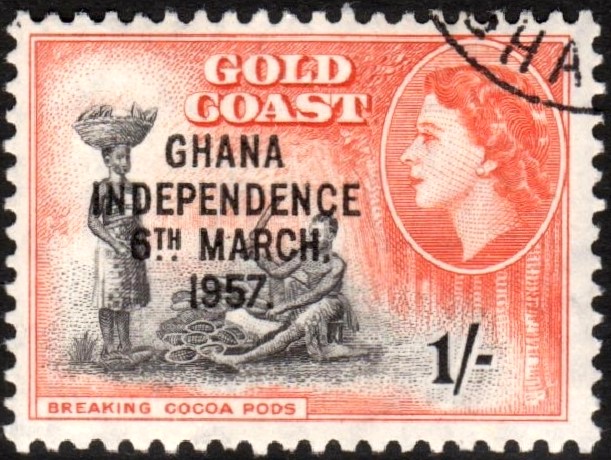
- Changing names and symbols: Many countries renamed their cities and their territory to erase the colonial imprint (Southern Rhodesia became Zimbabwe, Léopoldville became Kinshasa, the Gold Coast became Ghana).
- Keeping the administrative tools: To avoid chaos, most of the new states kept the official language, the administrative divisions and the law inherited from colonisation.
- Inventing new national histories: Populations grouped together within artificial borders had to be unified by creating new national narratives, anthems, national holidays and independent school curricula.
A power facing its own traces
The temptation to control the archives and the historical narrative is not confined to the former colonial powers.
After independence, several new states in turn restricted access to administrative documents or selected the authorised narratives. For Algeria after 1962, the historian Malika Rahal describes archives that had become “very difficult to access”. In France too, access to the archives of the Algerian War was long a matter of debate: it was only at the end of 2021 that the state opened its archives relating to judicial cases and police investigations from that period.15
Finding the words: the French example
The way a former colonial power names the past also changes over time.
In France, for decades, official vocabulary avoided the word “war”. People spoke publicly of the “events in Algeria”, and official texts of “operations carried out in North Africa”.16
It was not until the law of 18 October 1999 that the French state officially recognised the name “Algerian War”.17
What to take away
Other pages of this site show that what reaches us from the past is not representative. Stone is preserved, wood almost never. Clay tablets survive the fires that destroy palaces. We call an era “the Stone Age”, when that name mostly describes the state of our archaeological rubbish bins.
All this is down to the chance survival of materials.
Here, it is not chance. It is a selection, decided and organised by people, and it had a name.
This is the third time this encyclopedia has encountered such a situation. In 1562, Maya books were burnt on the orders of a cleric, Diego de Landa; today only three ancient Maya books remain, and a fourth that was long disputed. In 1936, the man who had come up with the idea of the Olympic torch relay, driven from his post because he was Jewish, saw his name erased from the story.18
So a further question joins those already asked when faced with a gap in the historical record:
has what is missing disappeared, or was it removed?
These are not the same questions, and they do not call for the same research.
Finally, one difficult point remains. What has been found are the files that had been moved. Those destroyed on the spot, in the territories, are lost forever — and there were a great many of them.19
The world map is recent
One last point gives a sense of the scale of the period.
In 1945, the United Nations had fifty-one member states.
It has had one hundred and ninety-three since 2011, the year South Sudan was admitted.20
In other words, nearly three quarters of the one hundred and ninety-three member states were not members in 1945. The map studied at school is not an old map. It is a recent map, and it is still changing.
Note 1
Reasons for refusals to pass material to successor independent governments, and the underlying security concerns, are spelled out in the records; some indication of the volume of records destroyed or sent to London is given; methods of destruction and transmission are discussed;
Banton, Mandy, “Destroy? "Migrate"? Conceal? British Strategies for the Disposal of Sensitive Records of Colonial Administrations at Independence”, The Journal of Imperial and Commonwealth History, vol. 40, no. 2, 2012, p. 321-335
Note 2
Operation Legacy
Banton, Mandy, “Destroy? "Migrate"? Conceal? British Strategies for the Disposal of Sensitive Records of Colonial Administrations at Independence”, The Journal of Imperial and Commonwealth History, vol. 40, no. 2, 2012, p. 321-335
Note 3
Prior to the hearing, it was revealed that the British government had removed some 1,500 ‘sensitive’ government files from Kenya at independence, many of these relating to alleged abuses carried out during the Emergency of the 1950s.
Anderson, David M., “Mau Mau in the High Court and the "Lost" British Empire Archives: Colonial Conspiracy or Bureaucratic Bungle?”, The Journal of Imperial and Commonwealth History, vol. 39, no. 5, 2011, p. 699-716
The British Government recognises that Kenyans were subject to torture and other forms of ill treatment at the hands of the colonial administration. The British government sincerely regrets that these abuses took place, and that they marred Kenya’s progress towards independence.
Hague, William, “Statement to Parliament on settlement of Mau Mau claims”, Foreign and Commonwealth Office, GOV.UK, 6 June 2013
Note 4
Most recently, it is unfolding in the High Court of Justice in London where five Kenyans have filed a claim against the British government, alleging that they suffered acts of mistreatment and torture at the hands of British colonial and military personnel.
Elkins, Caroline, “Alchemy of Evidence: Mau Mau, the British Empire, and the High Court of Justice”, The Journal of Imperial and Commonwealth History, vol. 39, no. 5, 2011, p. 731-748
At the time, FCO officials denied having any relevant documents that might shed light on the crimes.
Engelhart, Katie, “Here’s What the British Government Has Been Hiding”, Vice, 1 September 2014
Note 5
Only two years later, in 2011, did the FCO admit it was unlawfully holding 1,500 Kenya files at Hanslope Park.
Engelhart, Katie, “Here’s What the British Government Has Been Hiding”, Vice, 1 September 2014
Later, it confessed to possessing 20,000 undisclosed files from 37 former British colonies.
Engelhart, Katie, “Here’s What the British Government Has Been Hiding”, Vice, 1 September 2014
Note 6
Snapshots from 2013 of the timetable for transferring these records to The National Archives are available in the UK Government Web Archive. […] Open unless otherwise stated
The National Archives (Royaume-Uni), fonds FCO 141, “Colonial Administration Records (Migrated Archives)”
Foreign and Commonwealth Office and predecessors: Records of Former Colonial Administrations: Migrated Archives
The National Archives (Royaume-Uni), fonds FCO 141, “Colonial Administration Records (Migrated Archives)”
Note 7
The records cover a wide range of subject matter relating to colonial administration.
The National Archives (Royaume-Uni), fonds FCO 141, “Colonial Administration Records (Migrated Archives)”
Note 8
The British Government sincerely regret that these abuses took place and that they marred Kenya's progress towards independence.
Hague, William, déclaration devant la Chambre des communes, 6 June 2013, Hansard
The agreement includes payment of a settlement sum in respect of 5,228 claimants […] to the total value of £19.9 million
Foreign and Commonwealth Office, “Statement to Parliament on settlement of Mau Mau claims”, déclaration de William Hague, 6 June 2013, GOV.UK
Note 9
The British Government recognise that Kenyans were subject to torture and other forms of ill treatment at the hands of the colonial administration. The British Government sincerely regret that these abuses took place
Hague, William, déclaration devant la Chambre des communes, 6 June 2013, Hansard
We continue to deny liability on behalf of the Government and British taxpayers today
Foreign and Commonwealth Office, “Statement to Parliament on settlement of Mau Mau claims”, déclaration de William Hague, 6 June 2013, GOV.UK
Note 10
we do not believe that this settlement establishes a precedent in relation to any other former British colonial administration.
Hague, William, déclaration devant la Chambre des communes, 6 June 2013, Hansard
Note 11
About three dozen Cypriots who alleged they were tortured while in custody […] the 33 Cypriots see the out-of-court settlement as the British government's acknowledgement that they were tortured
Associated Press, “Cypriots ’vindicated’ after UK settlement of torture claims”, Arab News, 24 January 2019
Note 12
That review was undertaken by the former British High Commissioner to Canada, Mr Anthony Cary. […] I have today deposited in the Libraries of both Houses the findings of that investigation. […] It is my intention to release every part of every paper of interest subject only to legal exemptions.
House of Commons, “Public Records: Colonial Documents”, written statement by the Foreign and Commonwealth Office, 5 May 2011, Hansard
A bleakly comic example of this is the 2011 Foreign Office report on the migrated archives affair. Intended to showcase its new spirit of openness, the published report was peppered with redactions.
Livsey, Tim, “Open secrets: the British ‘migrated archives’, colonial history, and postcolonial history”, History Workshop Journal, vol. 93, no. 1, 2022, pp. 95-116
Note 13
But there is still a little batch of Kenya files that have never been found.
Engelhart, Katie, “Here’s What the British Government Has Been Hiding”, Vice, 1 September 2014
The email references a list from the 1980s, which records Kenya boxes 668-678 as destroyed. […] The box numbers indicate to me that the files were originally held in London, and so were destroyed in London around 1980-81
Engelhart, Katie, “Here’s What the British Government Has Been Hiding”, Vice, 1 September 2014
Note 14
The Guardian revealed that Britain's Foreign & Commonwealth Office (FCO) had illegally withheld 1.2 million
Engelhart, Katie, “Here’s What the British Government Has Been Hiding”, Vice, 1 September 2014
Note 15
Outre la question des archives qui deviennent très difficilement accessibles
Besides the question of archives that are becoming very difficult to access
Rahal, Malika, “Comment faire l’histoire de l’Algérie indépendante ?”, La Vie des idées, 13 March 2012
ses archives relatives aux affaires judiciaires et aux enquêtes de police […] Ce texte qui empêche la déclassification automatique des archives de plus de 50 ans
its archives relating to judicial cases and police investigations […] This text, which prevents the automatic declassification of archives more than 50 years old
Berkaoui, Héléna, “Archives de la guerre d’Algérie : “Il ne faut pas s’attendre à des découvertes fracassantes”, affirme l’historien Fabrice Riceputi”, Public Sénat, 24 December 2021
Note 16
Ce n’est qu’avec la loi du 18 octobre 1999 (1) que le caractère de guerre a été reconnu aux opérations militaires qui se sont déroulées en Algérie, en Tunisie et au Maroc entre 1952 et 1962. Auparavant qualifiés par des euphémismes tels que « pacification », « opérations de maintien de l’ordre » ou « événements », les combats de la guerre d’Algérie ont trop longtemps été occultés de notre mémoire collective. […] La meilleure preuve en est que les événements d’Algérie, comme on disait alors, ont failli entraîner à la fois la fin de la République et celle de ses institutions.
Only with the law of 18 October 1999 (1) was the character of war recognised for the military operations that took place in Algeria, Tunisia and Morocco between 1952 and 1962. Formerly described by euphemisms such as “pacification”, “law-and-order operations” or “events”, the fighting of the Algerian War was for too long hidden from our collective memory. […] The best proof of this is that the events in Algeria, as people said at the time, nearly brought about the end both of the Republic and of its institutions.
Néri, Alain, Rapport fait au nom de la commission des affaires sociales sur la proposition de loi relative à la reconnaissance du 19 mars comme journée nationale du souvenir et de recueillement, French Senate, report no. 60 (2012-2013), 17 October 2012
Il apparaît désormais nécessaire de faire un pas supplémentaire dans la prise en compte pleine et entière de la réalité des faits en substituant à l'expression trop imprécise d' « opérations effectuées en Afrique du Nord », celle réelle et juste de « guerre d'Algérie » au sein des dispositions de principe inscrites dans le code des pensions militaires d'invalidité et des victimes de guerre ainsi que dans le code de la mutualité.
It now appears necessary to take a further step towards the full and complete acknowledgement of the reality of the facts by substituting for the overly imprecise expression “operations carried out in North Africa” the real and accurate one of “Algerian War” in the statements of principle set out in the code of military invalidity pensions and war victims as well as in the mutual insurance code.
Néri, Alain, rapport no. 1672 fait au nom de la commission des affaires culturelles, familiales et sociales sur la proposition de loi no. 1293, Assemblée nationale, 2 June 1999
Note 17
Ce principe politique excluait que les opérations militaires menées contre les mouvements nationalistes puissent être qualifiées de « guerre ». […] Telle est la portée de la loi n° 99-882 du 18 octobre 1999 relative au remplacement de l'expression « opérations effectuées en Afrique du Nord » par celle de « guerre d'Algérie ou combats en Tunisie et au Maroc ».
This political principle ruled out the military operations conducted against the nationalist movements being described as a “war”. […] Such is the scope of Law no. 99-882 of 18 October 1999 on the replacement of the expression “operations carried out in North Africa” by that of “Algerian War or fighting in Tunisia and Morocco”.
Secrétaire d’État à la Défense, chargé des Anciens combattants, answer to written question no. 35879 from Jean Bardet, Assemblée nationale, Journal officiel, 13 December 1999, p. 7127
Note 18
Les datations, les analyses physico-chimiques de matériaux, l’entomologie, les études iconographiques et stylistiques récemment effectuées au Mexique sont venues confirmer en 2018 l’authenticité d’un quatrième, le codex Grolier, désormais appelé CódiceMaya de México. […] L’évêque du Yucatán, Diego de Landa, fit brûler plusieurs manuscrits lors d’un autodafé en 1562. […] Seuls subsistaient donc trois codex, ceux de Dresde, de Paris et de Madrid, du nom des villes où ils sont conservés.
The dating, the physico-chemical analyses of materials, the entomology and the iconographic and stylistic studies recently carried out in Mexico confirmed in 2018 the authenticity of a fourth, the Grolier Codex, now called Códice Maya de México. […] The Bishop of Yucatán, Diego de Landa, had several manuscripts burnt in an auto-da-fé in 1562. […] So only three codices survived, those of Dresden, Paris and Madrid, named after the cities where they are kept.
“Codex mayas”, Encyclopædia Universalis
Er geht auf eine Idee des Archäologen Alfred Schiff zurück, des persönlichen Beraters von Carl Diem. […] Schiff war jüdischen Glaubens. Aus diesem Grund wurde er 1933 seiner Funktion als Verwaltungsdirektor an der „Deutschen Hochschule für Leibesübungen“ enthoben.
It goes back to an idea of the archaeologist Alfred Schiff, the personal adviser of Carl Diem. […] Schiff was of the Jewish faith. For this reason, in 1933 he was removed from his post as administrative director at the “Deutsche Hochschule für Leibesübungen”.
Bundesarchiv, “Der Olympische Fackellauf bei den Sommerspielen in Berlin 1936”, sans date, open access
Seinen Olympianachlass übernahm Diem, der Schiff im Kontext des Fackellaufs nie erwähnte. Alfred Schiff aber blieb lange vergessen.
His Olympic papers were taken over by Diem, who never mentioned Schiff in connection with the torch relay. Alfred Schiff, however, long remained forgotten.
Schäfer, Ralf, “Gestohlenes Feuer”, Jüdische Allgemeine, 23 July 2012, open access
Note 19
A great many documents were destroyed on this basis, but others were returned to the UK.
The National Archives (Royaume-Uni), fonds FCO 141, “Colonial Administration Records (Migrated Archives)”
Note 20
Original 51 Members (1945) […] 193 Members (2011)
Organisation des Nations unies, “Growth in United Nations membership”
Notes and sources
- ↑
Passage Officials sorted through them. Some files were left in place. Others were taken to London. Others were destroyed.
Reasons for refusals to pass material to successor independent governments, and the underlying security concerns, are spelled out in the records; some indication of the volume of records destroyed or sent to London is given; methods of destruction and transmission are discussed;
Source Banton, Mandy, “Destroy? "Migrate"? Conceal? British Strategies for the Disposal of Sensitive Records of Colonial Administrations at Independence”, The Journal of Imperial and Commonwealth History, vol. 40, no. 2, 2012, p. 321-335, abstract.
Paywalled · checked on 25 October 2026
- ↑
Passage This operation had a name, notably in the British Empire: Operation Legacy.
Operation Legacy
Source Banton, Mandy, “Destroy? "Migrate"? Conceal? British Strategies for the Disposal of Sensitive Records of Colonial Administrations at Independence”, The Journal of Imperial and Commonwealth History, vol. 40, no. 2, 2012, p. 321-335, name of the operation in the specialist literature.
Paywalled · checked on 9 September 2026
- ↑
Passage in Kenya, the administration took steps at the time of independence, in December 1963, to remove files
Prior to the hearing, it was revealed that the British government had removed some 1,500 ‘sensitive’ government files from Kenya at independence, many of these relating to alleged abuses carried out during the Emergency of the 1950s.
Source Anderson, David M., “Mau Mau in the High Court and the "Lost" British Empire Archives: Colonial Conspiracy or Bureaucratic Bungle?”, The Journal of Imperial and Commonwealth History, vol. 39, no. 5, 2011, p. 699-716, abstract.
Paywalled open the source · checked on 27 October 2026
Passage the repression in Kenya
The British Government recognises that Kenyans were subject to torture and other forms of ill treatment at the hands of the colonial administration. The British government sincerely regrets that these abuses took place, and that they marred Kenya’s progress towards independence.
Source Hague, William, “Statement to Parliament on settlement of Mau Mau claims”, Foreign and Commonwealth Office, GOV.UK, 6 June 2013, 5th paragraph.
Open access open the source · checked on 27 October 2026
- ↑
Passage In 2011, a trial was held before the High Court in London: five Kenyans accused the British government of torture suffered in the colonial era.
Most recently, it is unfolding in the High Court of Justice in London where five Kenyans have filed a claim against the British government, alleging that they suffered acts of mistreatment and torture at the hands of British colonial and military personnel.
Source Elkins, Caroline, “Alchemy of Evidence: Mau Mau, the British Empire, and the High Court of Justice”, The Journal of Imperial and Commonwealth History, vol. 39, no. 5, 2011, p. 731-748, abstract.
Paywalled · checked on 9 September 2026
Passage The British Foreign Office was then asked whether it held documents relevant to the case. It replied that it did not. It did.
At the time, FCO officials denied having any relevant documents that might shed light on the crimes.
Source Engelhart, Katie, “Here’s What the British Government Has Been Hiding”, Vice, 1 September 2014, account of the proceedings.
Open access open the source · checked on 24 October 2026
- ↑
Passage the Foreign Office first admitted to unlawfully holding fifteen hundred Kenyan files at a site called Hanslope Park
Only two years later, in 2011, did the FCO admit it was unlawfully holding 1,500 Kenya files at Hanslope Park.
Source Engelhart, Katie, “Here’s What the British Government Has Been Hiding”, Vice, 1 September 2014, account of the disclosure.
Open access open the source · checked on 24 October 2026
Passage Then twenty thousand, concerning thirty-seven former colonies.
Later, it confessed to possessing 20,000 undisclosed files from 37 former British colonies.
Source Engelhart, Katie, “Here’s What the British Government Has Been Hiding”, Vice, 1 September 2014, account of the disclosure.
Open access open the source · checked on 24 October 2026
- ↑
Passage These twenty thousand files were then transferred to the National Archives, where anyone can consult them today.
Snapshots from 2013 of the timetable for transferring these records to The National Archives are available in the UK Government Web Archive. […] Open unless otherwise stated
Source The National Archives (Royaume-Uni), fonds FCO 141, “Colonial Administration Records (Migrated Archives)”, description of the series (administrative history; access conditions).
Open access open the source · checked on 9 September 2026
Passage There they form a series with an innocuous-looking name: the “Migrated Archives”
Foreign and Commonwealth Office and predecessors: Records of Former Colonial Administrations: Migrated Archives
Source The National Archives (Royaume-Uni), fonds FCO 141, “Colonial Administration Records (Migrated Archives)”, Discovery catalogue, record of the FCO 141 series, title (“Title”).
Open access open the source · checked on 24 October 2026
- ↑
Passage The content of these files is very mixed: it covers a wide range of subjects relating to colonial administration.
The records cover a wide range of subject matter relating to colonial administration.
Source The National Archives (Royaume-Uni), fonds FCO 141, “Colonial Administration Records (Migrated Archives)”, description of the series (scope and content).
Open access open the source · checked on 9 September 2026
- ↑
Passage In 2013, the British government expressed regret before Parliament
The British Government sincerely regret that these abuses took place and that they marred Kenya's progress towards independence.
Source Hague, William, déclaration devant la Chambre des communes, 6 June 2013, Hansard, Mau Mau Claims (Settlement) debate, 6 June 2013.
Open access open the source · checked on 9 September 2026
Passage agreed to pay compensation to 5,228 former Kenyan detainees — nearly twenty million pounds, legal costs included
The agreement includes payment of a settlement sum in respect of 5,228 claimants […] to the total value of £19.9 million
Source Foreign and Commonwealth Office, “Statement to Parliament on settlement of Mau Mau claims”, déclaration de William Hague, 6 June 2013, GOV.UK, statement of 6 June 2013.
Open access open the source · checked on 24 October 2026
- ↑
Passage his Government “sincerely regret” that these abuses took place
The British Government recognise that Kenyans were subject to torture and other forms of ill treatment at the hands of the colonial administration. The British Government sincerely regret that these abuses took place
Source Hague, William, déclaration devant la Chambre des communes, 6 June 2013, Hansard, Mau Mau Claims (Settlement) debate, 6 June 2013.
Open access open the source · checked on 9 September 2026
Passage the text also states that the government continues to dispute its legal liability
We continue to deny liability on behalf of the Government and British taxpayers today
Source Foreign and Commonwealth Office, “Statement to Parliament on settlement of Mau Mau claims”, déclaration de William Hague, 6 June 2013, GOV.UK, statement of 6 June 2013.
Open access open the source · checked on 24 October 2026
- ↑
Passage this settlement does not establish a precedent in relation to any other former British colonial administration
we do not believe that this settlement establishes a precedent in relation to any other former British colonial administration.
Source Hague, William, déclaration devant la Chambre des communes, 6 June 2013, Hansard, Mau Mau Claims (Settlement) debate, 6 June 2013, col. 1693.
Open access open the source · checked on 9 September 2026
- ↑
Passage A comparable step nevertheless followed in 2019: an out-of-court settlement with thirty-three Cypriots who said they had been tortured.
About three dozen Cypriots who alleged they were tortured while in custody […] the 33 Cypriots see the out-of-court settlement as the British government's acknowledgement that they were tortured
Source Associated Press, “Cypriots ’vindicated’ after UK settlement of torture claims”, Arab News, 24 January 2019, wire report of 24 January 2019.
Open access open the source · checked on 24 October 2026
- ↑
Passage the British Foreign Office published an official report […] The minister then promised to release “every part of every paper of interest subject only to legal exemptions”.
That review was undertaken by the former British High Commissioner to Canada, Mr Anthony Cary. […] I have today deposited in the Libraries of both Houses the findings of that investigation. […] It is my intention to release every part of every paper of interest subject only to legal exemptions.
Source House of Commons, “Public Records: Colonial Documents”, written statement by the Foreign and Commonwealth Office, 5 May 2011, Hansard, written statement “Public Records: Colonial Documents” (non-contiguous passages).
Open access open the source · checked on 27 October 2026
Passage Yet this report was itself redacted: some of its passages were blacked out before publication.
A bleakly comic example of this is the 2011 Foreign Office report on the migrated archives affair. Intended to showcase its new spirit of openness, the published report was peppered with redactions.
Source Livsey, Tim, “Open secrets: the British ‘migrated archives’, colonial history, and postcolonial history”, History Workshop Journal, vol. 93, no. 1, 2022, pp. 95-116, last part of the article (after the “* * *” divider), note citing “Cary report, p. 13”.
Open access (CC BY 4.0) open the source · checked on 28 October 2026
- ↑
Passage A small batch of Kenyan files has never been found.
But there is still a little batch of Kenya files that have never been found.
Source Engelhart, Katie, “Here’s What the British Government Has Been Hiding”, Vice, 1 September 2014, Mandy Banton’s answer on the Kenyan files.
Open access open the source · checked on 27 October 2026
Passage A list from the 1980s records a run of Kenya boxes as destroyed, probably in London around 1980-1981, according to the archivist Mandy Banton.
The email references a list from the 1980s, which records Kenya boxes 668-678 as destroyed. […] The box numbers indicate to me that the files were originally held in London, and so were destroyed in London around 1980-81
Source Engelhart, Katie, “Here’s What the British Government Has Been Hiding”, Vice, 1 September 2014, Mandy Banton’s answer on file FCO 141/19933.
Open access open the source · checked on 27 October 2026
- ↑
Passage It was later learnt that it was also unlawfully withholding hundreds of thousands of other historical documents
The Guardian revealed that Britain's Foreign & Commonwealth Office (FCO) had illegally withheld 1.2 million
Source Engelhart, Katie, “Here’s What the British Government Has Been Hiding”, Vice, 1 September 2014, beginning of the article (figure later revised to 600,000 documents).
Open access open the source · checked on 24 October 2026
- ↑
Passage For Algeria after 1962, the historian Malika Rahal describes archives that had become “very difficult to access”.
Outre la question des archives qui deviennent très difficilement accessibles
Editors’ translation Besides the question of archives that are becoming very difficult to access
Source Rahal, Malika, “Comment faire l’histoire de l’Algérie indépendante ?”, La Vie des idées, 13 March 2012, on the history of Algeria after 1962.
Open access open the source · checked on 24 October 2026
Passage In France too, access to the archives of the Algerian War was long a matter of debate: it was only at the end of 2021 that the state opened its archives relating to judicial cases and police investigations from that period.
ses archives relatives aux affaires judiciaires et aux enquêtes de police […] Ce texte qui empêche la déclassification automatique des archives de plus de 50 ans
Editors’ translation its archives relating to judicial cases and police investigations […] This text, which prevents the automatic declassification of archives more than 50 years old
Source Berkaoui, Héléna, “Archives de la guerre d’Algérie : “Il ne faut pas s’attendre à des découvertes fracassantes”, affirme l’historien Fabrice Riceputi”, Public Sénat, 24 December 2021, article of 24 December 2021 (the decree covers 1954-1966; the IG 1300 instruction).
Open access open the source · checked on 24 October 2026
- ↑
Passage official vocabulary avoided the word “war”. People spoke publicly of the “events in Algeria”
Ce n’est qu’avec la loi du 18 octobre 1999 (1) que le caractère de guerre a été reconnu aux opérations militaires qui se sont déroulées en Algérie, en Tunisie et au Maroc entre 1952 et 1962. Auparavant qualifiés par des euphémismes tels que « pacification », « opérations de maintien de l’ordre » ou « événements », les combats de la guerre d’Algérie ont trop longtemps été occultés de notre mémoire collective. […] La meilleure preuve en est que les événements d’Algérie, comme on disait alors, ont failli entraîner à la fois la fin de la République et celle de ses institutions.
Editors’ translation Only with the law of 18 October 1999 (1) was the character of war recognised for the military operations that took place in Algeria, Tunisia and Morocco between 1952 and 1962. Formerly described by euphemisms such as “pacification”, “law-and-order operations” or “events”, the fighting of the Algerian War was for too long hidden from our collective memory. […] The best proof of this is that the events in Algeria, as people said at the time, nearly brought about the end both of the Republic and of its institutions.
Source Néri, Alain, Rapport fait au nom de la commission des affaires sociales sur la proposition de loi relative à la reconnaissance du 19 mars comme journée nationale du souvenir et de recueillement, French Senate, report no. 60 (2012-2013), 17 October 2012, p. 5 (general presentation) and p. 25 (Ronan Kerdraon’s remarks in committee).
Open access open the source · checked on 27 October 2026
Passage official texts of “operations carried out in North Africa”
Il apparaît désormais nécessaire de faire un pas supplémentaire dans la prise en compte pleine et entière de la réalité des faits en substituant à l'expression trop imprécise d' « opérations effectuées en Afrique du Nord », celle réelle et juste de « guerre d'Algérie » au sein des dispositions de principe inscrites dans le code des pensions militaires d'invalidité et des victimes de guerre ainsi que dans le code de la mutualité.
Editors’ translation It now appears necessary to take a further step towards the full and complete acknowledgement of the reality of the facts by substituting for the overly imprecise expression “operations carried out in North Africa” the real and accurate one of “Algerian War” in the statements of principle set out in the code of military invalidity pensions and war victims as well as in the mutual insurance code.
Source Néri, Alain, rapport no. 1672 fait au nom de la commission des affaires culturelles, familiales et sociales sur la proposition de loi no. 1293, Assemblée nationale, 2 June 1999, introduction.
Open access open the source · checked on 24 October 2026
- ↑
Passage It was not until the law of 18 October 1999 that the French state officially recognised the name “Algerian War”.
Ce principe politique excluait que les opérations militaires menées contre les mouvements nationalistes puissent être qualifiées de « guerre ». […] Telle est la portée de la loi n° 99-882 du 18 octobre 1999 relative au remplacement de l'expression « opérations effectuées en Afrique du Nord » par celle de « guerre d'Algérie ou combats en Tunisie et au Maroc ».
Editors’ translation This political principle ruled out the military operations conducted against the nationalist movements being described as a “war”. […] Such is the scope of Law no. 99-882 of 18 October 1999 on the replacement of the expression “operations carried out in North Africa” by that of “Algerian War or fighting in Tunisia and Morocco”.
Source Secrétaire d’État à la Défense, chargé des Anciens combattants, answer to written question no. 35879 from Jean Bardet, Assemblée nationale, Journal officiel, 13 December 1999, p. 7127, ministerial answer (JO of 13 December 1999, p. 7127), 4th sentence of the 1st paragraph and penultimate sentence of the 2nd paragraph.
Open access open the source · checked on 27 October 2026
- ↑
Passage In 1562, Maya books were burnt on the orders of a cleric, Diego de Landa; today only three ancient Maya books remain, and a fourth that was long disputed.
Les datations, les analyses physico-chimiques de matériaux, l’entomologie, les études iconographiques et stylistiques récemment effectuées au Mexique sont venues confirmer en 2018 l’authenticité d’un quatrième, le codex Grolier, désormais appelé CódiceMaya de México. […] L’évêque du Yucatán, Diego de Landa, fit brûler plusieurs manuscrits lors d’un autodafé en 1562. […] Seuls subsistaient donc trois codex, ceux de Dresde, de Paris et de Madrid, du nom des villes où ils sont conservés.
Editors’ translation The dating, the physico-chemical analyses of materials, the entomology and the iconographic and stylistic studies recently carried out in Mexico confirmed in 2018 the authenticity of a fourth, the Grolier Codex, now called Códice Maya de México. […] The Bishop of Yucatán, Diego de Landa, had several manuscripts burnt in an auto-da-fé in 1562. […] So only three codices survived, those of Dresden, Paris and Madrid, named after the cities where they are kept.
Source “Codex mayas”, Encyclopædia Universalis, open-access part of the article: introductory paragraph, then the section “De multiples supports d’écriture”.
Open access open the source · checked on 24 October 2026
Passage In 1936, the man who had come up with the idea of the Olympic torch relay, driven from his post because he was Jewish
Er geht auf eine Idee des Archäologen Alfred Schiff zurück, des persönlichen Beraters von Carl Diem. […] Schiff war jüdischen Glaubens. Aus diesem Grund wurde er 1933 seiner Funktion als Verwaltungsdirektor an der „Deutschen Hochschule für Leibesübungen“ enthoben.
Editors’ translation It goes back to an idea of the archaeologist Alfred Schiff, the personal adviser of Carl Diem. […] Schiff was of the Jewish faith. For this reason, in 1933 he was removed from his post as administrative director at the “Deutsche Hochschule für Leibesübungen”.
Source Bundesarchiv, “Der Olympische Fackellauf bei den Sommerspielen in Berlin 1936”, sans date, open access, section “Der Ursprung des Fackellaufs”.
Open access open the source · checked on 25 October 2026
Passage saw his name erased from the story.
Seinen Olympianachlass übernahm Diem, der Schiff im Kontext des Fackellaufs nie erwähnte. Alfred Schiff aber blieb lange vergessen.
Editors’ translation His Olympic papers were taken over by Diem, who never mentioned Schiff in connection with the torch relay. Alfred Schiff, however, long remained forgotten.
Source Schäfer, Ralf, “Gestohlenes Feuer”, Jüdische Allgemeine, 23 July 2012, open access, body of the article (two consecutive sentences, on either side of a paragraph break).
Open access open the source · checked on 25 October 2026
- ↑
Passage What has been found are the files that had been moved […] and there were a great many of them.
A great many documents were destroyed on this basis, but others were returned to the UK.
Source The National Archives (Royaume-Uni), fonds FCO 141, “Colonial Administration Records (Migrated Archives)”, description of the series (administrative history).
Open access open the source · checked on 9 September 2026
- ↑
Passage In 1945, the United Nations had fifty-one member states. It has had one hundred and ninety-three since 2011
Original 51 Members (1945) […] 193 Members (2011)
Source Organisation des Nations unies, “Growth in United Nations membership”, headings for the years 1945 and 2011.
Open access open the source · checked on 9 September 2026
Bibliography
25
- Anderson, David M., Histories of the Hanged: Britain’s Dirty War in Kenya and the End of Empire, Weidenfeld & Nicolson, 2005 ; Elkins, Caroline, Imperial Reckoning: The Untold Story of Britain’s Gulag in Kenya, Henry Holt, 2005, in libraries (the context of the repression in Kenya).
- Anderson, David M., “Mau Mau in the High Court and the "Lost" British Empire Archives: Colonial Conspiracy or Bureaucratic Bungle?”, The Journal of Imperial and Commonwealth History, vol. 39, no. 5, 2011, p. 699-716, paywalled (the trial, Hanslope Park, the missing Kenyan files). https://doi.org/10.1080/03086534.2011.629082
- Associated Press, “Cypriots ’vindicated’ after UK settlement of torture claims”, Arab News, 24 January 2019, open access (the out-of-court settlement reached with thirty-three Cypriots). https://www.arabnews.com/node/1441251
- Banton, Mandy, “Destroy? "Migrate"? Conceal? British Strategies for the Disposal of Sensitive Records of Colonial Administrations at Independence”, The Journal of Imperial and Commonwealth History, vol. 40, no. 2, 2012, p. 321-335, paywalled (the policy of sorting archives at the time of independence).
- Berkaoui, Héléna, “Archives de la guerre d’Algérie : “Il ne faut pas s’attendre à des découvertes fracassantes”, affirme l’historien Fabrice Riceputi”, Public Sénat, 24 December 2021, open access (the opening in December 2021 of the judicial and police archives of the Algerian War; the earlier restrictions). https://www.publicsenat.fr/article/parlementaire/archives-de-la-guerre-d-algerie-il-ne-faut-pas-s-attendre-a-des-decouvertes
- Bundesarchiv, “Der Olympische Fackellauf bei den Sommerspielen in Berlin 1936”, sans date, open access (the idea of the relay credited to the archaeologist Alfred Schiff, adviser to Carl Diem; Schiff, who was Jewish, removed in 1933 from his post at the Deutsche Hochschule für Leibesübungen; see Entry 2.14). https://www.bundesarchiv.de/themen-entdecken/online-entdecken/themenbeitraege/der-olympische-fackellauf-bei-den-sommerspielen-in-berlin-1936/
- Cary, Anthony, Cary Report on Release of the Colonial Administration Files, Foreign and Commonwealth Office, 2011, open access (the official report on the affair, itself redacted). https://www.gov.uk/government/publications/cary-report-on-release-of-the-colonial-administration-files
- “Codex mayas”, Encyclopædia Universalis (the surviving Maya manuscripts and what can be said about their destruction; the fourth codex, long disputed). https://www.universalis.fr/encyclopedie/codex-mayas/
- Elkins, Caroline, “Alchemy of Evidence: Mau Mau, the British Empire, and the High Court of Justice”, The Journal of Imperial and Commonwealth History, vol. 39, no. 5, 2011, p. 731-748, paywalled (the role of expert historians at the trial).
- Engelhart, Katie, “Here’s What the British Government Has Been Hiding”, Vice, 1 September 2014, open access (the ministry’s denial, then its admission of the 1,500 Kenyan files and of the 20,000 files from 37 colonies; the historical documents unlawfully withheld; the small batch of Kenyan files never found, recorded as destroyed around 1980-1981). https://www.vice.com/en/article/katie-engelhart-britains-secrets-mandy-banton-321/
- Foreign and Commonwealth Office, “Statement to Parliament on settlement of Mau Mau claims”, déclaration de William Hague, 6 June 2013, GOV.UK, open access (the 5,228 beneficiaries, the 19.9 million pounds, the disputed legal liability). https://www.gov.uk/government/news/statement-to-parliament-on-settlement-of-mau-mau-claims
- Hague, William, déclaration devant la Chambre des communes, 6 June 2013, Hansard, open access (the regrets expressed and the compensation of the former Kenyan detainees). https://hansard.parliament.uk/
- Hague, William, “Statement to Parliament on settlement of Mau Mau claims”, Foreign and Commonwealth Office, GOV.UK, 6 June 2013, open access. https://www.gov.uk/government/news/statement-to-parliament-on-settlement-of-mau-mau-claims
- House of Commons, “Public Records: Colonial Documents”, written statement by the Foreign and Commonwealth Office, 5 May 2011, Hansard, open access (Anthony Cary’s report deposited in Parliament; the commitment to release “every part of every paper of interest”). https://hansard.parliament.uk/html/commons/2011-05-05/WrittenStatements
- Livsey, Tim, “Open secrets: the British ‘migrated archives’, colonial history, and postcolonial history”, History Workshop Journal, vol. 93, no. 1, 2022, pp. 95-116, open access (the 2011 report, meant to showcase the ministry’s new openness, published “peppered with redactions”). https://doi.org/10.1093/hwj/dbac002
- Loi no. 99-882 du 18 October 1999 relative à la substitution, à l’expression “aux opérations effectuées en Afrique du Nord”, de l’expression “à la guerre d’Algérie ou aux combats en Tunisie et au Maroc”, Journal officiel, open access (the very title of the law says what it does: replace an administrative circumlocution with the word “war”; the text covers events that occurred between 1 January 1952 and 2 July 1962). https://www.legifrance.gouv.fr/loda/id/JORFTEXT000000578132
- The National Archives (Royaume-Uni), fonds FCO 141, “Colonial Administration Records (Migrated Archives)”, open access (the twenty thousand files from thirty-seven territories, open to consultation; the name given to the series; the great diversity of their content; the many documents destroyed at the time of independence). https://discovery.nationalarchives.gov.uk/
- Néri, Alain, Rapport fait au nom de la commission des affaires sociales sur la proposition de loi relative à la reconnaissance du 19 mars comme journée nationale du souvenir et de recueillement, French Senate, report no. 60 (2012-2013), 17 October 2012, open access. https://www.senat.fr/rap/l12-060/l12-0601.pdf
- Néri, Alain, rapport no. 1672 fait au nom de la commission des affaires culturelles, familiales et sociales sur la proposition de loi no. 1293, Assemblée nationale, 2 June 1999, open access (the expression “operations carried out in North Africa” used in official texts, which the law replaces with “Algerian War”). https://www.assemblee-nationale.fr/11/rapports/r1672.asp
- Organisation des Nations unies, “Growth in United Nations membership”, open access (51 original members in 1945, 193 members since 2011). https://www.un.org/en/about-us/growth-in-un-membership
- Organisation des Nations unies, “États Membres”, liste officielle avec dates d’admission, open access. https://www.un.org/fr/about-us/member-states
- Rahal, Malika, “Comment faire l’histoire de l’Algérie indépendante ?”, La Vie des idées, 13 March 2012, open access (the archives of independent Algeria, very difficult to access). https://laviedesidees.fr/Comment-faire-l-histoire-de-l-Algerie-independante
- Schäfer, Ralf, “Gestohlenes Feuer”, Jüdische Allgemeine, 23 July 2012, open access (Carl Diem regarded as the inventor of the relay; Alfred Schiff, never mentioned by Diem, long forgotten; see Entry 2.14). https://juedische-allgemeine.de/juedische-welt/gestohlenes-feuer
- Secrétaire d’État à la Défense, chargé des Anciens combattants, answer to written question no. 35879 from Jean Bardet, Assemblée nationale, Journal officiel, 13 December 1999, p. 7127, open access (the official refusal of the word “war” and its recognition by the law of 18 October 1999). https://www.assemblee-nationale.fr/dyn/11/questions/QANR5L11QE35879.pdf
- Stora, Benjamin, La Gangrène et l’Oubli. La mémoire de la guerre d’Algérie, La Découverte, 1991, in libraries (official vocabulary and what it avoids).
Spotted an error or have a doubt? Write to us.