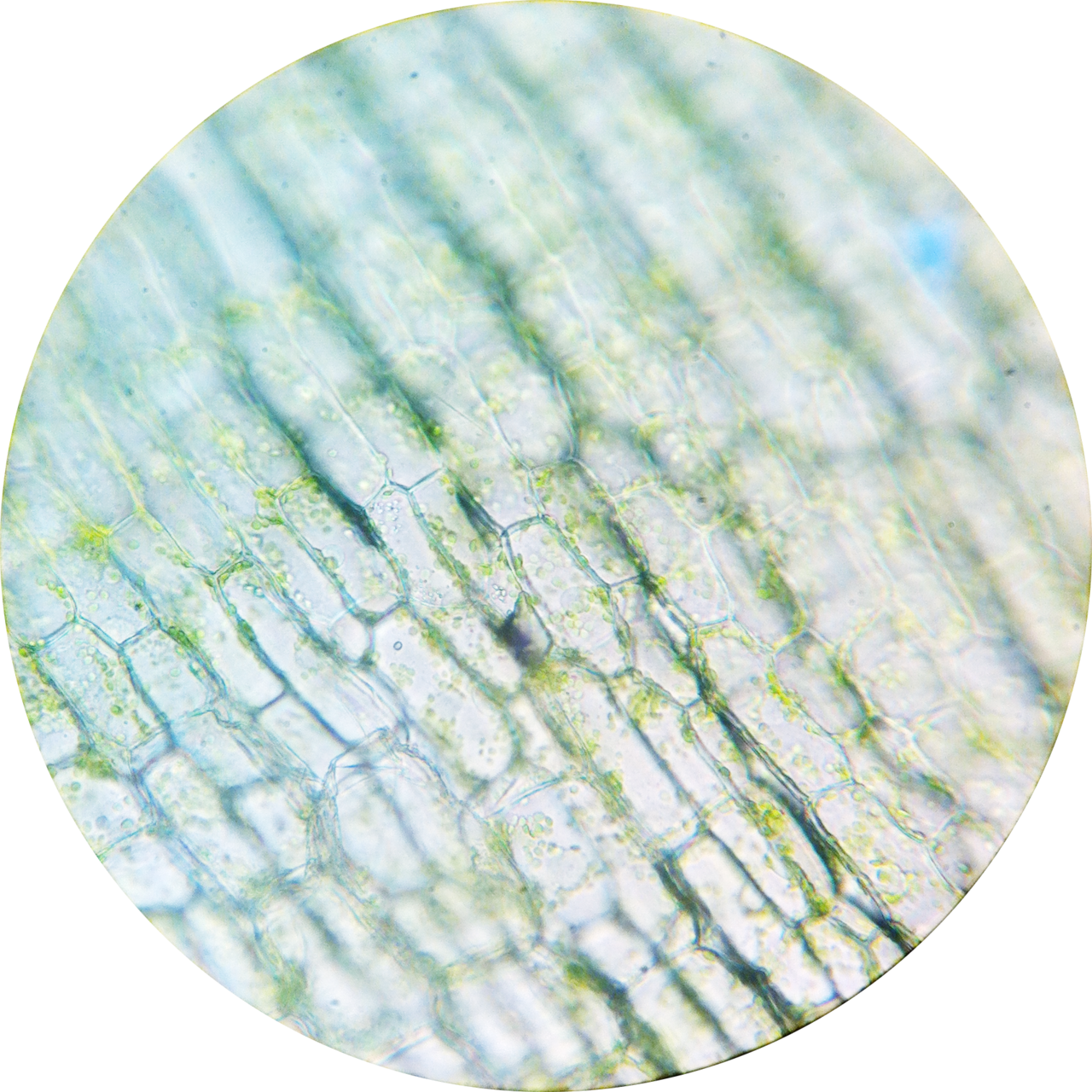

Humans do not see plants.
This is not a figure of speech but a phenomenon that has been studied, named and measured — and it concerns this site as much as its readers.
An issue flagged as early as 1919
In 1919, as general biology courses were being set up, some teachers made an observation: in practice, the words “biology” and “zoology” were being treated as synonyms.
Botany played only a minor part in them.
The phenomenon was named “zoo-chauvinism” in the 1980s. Then, in 1998, two American botanists gave it the name by which it is known today — and defined it.1
It is the inability to see or notice the plants in one’s own environment. This leads, they say, to the inability to recognise their importance, the inability to appreciate their distinctive features, and a ranking of plants as inferior to animals.
Their two articles have since been cited hundreds of times.
Two important corrections
We began this page with a simple hypothesis: humans do not see plants.
The literature corrected us on two points, and it is important to say so.
First point: it is too general. The researcher who has worked most on this subject makes clear that the phenomenon differs across cultures, that most of the research has been carried out in European and North American societies, and that Indigenous peoples generally show far greater attention to plants.2
In other words: a result obtained in one place had been stated as if it held everywhere. This is exactly the flaw that this site has been tracking from the start — and it is the authors themselves who point it out.
Second point: it is not an inability. A review of twenty years of literature concludes that, in high-income countries, it is a lack of attention due to increasingly scarce experiences with plants — and not an impediment to perceiving them.3
So it is not that we cannot see plants.
It is that we no longer have any reason to look at them.
This changes everything: an impediment is something one suffers; a lack of habit is something one can correct.
The organs of a plant
A plant has no mouth, no legs and no heart. Yet it solves the same problems as we do — feeding, drinking, breathing, reproducing — with entirely different equipment. Four organs take care of this.
- Roots anchor the plant and absorb water and mineral salts from the soil. Their exchange surface is considerable: that of a rye plant, root hairs included, exceeds several hundred square metres.
- The stem supports the rest and handles circulation. It contains two distinct networks of conduits, which differ both in what they carry and in the direction they carry it.4
- The xylem carries water and minerals up from the roots to the leaves. Its cells are dead at maturity: they are empty tubes, and it is this material that, as it accumulates, forms wood.
- The phloem carries the sugars made by the leaves back down to the rest of the plant, including the roots. Its cells, by contrast, are alive.5
A root does not feed itself: it is fed by the leaves.
- Leaves capture light. Their flat shape is no accident: it offers the maximum surface area for the minimum of material. Their underside is pierced by thousands of tiny pores, the stomata, which open to let carbon dioxide in and close to limit water loss.
- Flowers, where there are any, handle reproduction, then become fruits and seeds.6
These organs are not separate parts: they depend on one another all the time. Roots never see the light and live on sugars coming from above; leaves never touch the ground and live on water coming from below. It is this two-way circulation that makes possible everything this page describes.
Where does the matter of plants come from?
This is the central question, and the answer is deeply counter-intuitive.
When we look at a century-old tree weighing several tonnes, our immediate reflex is to think that all this matter was extracted from the soil by its roots. That idea is wrong.
Van Helmont’s historic experiment
In the seventeenth century, the Flemish physician and chemist Jan Baptist van Helmont carried out a famous experiment, published after his death in 1648:7
- He planted a young willow weighing 2.3 kg in a pot containing exactly 90.7 kg of oven-dried soil.
- For five years, he added nothing but rainwater.
- After five years, the willow weighed 76.7 kg (a gain in mass of more than 74 kg).
- He put the soil back in the oven and weighed it again: it had lost only about 57 grams.8
Van Helmont concluded — wrongly — that the tree’s mass came exclusively from water. He was unaware of the fundamental role of air.9
The tree is made of air and light
The dry matter of a plant consists of about 95% carbon, oxygen and hydrogen.10
- The carbon and oxygen come from the carbon dioxide (CO₂) present in the air, taken in through the stomata of the leaves.
- The hydrogen comes from the water (H₂O) absorbed by the roots.
- The minerals from the soil (nitrogen, phosphorus, potassium) make up only a tiny fraction of the total mass (the 57 grams of Van Helmont’s experiment).
A tree is therefore literally an assembly of air turned into solid matter by the energy of light.
And this mechanism has a name
It is photosynthesis. The word comes from Greek: photo, light, and synthesis, putting together. Putting together by means of light — the name describes exactly what Van Helmont had failed to see.
The equation fits on one line: the plant takes in carbon dioxide through the stomata of its leaves, water through its roots, and light energy; from these it makes sugar, which will become wood, leaf and fruit, and it releases oxygen, for which it has no immediate use.
The order of things matters here. The oxygen we breathe is not the purpose of the operation: it is a waste product. The plant makes sugar; oxygen is what is left on the plate.
Why leaves are green
“Because of chlorophyll” is the usual answer. It does not answer the question: it merely shifts it.
Why, then, is chlorophyll itself green?
A misconception to correct first
We often read that chlorophyll “reflects” green, as if it were choosing to.
That is not what happens. It preferentially absorbs blue and red. Green is simply what is left over — what it captures least well.
There is something more surprising still. Leaves lacking chlorophyll reflect green more efficiently than green leaves. What reflects light in a leaf is thought to be mainly the cellulose of the cell walls — not the pigment.11
An article published in 2020 by Finnish researchers was written specifically to correct this confusion, so widespread is it in textbooks.
And green is not wasted
Another surprise: green is absorbed only about 20 to 30% less efficiently than blue and red. It is not a rejected colour: it is a colour that is captured slightly less well.
Once absorbed, a green photon is not wasted: in fairly strong white light, it even makes the leaf work better than a red photon does. Why? Because green penetrates the leaf more deeply than red and blue, which are stopped in the very first layers. In full light, it is therefore the green photons that power the lower chloroplasts.12
If everything were absorbed, a plant would look black. The green we see is the small fraction that comes back out.
Why, then, not capture everything?
The most remarkable point was documented in 2020. It starts from an oddity that no one could explain.
A plant has not one pigment, but two: chlorophyll a and chlorophyll b. Yet their absorption peaks do not fall at the top of the solar spectrum, nor do they fall in the same place. They are offset — from the maximum of available light, and from each other.13
This is strange. To capture as much energy as possible, one would place one’s sensors where light is most abundant.
The explanation put forward is as follows. Sunlight flickers constantly: a cloud passes, a leaf moves overhead, the sun goes down. And inside the plant itself, the transfer of energy is irregular.
Two sensors whose peaks are slightly offset, and placed where the spectrum changes fastest, respond differently to the same fluctuation. What one loses, the other gains. The variations cancel each other out, and the power coming out of the system remains stable.14
The researchers call this cancelling the noise. Their model, applied to three very different organisms — green plants, purple bacteria, bacteria living under water — recovers the actually observed peaks every time.15
Three different light environments, one and the same rule, three correct predictions. That is what makes the explanation sound.
So it is not the maximum that is sought. It is the stability of what comes out.16
A reversal that is useful well beyond botany: what captures the most is not always what is selected. Regularity can be worth more than performance.
It can be measured
There is now a validated measuring instrument for this phenomenon, built around four components:17
- The attention paid to plants in the everyday environment;
- Attitude and empathy towards the plant world;
- The level of basic biological knowledge;
- The relative interest given to plants compared with animals.
This is what definitively distinguishes the phenomenon, as studied, from a mere shared impression.
Note 1
in 1998 we decided to introduce a new term, plant blindness, to the US biology education literature (1998a). […] Subsequently, we defined plant blindness as: the inability to see or notice the plants in one's own environment
Wandersee, James H. and Schussler, Elisabeth E., “Preventing Plant Blindness”, The American Biology Teacher, vol. 61, no. 2, 1999, p. 82-86 ; et “Toward a Theory of Plant Blindness”, Plant Science Bulletin, vol. 47, 2001, p. 2-9
Note 2
It is worth noting, however, that "plant blindness" as a phenomenon differs across cultures. Most of the research cited here has been done in Euro-centric cultures (such as in the U.S. or U.K.). Indigenous peoples tend to have much more appreciation for plants, as evidenced in the book, "Braiding Sweetgrass," by Robin Wall Kimmerer.
Parsley, Kathryn M., “Plant Awareness Disparity: A Case for Renaming Plant Blindness”, Plants, People, Planet, vol. 2, no. 6, 2020, p. 598-601
Note 3
There was no concrete evidence of innate plant awareness disparity; instead, diminished experience of nature in urbanised societies appeared to be the cause. Virtually, all the 87 studies that found evidence of plant awareness disparity were undertaken in urban populations in high-income countries. […] We conclude that a decline in relevant experience with plants leads to a cyclical process of inattention that could be addressed through first-hand experiences of edible and useful plants in local environments.
Stagg, Bethan C. and Dillon, Justin, “Plant Awareness Is Linked to Plant Relevance: A Review of Educational and Ethnobiological Literature (1998–2020)”, Plants, People, Planet, vol. 4, no. 6, 2022, p. 579-592
Note 4
These roots had a surface area of about 2,550 square feet […] and a surface area of about 4.320 square feet.
[attributed to Dittmer, H. J.], “The Efficiency of Monocotyledon Roots in Soil Conservation”, University of Iowa Studies in Natural History, vol. 17, no. 8 (Contributions from the Botanical Laboratories), 1938, p. 344-346, open access
Note 5
Xylem tissue has three types of cells: xylem parenchyma, tracheids, and vessel elements. The latter two types conduct water and are dead at maturity. […] A series of sieve-tube cells (also called sieve-tube elements) are arranged end to end to make up a long sieve tube, which transports organic substances such as sugars and amino acids. […] Although still alive at maturity, the nucleus and other cell components of the sieve-tube cells have disintegrated.
Clark, Mary Ann, Douglas, Matthew and Choi, Jung, Biology 2e, OpenStax
Note 6
Regulation of transpiration, therefore, is achieved primarily through the opening and closing of stomata on the leaf surface. […] Stomata must open to allow air containing carbon dioxide and oxygen to diffuse into the leaf for photosynthesis and respiration. When stomata are open, however, water vapor is lost to the external environment, increasing the rate of transpiration.
Clark, Mary Ann, Douglas, Matthew and Choi, Jung, Biology 2e, OpenStax
Note 7
The 1648 potted willow experiment of Johannes Baptista van Helmont is widely discussed in biology teaching because it is the first known quantitative experiment in biology.
Hershey, David R., “Misconceptions about Helmont’s Willow Experiment”, Plant Science Bulletin, vol. 49, no. 3, 2003
Note 8
[…] vas terreum, in quo posui terræ in clibano arefactæ lb 200, quam madefeci aqua pluvia, illique implantavi truncum salicis, ponderantem lb 5. ac tandem exacto quinquennio, arbor inde prognata, pendebat 169 lb, & circiter uncias tres. […] Tandem iterum siccavi terram vasis, & repertæ sunt eædem libræ 200 duabus circiter unciis minus.
[…] an earthen vessel, in which I put 200 lb of earth dried in an oven, which I moistened with rainwater, and I planted in it the trunk of a willow weighing 5 lb. And at length, after a full five years, the tree grown from it weighed 169 lb and about three ounces. […] At length I dried the earth of the vessel again, and the same 200 pounds were found, less about two ounces.
Van Helmont, Jan Baptist, Ortus medicinae, Amsterdam, 1648
For I took an Earthen vessel, in which I put 200 pounds of Earth that had been dried in a Furnace, which I moystened with Rainwater, and I implanted therein the Trunk or Stem of a Willow Tree, weighing five pounds; […]
Hershey, David R., “Misconceptions about Helmont’s Willow Experiment”, Plant Science Bulletin, vol. 49, no. 3, 2003
Note 9
Therefore 164 pounds of Wood, Barks, and Roots, arose out of water onely. […] Although Woodward (1699) showed that Helmont's conclusion was wrong, Woodward's work has been largely overlooked (Stanhill, 1986) while Helmont's willow experiment is still widely mentioned in biology textbooks and histories of science.
Hershey, David R., “Misconceptions about Helmont’s Willow Experiment”, Plant Science Bulletin, vol. 49, no. 3, 2003
Note 10
On average, the dry weight (excluding water) of a cell is 45 percent carbon. As shown in Figure 31.3, carbon is a key part of plant biomolecules, followed by oxygen (45 percent) and hydrogen (6 percent), which are the next two most abundant elements in plants.
Clark, Mary Ann, Douglas, Matthew and Choi, Jung, Biology 2e, OpenStax, chapter 31.1 “Nutritional Requirements of Plants”
Note 11
Chlorophyll-deficient leaves reflected green light more efficiently than green leaves of the same species, which conclusively refutes the misconception. […] The data suggest that the cellulose of the cell walls is the main component that diffusely reflects visible light within plant leaves.
Virtanen, Olli, Constantinidou, Emanuella and Tyystjärvi, Esa, “Chlorophyll Does Not Reflect Green Light — How to Correct a Misconception”, Journal of Biological Education, vol. 56, 2022, p. 552-559
Note 12
Because green light can penetrate further into the leaf than red or blue light, in strong white light, any additional green light absorbed by the lower chloroplasts would increase leaf photosynthesis to a greater extent than would additional red or blue light. […] in moderate to strong white light, green light drove photosynthesis more effectively than red light.
Terashima, Ichiro et al., “Green Light Drives Leaf Photosynthesis More Efficiently than Red Light in Strong White Light: Revisiting the Enigmatic Question of Why Leaves Are Green”, Plant and Cell Physiology, vol. 50, 2009, p. 684-697
Note 13
In photosynthesis, light enters the antenna through a large number of pigment molecules, each of which is a member of a small set of distinct molecular species (e.g., chlorophyll a and b). […] In Fig. 2, the photosynthetic pigments do not absorb at the maximum solar power. Instead, all three phototrophs exhibit pairs of closely spaced peaks in regions where the spectrum shows a steep rate of change with respect to wavelength.
Arp, Trevor B. et al., “Quieting a Noisy Antenna Reproduces Photosynthetic Light-Harvesting Spectra”, Science, vol. 368, 2020, p. 1490-1495
Note 14
the finely tuned network is that which most effectively reduces the antenna noise. […] Instead, all three phototrophs exhibit pairs of closely spaced peaks in regions where the spectrum shows a steep rate of change with respect to wavelength.
Arp, Trevor B. et al., “Quieting a Noisy Antenna Reproduces Photosynthetic Light-Harvesting Spectra”, Science, vol. 368, 2020, p. 1490-1495
Note 15
Here, we present a noise-canceling network model that relates noisy physiological conditions, power conversion efficiency, and the resulting absorption spectrum of photosynthetic organisms.
Arp, Trevor B. et al., “Quieting a Noisy Antenna Reproduces Photosynthetic Light-Harvesting Spectra”, Science, vol. 368, 2020, p. 1490-1495
thus providing a unified theoretical basis for the experimentally observed wavelength dependence of light absorption in green plants, purple bacteria, and green sulfur bacteria.
Arp, Trevor B. et al., “Quieting a Noisy Antenna Reproduces Photosynthetic Light-Harvesting Spectra”, Science, vol. 368, 2020, p. 1490-1495
Note 16
In Fig. 2, the photosynthetic pigments do not absorb at the maximum solar power. […] The finely tuned antenna absorbs at specific positions on the spectrum that give rise to robust light harvesting even in the presence of both varying light conditions and substantial internal noise.
Arp, Trevor B. et al., “Quieting a Noisy Antenna Reproduces Photosynthetic Light-Harvesting Spectra”, Science, vol. 368, 2020, p. 1490-1495
Note 17
There are four components of PAD: attitude (not liking plants), attention (not noticing plants), knowledge (not understanding the importance of plants), and relative interest (finding animals more interesting than plants). […] We have developed and validated the Plant Awareness Disparity Index (PAD-I) to measure PAD and its four components in undergraduate biology students.
Parsley, Kathryn M., Daigle, Bernie J. and Sabel, Jaime L., “Initial Development and Validation of the Plant Awareness Disparity Index”, CBE — Life Sciences Education, vol. 21, ar64, 2022
Notes and sources
- ↑
Passage in 1998, two American botanists gave it the name by which it is known today […] the inability to see or notice the plants in one’s own environment
in 1998 we decided to introduce a new term, plant blindness, to the US biology education literature (1998a). […] Subsequently, we defined plant blindness as: the inability to see or notice the plants in one's own environment
Source Wandersee, James H. and Schussler, Elisabeth E., “Preventing Plant Blindness”, The American Biology Teacher, vol. 61, no. 2, 1999, p. 82-86 ; et “Toward a Theory of Plant Blindness”, Plant Science Bulletin, vol. 47, 2001, p. 2-9, Plant Science Bulletin, vol. 47, no. 1, 2001, article beginning on p. 2: passage on the introduction of the term, then section “Defining the New Term”.
Open access · checked on 9 September 2026
- ↑
Passage the phenomenon differs across cultures […] Indigenous peoples generally show far greater attention to plants
It is worth noting, however, that "plant blindness" as a phenomenon differs across cultures. Most of the research cited here has been done in Euro-centric cultures (such as in the U.S. or U.K.). Indigenous peoples tend to have much more appreciation for plants, as evidenced in the book, "Braiding Sweetgrass," by Robin Wall Kimmerer.
Source Parsley, Kathryn M., “Plant Awareness Disparity: A Case for Renaming Plant Blindness”, Plants, People, Planet, vol. 2, no. 6, 2020, p. 598-601, section 1 “Introduction”, p. 1-2.
Open access · checked on 24 October 2026
- ↑
Passage it is a lack of attention due to increasingly scarce experiences with plants — and not an impediment to perceiving them
There was no concrete evidence of innate plant awareness disparity; instead, diminished experience of nature in urbanised societies appeared to be the cause. Virtually, all the 87 studies that found evidence of plant awareness disparity were undertaken in urban populations in high-income countries. […] We conclude that a decline in relevant experience with plants leads to a cyclical process of inattention that could be addressed through first-hand experiences of edible and useful plants in local environments.
Source Stagg, Bethan C. and Dillon, Justin, “Plant Awareness Is Linked to Plant Relevance: A Review of Educational and Ethnobiological Literature (1998–2020)”, Plants, People, Planet, vol. 4, no. 6, 2022, p. 579-592, abstract (“Summary”).
Open access open the source · checked on 27 October 2026
- ↑
Passage that of a rye plant, root hairs included, exceeds several hundred square metres
These roots had a surface area of about 2,550 square feet […] and a surface area of about 4.320 square feet.
Source [attributed to Dittmer, H. J.], “The Efficiency of Monocotyledon Roots in Soil Conservation”, University of Iowa Studies in Natural History, vol. 17, no. 8 (Contributions from the Botanical Laboratories), 1938, p. 344-346, open access, p. 344: surface area of the roots, then of the root hairs (“4.320” in the repository’s OCR text); 2,550 + 4,320 square feet, i.e. about 640 m².
Open access open the source · checked on 27 October 2026
- ↑
Passage The xylem carries water and minerals up […] Its cells are dead at maturity […] The phloem carries the sugars […] Its cells, by contrast, are alive.
Xylem tissue has three types of cells: xylem parenchyma, tracheids, and vessel elements. The latter two types conduct water and are dead at maturity. […] A series of sieve-tube cells (also called sieve-tube elements) are arranged end to end to make up a long sieve tube, which transports organic substances such as sugars and amino acids. […] Although still alive at maturity, the nucleus and other cell components of the sieve-tube cells have disintegrated.
Source Clark, Mary Ann, Douglas, Matthew and Choi, Jung, Biology 2e, OpenStax, chapter 30.2 “Stems”, subsection “Vascular Tissue”.
Open access open the source · checked on 24 October 2026
- ↑
Passage the stomata, which open to let carbon dioxide in and close to limit water loss
Regulation of transpiration, therefore, is achieved primarily through the opening and closing of stomata on the leaf surface. […] Stomata must open to allow air containing carbon dioxide and oxygen to diffuse into the leaf for photosynthesis and respiration. When stomata are open, however, water vapor is lost to the external environment, increasing the rate of transpiration.
Source Clark, Mary Ann, Douglas, Matthew and Choi, Jung, Biology 2e, OpenStax, chapter 30.5 “Transport of Water and Solutes in Plants”, subsection “Control of Transpiration”.
Open access open the source · checked on 24 October 2026
- ↑
Passage In the seventeenth century, […] Jan Baptist van Helmont carried out a famous experiment, published […] in 1648
The 1648 potted willow experiment of Johannes Baptista van Helmont is widely discussed in biology teaching because it is the first known quantitative experiment in biology.
Source Hershey, David R., “Misconceptions about Helmont’s Willow Experiment”, Plant Science Bulletin, vol. 49, no. 3, 2003, introduction.
Open access open the source · checked on 9 September 2026
- ↑
Passage He planted a young willow […] After five years, the willow weighed 76.7 kg […] it had lost only about 57 grams.
[…] vas terreum, in quo posui terræ in clibano arefactæ lb 200, quam madefeci aqua pluvia, illique implantavi truncum salicis, ponderantem lb 5. ac tandem exacto quinquennio, arbor inde prognata, pendebat 169 lb, & circiter uncias tres. […] Tandem iterum siccavi terram vasis, & repertæ sunt eædem libræ 200 duabus circiter unciis minus.
Editors’ translation […] an earthen vessel, in which I put 200 lb of earth dried in an oven, which I moistened with rainwater, and I planted in it the trunk of a willow weighing 5 lb. And at length, after a full five years, the tree grown from it weighed 169 lb and about three ounces. […] At length I dried the earth of the vessel again, and the same 200 pounds were found, less about two ounces.
Source Van Helmont, Jan Baptist, Ortus medicinae, Amsterdam, 1648, chapter “Complexionum atque mistionum elementalium figmentum” (beginning at scan no. 150), scan no. 155 of the digitised copy (Wellcome Collection); § 30 according to the reference, number not checked on the image.
Public domain open the source · checked on 27 October 2026
Passage He planted a young willow weighing 2.3 kg in a pot containing exactly 90.7 kg of oven-dried soil
For I took an Earthen vessel, in which I put 200 pounds of Earth that had been dried in a Furnace, which I moystened with Rainwater, and I implanted therein the Trunk or Stem of a Willow Tree, weighing five pounds; […]
Source Hershey, David R., “Misconceptions about Helmont’s Willow Experiment”, Plant Science Bulletin, vol. 49, no. 3, 2003, quotation from Helmont (1662 English translation); conversion: 5 pounds ≈ 2.3 kg, 200 pounds ≈ 90.7 kg.
Open access open the source · checked on 9 September 2026
- ↑
Passage Van Helmont concluded — wrongly — that the tree’s mass came exclusively from water.
Therefore 164 pounds of Wood, Barks, and Roots, arose out of water onely. […] Although Woodward (1699) showed that Helmont's conclusion was wrong, Woodward's work has been largely overlooked (Stanhill, 1986) while Helmont's willow experiment is still widely mentioned in biology textbooks and histories of science.
Source Hershey, David R., “Misconceptions about Helmont’s Willow Experiment”, Plant Science Bulletin, vol. 49, no. 3, 2003, quotation from Helmont (1662 English translation); section “Woodward Disproves Helmont”.
Open access open the source · checked on 9 September 2026
- ↑
Passage The dry matter of a plant consists of about 95% carbon, oxygen and hydrogen.
On average, the dry weight (excluding water) of a cell is 45 percent carbon. As shown in Figure 31.3, carbon is a key part of plant biomolecules, followed by oxygen (45 percent) and hydrogen (6 percent), which are the next two most abundant elements in plants.
Source Clark, Mary Ann, Douglas, Matthew and Choi, Jung, Biology 2e, OpenStax, chapter 31.1 “Nutritional Requirements of Plants”, chapter 31.1 “Nutritional Requirements of Plants”, subsection “Macronutrients and Micronutrients”, 2nd paragraph.
Open access open the source · checked on 27 October 2026
- ↑
Passage Leaves lacking chlorophyll reflect green more efficiently than green leaves […] is thought to be mainly the cellulose of the cell walls
Chlorophyll-deficient leaves reflected green light more efficiently than green leaves of the same species, which conclusively refutes the misconception. […] The data suggest that the cellulose of the cell walls is the main component that diffusely reflects visible light within plant leaves.
Source Virtanen, Olli, Constantinidou, Emanuella and Tyystjärvi, Esa, “Chlorophyll Does Not Reflect Green Light — How to Correct a Misconception”, Journal of Biological Education, vol. 56, 2022, p. 552-559, abstract.
Paywalled · checked on 25 October 2026
- ↑
Passage a green photon is not wasted: in fairly strong white light, it even makes the leaf work better than a red photon does. Why? Because green penetrates the leaf more deeply
Because green light can penetrate further into the leaf than red or blue light, in strong white light, any additional green light absorbed by the lower chloroplasts would increase leaf photosynthesis to a greater extent than would additional red or blue light. […] in moderate to strong white light, green light drove photosynthesis more effectively than red light.
Source Terashima, Ichiro et al., “Green Light Drives Leaf Photosynthesis More Efficiently than Red Light in Strong White Light: Revisiting the Enigmatic Question of Why Leaves Are Green”, Plant and Cell Physiology, vol. 50, 2009, p. 684-697, abstract.
Paywalled · checked on 25 October 2026
- ↑
Passage A plant has not one pigment, but two […] their absorption peaks do not fall at the top of the solar spectrum, nor do they fall in the same place
In photosynthesis, light enters the antenna through a large number of pigment molecules, each of which is a member of a small set of distinct molecular species (e.g., chlorophyll a and b). […] In Fig. 2, the photosynthetic pigments do not absorb at the maximum solar power. Instead, all three phototrophs exhibit pairs of closely spaced peaks in regions where the spectrum shows a steep rate of change with respect to wavelength.
Source Arp, Trevor B. et al., “Quieting a Noisy Antenna Reproduces Photosynthetic Light-Harvesting Spectra”, Science, vol. 368, 2020, p. 1490-1495, arXiv:1912.12281, main text: introduction (discussion of fig. 1) and results (discussion of fig. 2).
Open access open the source · checked on 9 September 2026
- ↑
Passage Two sensors whose peaks are slightly offset, and placed where the spectrum changes fastest […] The variations cancel each other out
the finely tuned network is that which most effectively reduces the antenna noise. […] Instead, all three phototrophs exhibit pairs of closely spaced peaks in regions where the spectrum shows a steep rate of change with respect to wavelength.
Source Arp, Trevor B. et al., “Quieting a Noisy Antenna Reproduces Photosynthetic Light-Harvesting Spectra”, Science, vol. 368, 2020, p. 1490-1495, arXiv:1912.12281, main text: discussion of fig. 1 (antenna noise), then discussion of fig. 2.
Open access open the source · checked on 9 September 2026
- ↑
Passage The researchers call this cancelling the noise.
Here, we present a noise-canceling network model that relates noisy physiological conditions, power conversion efficiency, and the resulting absorption spectrum of photosynthetic organisms.
Source Arp, Trevor B. et al., “Quieting a Noisy Antenna Reproduces Photosynthetic Light-Harvesting Spectra”, Science, vol. 368, 2020, p. 1490-1495, abstract.
Open access open the source · checked on 9 September 2026
Passage applied to three very different organisms — green plants, purple bacteria, bacteria living under water — recovers the actually observed peaks every time
thus providing a unified theoretical basis for the experimentally observed wavelength dependence of light absorption in green plants, purple bacteria, and green sulfur bacteria.
Source Arp, Trevor B. et al., “Quieting a Noisy Antenna Reproduces Photosynthetic Light-Harvesting Spectra”, Science, vol. 368, 2020, p. 1490-1495, abstract; main text (green sulfur bacteria “adapted to solar light shining through seawater”).
Open access open the source · checked on 9 September 2026
- ↑
Passage So it is not the maximum that is sought. It is the stability of what comes out.
In Fig. 2, the photosynthetic pigments do not absorb at the maximum solar power. […] The finely tuned antenna absorbs at specific positions on the spectrum that give rise to robust light harvesting even in the presence of both varying light conditions and substantial internal noise.
Source Arp, Trevor B. et al., “Quieting a Noisy Antenna Reproduces Photosynthetic Light-Harvesting Spectra”, Science, vol. 368, 2020, p. 1490-1495, arXiv:1912.12281, results (discussion of figs 2 and 3).
Open access open the source · checked on 9 September 2026
- ↑
Passage There is now a validated measuring instrument for this phenomenon, built around four components
There are four components of PAD: attitude (not liking plants), attention (not noticing plants), knowledge (not understanding the importance of plants), and relative interest (finding animals more interesting than plants). […] We have developed and validated the Plant Awareness Disparity Index (PAD-I) to measure PAD and its four components in undergraduate biology students.
Source Parsley, Kathryn M., Daigle, Bernie J. and Sabel, Jaime L., “Initial Development and Validation of the Plant Awareness Disparity Index”, CBE — Life Sciences Education, vol. 21, ar64, 2022, abstract.
Open access · checked on 24 October 2026
Bibliography
14
- [attributed to Dittmer, H. J.], “The Efficiency of Monocotyledon Roots in Soil Conservation”, University of Iowa Studies in Natural History, vol. 17, no. 8 (Contributions from the Botanical Laboratories), 1938, p. 344-346, open access (the surface area of the roots and root hairs of a rye plant; summary of Dittmer, American Journal of Botany, vol. 24, 1937). https://publications.iowa.gov/47532/1/contributions_from_botanical_laborattories_1938_OCR_.pdf
- Amprazis, Alexandros and Papadopoulou, Penelope, “Plant Blindness: A Faddish Research Interest or a Substantive Impediment to Achieve Sustainable Development Goals?”, Environmental Education Research, vol. 26, 2020, p. 1065-1087, paywalled (the debate on the notion of “plant blindness”).
- Arp, Trevor B. et al., “Quieting a Noisy Antenna Reproduces Photosynthetic Light-Harvesting Spectra”, Science, vol. 368, 2020, p. 1490-1495, open access (absorption peaks offset from the solar maximum and from each other; the cancelling of internal and external noise; the model tested on three photosynthetic systems from different light environments). https://arxiv.org/abs/1912.12281
- Clark, Mary Ann, Douglas, Matthew and Choi, Jung, Biology 2e, OpenStax, open access (xylem and phloem, direction and content of the two flows, role of the stomata). https://openstax.org/details/books/biology-2e
- Hershey, David R., “Misconceptions about Helmont’s Willow Experiment”, Plant Science Bulletin, vol. 49, no. 3, 2003, p. 78 et suiv., open access (Helmont’s account: 200 pounds of oven-dried soil, a five-pound willow; his conclusion, refuted by Woodward; the date of 1648). https://aws4.botany.org/psbarchive/issue/2003-v49-no-3.html
- Hershey, David R., “Digging Deeper into Helmont’s Famous Willow Tree Experiment”, The American Biology Teacher, vol. 53, 1991, p. 458-460, paywalled.
- Parsley, Kathryn M., “Plant Awareness Disparity: A Case for Renaming Plant Blindness”, Plants, People, Planet, vol. 2, no. 6, 2020, p. 598-601, open access (the proposal to rename; cultural differences; the precedent of “zoo-chauvinism”).
- Parsley, Kathryn M., Daigle, Bernie J. and Sabel, Jaime L., “Initial Development and Validation of the Plant Awareness Disparity Index”, CBE — Life Sciences Education, vol. 21, ar64, 2022, open access (the measuring instrument and its four components).
- Stagg, Bethan C. and Dillon, Justin, “Plant Awareness Is Linked to Plant Relevance: A Review of Educational and Ethnobiological Literature (1998–2020)”, Plants, People, Planet, vol. 4, no. 6, 2022, p. 579-592, open access. https://doi.org/10.1002/ppp3.10323
- Taiz, Lincoln et al., Plant Physiology and Development, Sinauer, 2015, in libraries (the composition of dry matter).
- Terashima, Ichiro et al., “Green Light Drives Leaf Photosynthesis More Efficiently than Red Light in Strong White Light: Revisiting the Enigmatic Question of Why Leaves Are Green”, Plant and Cell Physiology, vol. 50, 2009, p. 684-697, paywalled (the efficiency of green comparable to that of red; its deeper penetration into the leaf).
- Van Helmont, Jan Baptist, Ortus medicinae, Amsterdam, 1648, public domain (the willow experiment).
- Virtanen, Olli, Constantinidou, Emanuella and Tyystjärvi, Esa, “Chlorophyll Does Not Reflect Green Light — How to Correct a Misconception”, Journal of Biological Education, vol. 56, 2022, p. 552-559, paywalled (leaves without chlorophyll reflect green better; the role of the cell walls).
- Wandersee, James H. and Schussler, Elisabeth E., “Preventing Plant Blindness”, The American Biology Teacher, vol. 61, no. 2, 1999, p. 82-86 ; et “Toward a Theory of Plant Blindness”, Plant Science Bulletin, vol. 47, 2001, p. 2-9, open access (the original definition and its components).
Spotted an error or have a doubt? Write to us.