
The name “Big Bang” was first uttered on 28 March 1949, on British radio, by an astronomer who did not believe in the theory.1
His name was Fred Hoyle. He detested the idea of a Big Bang, and he criticised it until his death, in 2001. This is where the usual story goes wrong.2
The usual story
Almost everywhere, one reads that Hoyle coined the expression in mockery: a ridiculous name, thrown out with contempt, which his opponents then supposedly adopted.3
It is an excellent story: a scientist derisively invents the name of the theory that will triumph over him. One could hardly ask for better.
The historian of science Helge Kragh finds no solid evidence that Hoyle meant to mock the theory. Hoyle himself always denied any such intention.4
What Kragh finds is more mundane. On the radio, Hoyle had only the spoken word, with no pictures or diagrams, and he was constantly searching for mental images: this is what he himself explained in 1989. He dropped the expression in passing, three times in a twenty-minute talk. Critics at the time barely noticed the word. Kragh returned to the question in the journal Nature in 2024, for the expression’s 75th anniversary.5
A clarification is needed: Hoyle did indeed oppose this theory. He called it “irrational” in that very talk, and he remained an opponent of it until his death in 2001. What is corrected here is the intention attributed to him at the moment he coined the word — not his opposition.6
He himself, in 1995, summed up what had happened to him with a neat phrase: words are like harpoons — once they go in, they are very hard to pull out.7
The word took a long time to catch on. Between 1950 and 1965, Hoyle no longer used it at all, and physicists were still writing it in quotation marks in the 1960s.8
A misleading name nonetheless
“Big Bang” means “a great boom”. The word evokes an explosion: something that bursts at one point, in a pre-existing space, and throws out debris.
That is not what the theory describes. There is no centre, no particular place where it happened, and nothing is scattering into the empty space around it.
What does the theory actually say?
- It is not a theory of the origin. It describes how the Universe evolved from a very hot, very dense state. It does not say what triggered it, nor what came “before”.
- It is space itself that grows. It is not an explosion in space. Nothing moves through space the way a fragment would.
- There is no centre. On large scales, every galaxy sees the others moving away from it (except its immediate neighbours, which gravity holds back: Andromeda, for example, is approaching us). To the question “where did it happen?”, the answer is: everywhere — including the very spot where the reader is.
- In short: in the past, the Universe was hotter and denser. Since then, space has expanded and the Universe has cooled. “Bigger” does not mean that matter is scattering: it is the container (space) that grows.
What physicists made of the word
Several major physics textbooks avoided it. In an encyclopaedic treatise on astrophysics, two Russian authors do without it entirely: they speak of a singular beginning of the universe, and use throughout the phrase “theory of the hot Universe”. The word only really spread in the 1970s, and only much later among the general public.9
Cosmologists have explained why. The astronomer George McVittie considered the term “loaded with inappropriate connotations” — that of an exploding bomb — and regretted that an expression introduced so casually had enjoyed such success.10
There have been attempts to replace it, serious and well resourced.
In 1993, a major science magazine launched a worldwide contest to rename the Big Bang. It received more than thirteen thousand entries from forty-one countries.11
The jury chose none of them. It judged that none was as simple or as evocative as the name it was meant to replace, and declared that the contest had no winner.12
The word was too short, too striking. It prevailed everywhere, including among those who think it a poor one.
Two ways of measuring, two results
The age of the Universe is often given as an established fact: 13.8 billion years. But this figure depends on a measurement that is now under debate.13
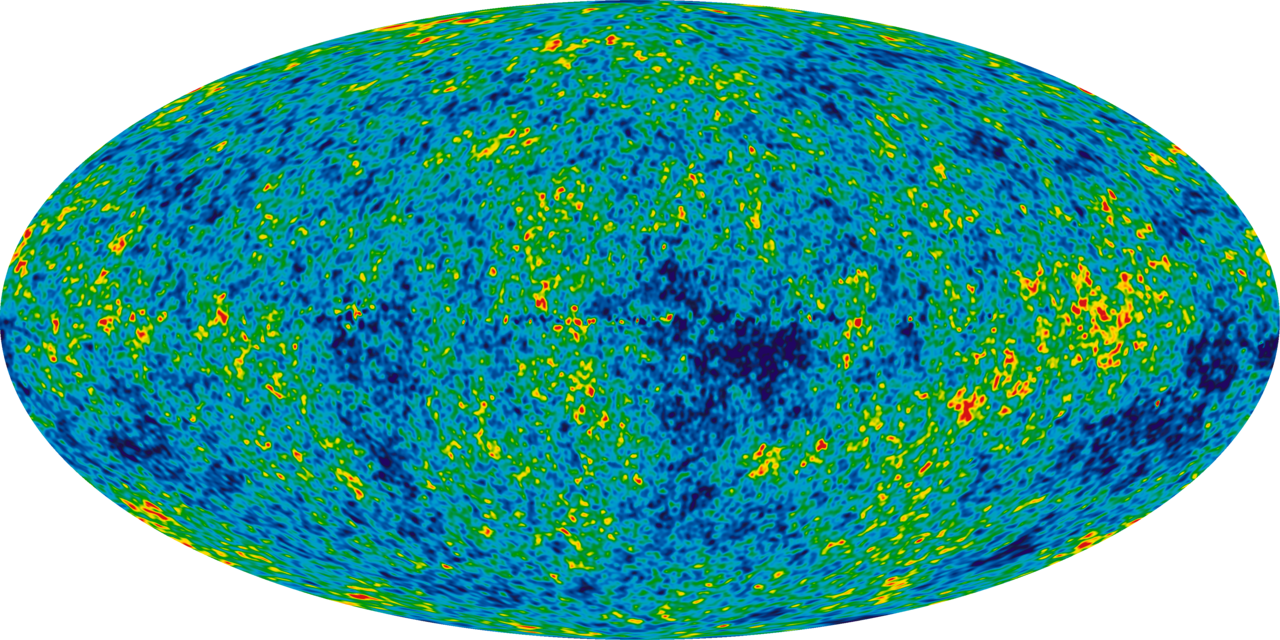
The age of the Universe is not measured directly: what is measured is the speed at which galaxies are receding (the Hubble constant, written H₀), and from there one works back in time. The trouble is that the two main methods of measurement do not give the same result.
| Method | Target observed | Expansion rate (H₀)* |
|---|---|---|
| Early Universe | Light of the cosmic microwave background | 67.4 |
| Nearby Universe | Variable stars and supernovae | ~ 73 |
Sources for the table14
(Unit: km/s/Mpc. What matters is the gap between the two values.)
The gap is larger than the margins of error: the Planck team already put it at 3.6 times the uncertainty. The 13.8 billion years are calculated from the early-Universe value. If the local value prevails, either the age estimate or the model itself will have to be revised.15
An error sought in vain
Suspicion first fell on a bias in the local measurements: neighbouring stars confused with the Cepheids, for lack of sufficient resolution. The James Webb Space Telescope, far sharper than Hubble, observed more than a thousand Cepheids and ruled out this explanation — the team considers it rejected with greater confidence than that of the tension itself.16
Another team, however, using the same telescope and other types of stars, finds an intermediate value, 70.4, which it considers consistent with the standard model without new physics. The debate remains open.17
A recent review counts more than a dozen ways of measuring H₀, all of which should agree. Their values cluster into two camps, one around 68, the other around 73. That leaves only three possible outcomes, none of which commands a consensus:18
- A systematic error still invisible in the data or in their interpretation;
- A change to the physics of the very earliest times;
- Or a global modification of the model, touching its most fundamental assumptions.19
What remains for us to discover
What remains unknown about the Universe is still immense. The disagreement over H₀ is one example: two ways of measuring, both careful, that refuse to agree. Researchers had been looking for a deviation from the standard model for twenty years; the one they may have found, three of them write, makes them wish they could put the genie back in the bottle.20
This is not a weakness of science: it is precisely the frontier where it is at work today.
Note 1
On 28 March 1949 Hoyle gave a twenty-minute's talk on the new cosmological theory to BBC's Third Programme […] This is the origin of the cosmological term “big bang,” which Hoyle mentioned three times. At the end of his talk, Hoyle made it clear that he found this kind of theory unacceptable on both scientific and philosophical grounds
Kragh, Helge, “What’s in a Name: History and Meanings of the Term "Big Bang"”, preprint, 2013
Note 2
Ironically, Hoyle deeply disliked the idea of a Big Bang and remained, until his death in 2001, a staunch critic of mainstream Big Bang cosmology.
Kragh, Helge, “How did the Big Bang get its name? Here’s the real story”, Nature, vol. 627, 25 March 2024, p. 726-728
Note 3
it became common to see Hoyle's neologism as an attempt to make the idea of an explosion universe […] sound ridiculous
Kragh, Helge, “What’s in a Name: History and Meanings of the Term "Big Bang"”, preprint, 2013
Note 4
there is no documentation in the historical records for this often repeated view
Kragh, Helge, “What’s in a Name: History and Meanings of the Term "Big Bang"”, preprint, 2013
he later insisted that he had not thought of it in a derogatory sense
Kragh, Helge, “What’s in a Name: History and Meanings of the Term "Big Bang"”, preprint, 2013
Note 5
I was constantly striving over the radio – where I had no visual aids, nothing except the spoken word – for visual images.
Kragh, Helge, “What’s in a Name: History and Meanings of the Term "Big Bang"”, preprint, 2013
This is the origin of the cosmological term "big bang," which Hoyle mentioned three times.
Kragh, Helge, “What’s in a Name: History and Meanings of the Term "Big Bang"”, preprint, 2013
very few of them paid attention to the name for the exploding universe that Hoyle had so casually invented
Kragh, Helge, “What’s in a Name: History and Meanings of the Term "Big Bang"”, preprint, 2013
Astronomer Fred Hoyle supposedly coined the catchy term to ridicule the theory of the Universe's origins — 75 years on, it's time to set the record straight.
Kragh, Helge, “How did the Big Bang get its name? Here’s the real story”, Nature, vol. 627, 25 March 2024, p. 726-728
Note 6
the big bang creation process was "irrational" and outside science
Kragh, Helge, “What’s in a Name: History and Meanings of the Term "Big Bang"”, preprint, 2013
remained, until his death in 2001, a staunch critic of mainstream Big Bang cosmology
Kragh, Helge, “How did the Big Bang get its name? Here’s the real story”, Nature, vol. 627, 25 March 2024, p. 726-728
Note 7
Words are like harpoons […] Once they go in, they are very hard to pull out.
Kragh, Helge, “How did the Big Bang get its name? Here’s the real story”, Nature, vol. 627, 25 March 2024, p. 726-728
“Words are like harpoons,” UK physicist and astronomer Fred Hoyle told an interviewer in 1995. “Once they go in, they are very hard to pull out.”
Kragh, Helge, “How did the Big Bang get its name? Here’s the real story”, Nature, vol. 627, 25 March 2024, p. 726-728, paywalled
Note 8
Between 1950 and 1965 he did not refer to Big Bang at all.
Kragh, Helge, “What’s in a Name: History and Meanings of the Term "Big Bang"”, preprint, 2013
Contrary to most other writers at the time, he referred to the term without putting it in quotation marks […] He only used the name once, and in citation marks
Kragh, Helge, “What’s in a Name: History and Meanings of the Term "Big Bang"”, preprint, 2013
Note 9
Novikov's encyclopedic Relativistic Astrophysics, avoided the term altogether. The two Russian authors based their exposition on what they called the Friedmann theory of a singular beginning of the universe, referring throughout to the "theory of the hot Universe"
Kragh, Helge, “What’s in a Name: History and Meanings of the Term "Big Bang"”, preprint, 2013
Only in the 1970s began "big bang" to be commonly used in cosmology, and it took more than another decade until it really caught on and came into wide use also outside the small field of physical cosmology.
Kragh, Helge, “What’s in a Name: History and Meanings of the Term "Big Bang"”, preprint, 2013
Note 10
He thought the term was "loaded with inappropriate connotations" such as an exploding bomb, and for this and other reasons "it is unfortunate that the term 'big bang', so casually introduced by Hoyle, has acquired the vogue which it has achieved."
Kragh, Helge, “What’s in a Name: History and Meanings of the Term "Big Bang"”, preprint, 2013
He thought the term was "loaded with inappropriate connotations" such as an exploding bomb
Kragh, Helge, “What’s in a Name: History and Meanings of the Term "Big Bang"”, preprint, 2013
Note 11
Most famously, in 1993 Sky and Telescope magazine sponsored a contest to identify a new name. […] Despite more than 13,000 submissions from participants in 41 countries
Halpern, Paul, “The Big Bang’s Identity Crisis”, NOVA, PBS, 30 May 2014
Note 12
The judges did not find any of the entries as simple and evocative as “Big Bang.” Consequently, they announced that nobody had won and that the old name would remain.
Halpern, Paul, “The Big Bang’s Identity Crisis”, NOVA, PBS, 30 May 2014
Note 13
Age [Gyr] […] 13.797 ± 0.023
Planck Collaboration, “Planck 2018 results. VI. Cosmological parameters”, Astronomy & Astrophysics, vol. 641, A6, 2020
Note 14
Hubble constant H0 = (67.4 ± 0.5) km s-1 Mpc-1
Planck Collaboration, “Planck 2018 results. VI. Cosmological parameters”, Astronomy & Astrophysics, vol. 641, A6, 2020
their values cluster around two camps: the low (68 km/s/Mpc) and high (73 km/s/Mpc) camp […] the very predictable nature of Cepheid variables as calibrators and on supernovae of type Ia (SNeIa) […] Riess et al. (2022c) to find a value of the Hubble constant of H0 = 73.04 ± 1.0(stat) ± 0.3(sys) km/s/Mpc.
Verde, Licia, Schöneberg, Nils and Gil-Marín, Héctor, “A Tale of Many H₀”, Annual Review of Astronomy and Astrophysics, vol. 62, 2024, p. 287-331
Note 15
in significant, 3.6σ, tension with local measurements of the Hubble constant (which prefer a higher value)
Planck Collaboration, “Planck 2018 results. VI. Cosmological parameters”, Astronomy & Astrophysics, vol. 641, A6, 2020
Note 16
unrecognized crowding of Cepheid photometry from HST that grows with distance
Riess, Adam G. et al., “JWST Observations Reject Unrecognized Crowding of Cepheid Photometry as an Explanation for the Hubble Tension at 8σ Confidence”, The Astrophysical Journal Letters, vol. 962, L17, 2024
We present high-definition observations with the James Webb Space Telescope of >1000 Cepheids […] The superior resolution of JWST negates crowding noise
Riess, Adam G. et al., “JWST Observations Reject Unrecognized Crowding of Cepheid Photometry as an Explanation for the Hubble Tension at 8σ Confidence”, The Astrophysical Journal Letters, vol. 962, L17, 2024
at 8.2σ, i.e., greater confidence than that of the Hubble Tension itself
Riess, Adam G. et al., “JWST Observations Reject Unrecognized Crowding of Cepheid Photometry as an Explanation for the Hubble Tension at 8σ Confidence”, The Astrophysical Journal Letters, vol. 962, L17, 2024
Note 17
Our current best (highest precision) estimate is H0 = 70.39 ± 1.22 (stat) ± 1.33 (sys) ± 0.70
Freedman, Wendy L. et al., “Status Report on the Chicago-Carnegie Hubble Program (CCHP): Measurement of the Hubble Constant Using the Hubble and James Webb Space Telescopes”, preprint, March 2025
Our results are consistent with the current standard LambdaCDM model, without the need for the inclusion of additional new physics.
Freedman, Wendy L. et al., “Status Report on the Chicago-Carnegie Hubble Program (CCHP): Measurement of the Hubble Constant Using the Hubble and James Webb Space Telescopes”, preprint, March 2025
Note 18
We have counted more than a dozen H0's which are expected to agree
Verde, Licia, Schöneberg, Nils and Gil-Marín, Héctor, “A Tale of Many H₀”, Annual Review of Astronomy and Astrophysics, vol. 62, 2024, p. 287-331
their values cluster around two camps: the low (68 km/s/Mpc) and high (73 km/s/Mpc) camp
Verde, Licia, Schöneberg, Nils and Gil-Marín, Héctor, “A Tale of Many H₀”, Annual Review of Astronomy and Astrophysics, vol. 62, 2024, p. 287-331
None of these three options has the consensus of the community.
Verde, Licia, Schöneberg, Nils and Gil-Marín, Héctor, “A Tale of Many H₀”, Annual Review of Astronomy and Astrophysics, vol. 62, 2024, p. 287-331
Note 19
Beyond systematics in the data/analysis, if the model is incorrect there are only two viable ways to "fix" it
Verde, Licia, Schöneberg, Nils and Gil-Marín, Héctor, “A Tale of Many H₀”, Annual Review of Astronomy and Astrophysics, vol. 62, 2024, p. 287-331
by changing the early time (z ≳ 1100) physics […] or by a global modification, possibly touching the model's fundamental assumptions
Verde, Licia, Schöneberg, Nils and Gil-Marín, Héctor, “A Tale of Many H₀”, Annual Review of Astronomy and Astrophysics, vol. 62, 2024, p. 287-331
Note 20
The research community has been actively looking for deviations from ΛCDM for two decades; the one we might have found makes us wish we could put the genie back in the bottle.
Verde, Licia, Schöneberg, Nils and Gil-Marín, Héctor, “A Tale of Many H₀”, Annual Review of Astronomy and Astrophysics, vol. 62, 2024, p. 287-331
Notes and sources
- ↑
Passage The name “Big Bang” was first uttered on 28 March 1949, on British radio, by an astronomer who did not believe in the theory.
On 28 March 1949 Hoyle gave a twenty-minute's talk on the new cosmological theory to BBC's Third Programme […] This is the origin of the cosmological term “big bang,” which Hoyle mentioned three times. At the end of his talk, Hoyle made it clear that he found this kind of theory unacceptable on both scientific and philosophical grounds
Source Kragh, Helge, “What’s in a Name: History and Meanings of the Term "Big Bang"”, preprint, 2013, § 4 (“Hoyle’s big bang – not a big deal”).
Open access open the source · checked on 9 September 2026
- ↑
Passage His name was Fred Hoyle. He detested the idea of a Big Bang, and he criticised it until his death, in 2001.
Ironically, Hoyle deeply disliked the idea of a Big Bang and remained, until his death in 2001, a staunch critic of mainstream Big Bang cosmology.
Source Kragh, Helge, “How did the Big Bang get its name? Here’s the real story”, Nature, vol. 627, 25 March 2024, p. 726-728, first paragraph of the body of the article.
Paywalled open the source · checked on 9 September 2026
- ↑
Passage Almost everywhere, one reads that Hoyle coined the expression in mockery
it became common to see Hoyle's neologism as an attempt to make the idea of an explosion universe […] sound ridiculous
Source Kragh, Helge, “What’s in a Name: History and Meanings of the Term "Big Bang"”, preprint, 2013, § 4.
Open access open the source · checked on 9 September 2026
- ↑
Passage The historian of science Helge Kragh finds no solid evidence that Hoyle meant to mock the theory.
there is no documentation in the historical records for this often repeated view
Source Kragh, Helge, “What’s in a Name: History and Meanings of the Term "Big Bang"”, preprint, 2013, § 8, conclusions.
Open access open the source · checked on 9 September 2026
Passage Hoyle himself always denied any such intention.
he later insisted that he had not thought of it in a derogatory sense
Source Kragh, Helge, “What’s in a Name: History and Meanings of the Term "Big Bang"”, preprint, 2013, § 4.
Open access open the source · checked on 9 September 2026
- ↑
Passage On the radio, Hoyle had only the spoken word, with no pictures or diagrams, and he was constantly searching for mental images: this is what he himself explained in 1989.
I was constantly striving over the radio – where I had no visual aids, nothing except the spoken word – for visual images.
Source Kragh, Helge, “What’s in a Name: History and Meanings of the Term "Big Bang"”, preprint, 2013, § 4, interview with Alan Lightman, 1989.
Open access open the source · checked on 9 September 2026
Passage He dropped the expression in passing, three times in a twenty-minute talk.
This is the origin of the cosmological term "big bang," which Hoyle mentioned three times.
Source Kragh, Helge, “What’s in a Name: History and Meanings of the Term "Big Bang"”, preprint, 2013, § 4.
Open access open the source · checked on 9 September 2026
Passage Critics at the time barely noticed the word.
very few of them paid attention to the name for the exploding universe that Hoyle had so casually invented
Source Kragh, Helge, “What’s in a Name: History and Meanings of the Term "Big Bang"”, preprint, 2013, § 4.
Open access open the source · checked on 9 September 2026
Passage Kragh returned to the question in the journal Nature in 2024, for the expression’s 75th anniversary.
Astronomer Fred Hoyle supposedly coined the catchy term to ridicule the theory of the Universe's origins — 75 years on, it's time to set the record straight.
Source Kragh, Helge, “How did the Big Bang get its name? Here’s the real story”, Nature, vol. 627, 25 March 2024, p. 726-728, standfirst of the article.
Paywalled open the source · checked on 9 September 2026
- ↑
Passage He called it “irrational” in that very talk
the big bang creation process was "irrational" and outside science
Source Kragh, Helge, “What’s in a Name: History and Meanings of the Term "Big Bang"”, preprint, 2013, § 4.
Open access open the source · checked on 9 September 2026
Passage he remained an opponent of it until his death in 2001
remained, until his death in 2001, a staunch critic of mainstream Big Bang cosmology
Source Kragh, Helge, “How did the Big Bang get its name? Here’s the real story”, Nature, vol. 627, 25 March 2024, p. 726-728, first paragraph.
Paywalled open the source · checked on 9 September 2026
- ↑
Passage words are like harpoons — once they go in, they are very hard to pull out
Words are like harpoons […] Once they go in, they are very hard to pull out.
Source Kragh, Helge, “How did the Big Bang get its name? Here’s the real story”, Nature, vol. 627, 25 March 2024, p. 726-728, first paragraph (1995 interview).
Paywalled open the source · checked on 9 September 2026
Passage He himself, in 1995, summed up what had happened to him with a neat phrase
“Words are like harpoons,” UK physicist and astronomer Fred Hoyle told an interviewer in 1995. “Once they go in, they are very hard to pull out.”
Source Kragh, Helge, “How did the Big Bang get its name? Here’s the real story”, Nature, vol. 627, 25 March 2024, p. 726-728, paywalled, first paragraph of the article.
Paywalled open the source · checked on 25 October 2026
- ↑
Passage Between 1950 and 1965, Hoyle no longer used it at all
Between 1950 and 1965 he did not refer to Big Bang at all.
Source Kragh, Helge, “What’s in a Name: History and Meanings of the Term "Big Bang"”, preprint, 2013, § 8, conclusions.
Open access open the source · checked on 9 September 2026
Passage physicists were still writing it in quotation marks in the 1960s
Contrary to most other writers at the time, he referred to the term without putting it in quotation marks […] He only used the name once, and in citation marks
Source Kragh, Helge, “What’s in a Name: History and Meanings of the Term "Big Bang"”, preprint, 2013, § 6 (Gardner 1962; Peebles 1966).
Open access open the source · checked on 9 September 2026
- ↑
Passage In an encyclopaedic treatise on astrophysics, two Russian authors do without it entirely: they speak of a singular beginning of the universe, and use throughout the phrase “theory of the hot Universe”.
Novikov's encyclopedic Relativistic Astrophysics, avoided the term altogether. The two Russian authors based their exposition on what they called the Friedmann theory of a singular beginning of the universe, referring throughout to the "theory of the hot Universe"
Source Kragh, Helge, “What’s in a Name: History and Meanings of the Term "Big Bang"”, preprint, 2013, § 6 (“Microwaves and the big bang”).
Open access open the source · checked on 9 September 2026
Passage The word only really spread in the 1970s, and only much later among the general public.
Only in the 1970s began "big bang" to be commonly used in cosmology, and it took more than another decade until it really caught on and came into wide use also outside the small field of physical cosmology.
Source Kragh, Helge, “What’s in a Name: History and Meanings of the Term "Big Bang"”, preprint, 2013, § 8, conclusions.
Open access open the source · checked on 9 September 2026
- ↑
Passage The astronomer George McVittie considered the term “loaded with inappropriate connotations” — that of an exploding bomb — and regretted that an expression introduced so casually had enjoyed such success.
He thought the term was "loaded with inappropriate connotations" such as an exploding bomb, and for this and other reasons "it is unfortunate that the term 'big bang', so casually introduced by Hoyle, has acquired the vogue which it has achieved."
Source Kragh, Helge, “What’s in a Name: History and Meanings of the Term "Big Bang"”, preprint, 2013, § 6 (“A catchy name that didn’t catch on”), quoting McVittie 1974.
Open access open the source · checked on 9 September 2026
Passage that of an exploding bomb
He thought the term was "loaded with inappropriate connotations" such as an exploding bomb
Source Kragh, Helge, “What’s in a Name: History and Meanings of the Term "Big Bang"”, preprint, 2013, quoting McVittie 1974, p. 260.
Open access open the source · checked on 9 September 2026
- ↑
Passage In 1993, a major science magazine launched a worldwide contest to rename the Big Bang. It received more than thirteen thousand entries from forty-one countries.
Most famously, in 1993 Sky and Telescope magazine sponsored a contest to identify a new name. […] Despite more than 13,000 submissions from participants in 41 countries
Source Halpern, Paul, “The Big Bang’s Identity Crisis”, NOVA, PBS, 30 May 2014, article on the renaming contest.
Open access open the source · checked on 9 September 2026
- ↑
Passage The jury chose none of them […] and declared that the contest had no winner.
The judges did not find any of the entries as simple and evocative as “Big Bang.” Consequently, they announced that nobody had won and that the old name would remain.
Source Halpern, Paul, “The Big Bang’s Identity Crisis”, NOVA, PBS, 30 May 2014, article on the renaming contest.
Open access open the source · checked on 9 September 2026
- ↑
Passage The age of the Universe is often given as an established fact: 13.8 billion years.
Age [Gyr] […] 13.797 ± 0.023
Source Planck Collaboration, “Planck 2018 results. VI. Cosmological parameters”, Astronomy & Astrophysics, vol. 641, A6, 2020, table 2, base ΛCDM, column TT,TE,EE+lowE+lensing.
Open access open the source · checked on 9 September 2026
- ↑
Passage Early Universe · Light of the cosmic microwave background · 67.4
Hubble constant H0 = (67.4 ± 0.5) km s-1 Mpc-1
Source Planck Collaboration, “Planck 2018 results. VI. Cosmological parameters”, Astronomy & Astrophysics, vol. 641, A6, 2020, abstract.
Open access open the source · checked on 9 September 2026
Passage Nearby Universe · Variable stars and supernovae · ~ 73
their values cluster around two camps: the low (68 km/s/Mpc) and high (73 km/s/Mpc) camp […] the very predictable nature of Cepheid variables as calibrators and on supernovae of type Ia (SNeIa) […] Riess et al. (2022c) to find a value of the Hubble constant of H0 = 73.04 ± 1.0(stat) ± 0.3(sys) km/s/Mpc.
Source Verde, Licia, Schöneberg, Nils and Gil-Marín, Héctor, “A Tale of Many H₀”, Annual Review of Astronomy and Astrophysics, vol. 62, 2024, p. 287-331, abstract; § 2.1 “Building the standard direct distance ladder”, including the paragraph “Third rung of the ladder”.
Open access open the source · checked on 9 September 2026
- ↑
Passage The gap is larger than the margins of error: the Planck team already put it at 3.6 times the uncertainty.
in significant, 3.6σ, tension with local measurements of the Hubble constant (which prefer a higher value)
Source Planck Collaboration, “Planck 2018 results. VI. Cosmological parameters”, Astronomy & Astrophysics, vol. 641, A6, 2020, abstract.
Open access open the source · checked on 9 September 2026
- ↑
Passage neighbouring stars confused with the Cepheids, for lack of sufficient resolution
unrecognized crowding of Cepheid photometry from HST that grows with distance
Source Riess, Adam G. et al., “JWST Observations Reject Unrecognized Crowding of Cepheid Photometry as an Explanation for the Hubble Tension at 8σ Confidence”, The Astrophysical Journal Letters, vol. 962, L17, 2024, abstract.
Open access open the source · checked on 9 September 2026
Passage The James Webb Space Telescope, far sharper than Hubble, observed more than a thousand Cepheids
We present high-definition observations with the James Webb Space Telescope of >1000 Cepheids […] The superior resolution of JWST negates crowding noise
Source Riess, Adam G. et al., “JWST Observations Reject Unrecognized Crowding of Cepheid Photometry as an Explanation for the Hubble Tension at 8σ Confidence”, The Astrophysical Journal Letters, vol. 962, L17, 2024, abstract.
Open access open the source · checked on 9 September 2026
Passage the team considers it rejected with greater confidence than that of the tension itself
at 8.2σ, i.e., greater confidence than that of the Hubble Tension itself
Source Riess, Adam G. et al., “JWST Observations Reject Unrecognized Crowding of Cepheid Photometry as an Explanation for the Hubble Tension at 8σ Confidence”, The Astrophysical Journal Letters, vol. 962, L17, 2024, abstract.
Open access open the source · checked on 9 September 2026
- ↑
Passage Another team, however, using the same telescope and other types of stars, finds an intermediate value, 70.4
Our current best (highest precision) estimate is H0 = 70.39 ± 1.22 (stat) ± 1.33 (sys) ± 0.70
Source Freedman, Wendy L. et al., “Status Report on the Chicago-Carnegie Hubble Program (CCHP): Measurement of the Hubble Constant Using the Hubble and James Webb Space Telescopes”, preprint, March 2025, abstract.
Open access open the source · checked on 9 September 2026
Passage which it considers consistent with the standard model without new physics
Our results are consistent with the current standard LambdaCDM model, without the need for the inclusion of additional new physics.
Source Freedman, Wendy L. et al., “Status Report on the Chicago-Carnegie Hubble Program (CCHP): Measurement of the Hubble Constant Using the Hubble and James Webb Space Telescopes”, preprint, March 2025, abstract.
Open access open the source · checked on 9 September 2026
- ↑
Passage A recent review counts more than a dozen ways of measuring H₀, all of which should agree.
We have counted more than a dozen H0's which are expected to agree
Source Verde, Licia, Schöneberg, Nils and Gil-Marín, Héctor, “A Tale of Many H₀”, Annual Review of Astronomy and Astrophysics, vol. 62, 2024, p. 287-331, abstract.
Open access open the source · checked on 9 September 2026
Passage Their values cluster into two camps, one around 68, the other around 73.
their values cluster around two camps: the low (68 km/s/Mpc) and high (73 km/s/Mpc) camp
Source Verde, Licia, Schöneberg, Nils and Gil-Marín, Héctor, “A Tale of Many H₀”, Annual Review of Astronomy and Astrophysics, vol. 62, 2024, p. 287-331, abstract.
Open access open the source · checked on 9 September 2026
Passage none of which commands a consensus
None of these three options has the consensus of the community.
Source Verde, Licia, Schöneberg, Nils and Gil-Marín, Héctor, “A Tale of Many H₀”, Annual Review of Astronomy and Astrophysics, vol. 62, 2024, p. 287-331, abstract.
Open access open the source · checked on 9 September 2026
- ↑
Passage A systematic error still invisible in the data or in their interpretation
Beyond systematics in the data/analysis, if the model is incorrect there are only two viable ways to "fix" it
Source Verde, Licia, Schöneberg, Nils and Gil-Marín, Héctor, “A Tale of Many H₀”, Annual Review of Astronomy and Astrophysics, vol. 62, 2024, p. 287-331, abstract.
Open access open the source · checked on 9 September 2026
Passage A change to the physics of the very earliest times; or a global modification of the model, touching its most fundamental assumptions
by changing the early time (z ≳ 1100) physics […] or by a global modification, possibly touching the model's fundamental assumptions
Source Verde, Licia, Schöneberg, Nils and Gil-Marín, Héctor, “A Tale of Many H₀”, Annual Review of Astronomy and Astrophysics, vol. 62, 2024, p. 287-331, abstract.
Open access open the source · checked on 9 September 2026
- ↑
Passage Researchers had been looking for a deviation from the standard model for twenty years; the one they may have found, three of them write, makes them wish they could put the genie back in the bottle.
The research community has been actively looking for deviations from ΛCDM for two decades; the one we might have found makes us wish we could put the genie back in the bottle.
Source Verde, Licia, Schöneberg, Nils and Gil-Marín, Héctor, “A Tale of Many H₀”, Annual Review of Astronomy and Astrophysics, vol. 62, 2024, p. 287-331, abstract.
Open access open the source · checked on 9 September 2026
Bibliography
7
- Freedman, Wendy L. et al., “Status Report on the Chicago-Carnegie Hubble Program (CCHP): Measurement of the Hubble Constant Using the Hubble and James Webb Space Telescopes”, preprint, March 2025, open access (intermediate value of 70.4 and consistency with the standard model). https://arxiv.org/abs/2408.06153
- Halpern, Paul, “The Big Bang’s Identity Crisis”, NOVA, PBS, 30 May 2014, open access (the 1993 contest: more than thirteen thousand entries from forty-one countries, and no winner). https://www.pbs.org/wgbh/nova/article/the-big-bangs-identity-crisis
- Kragh, Helge, “What’s in a Name: History and Meanings of the Term "Big Bang"”, preprint, 2013, open access (date and content of the talk, absence of evidence of mockery, disappearance of the word between 1950 and 1965, McVittie’s judgement). https://arxiv.org/abs/1301.0219
- Kragh, Helge, “How did the Big Bang get its name? Here’s the real story”, Nature, vol. 627, 25 March 2024, p. 726-728, paywalled (the word’s 75th anniversary, the harpoon quotation, Hoyle’s opposition until his death in 2001). https://doi.org/10.1038/d41586-024-00894-z
- Planck Collaboration, “Planck 2018 results. VI. Cosmological parameters”, Astronomy & Astrophysics, vol. 641, A6, 2020, open access (H₀ = 67.4; age of 13.8 billion years; 3.6 σ tension with local measurements). https://arxiv.org/abs/1807.06209
- Riess, Adam G. et al., “JWST Observations Reject Unrecognized Crowding of Cepheid Photometry as an Explanation for the Hubble Tension at 8σ Confidence”, The Astrophysical Journal Letters, vol. 962, L17, 2024, open access (more than a thousand Cepheids observed; the crowding hypothesis is rejected). https://arxiv.org/abs/2401.04773
- Verde, Licia, Schöneberg, Nils and Gil-Marín, Héctor, “A Tale of Many H₀”, Annual Review of Astronomy and Astrophysics, vol. 62, 2024, p. 287-331, open access (more than a dozen measurements, two camps, the three possible outcomes). https://arxiv.org/abs/2311.13305
Spotted an error or have a doubt? Write to us.