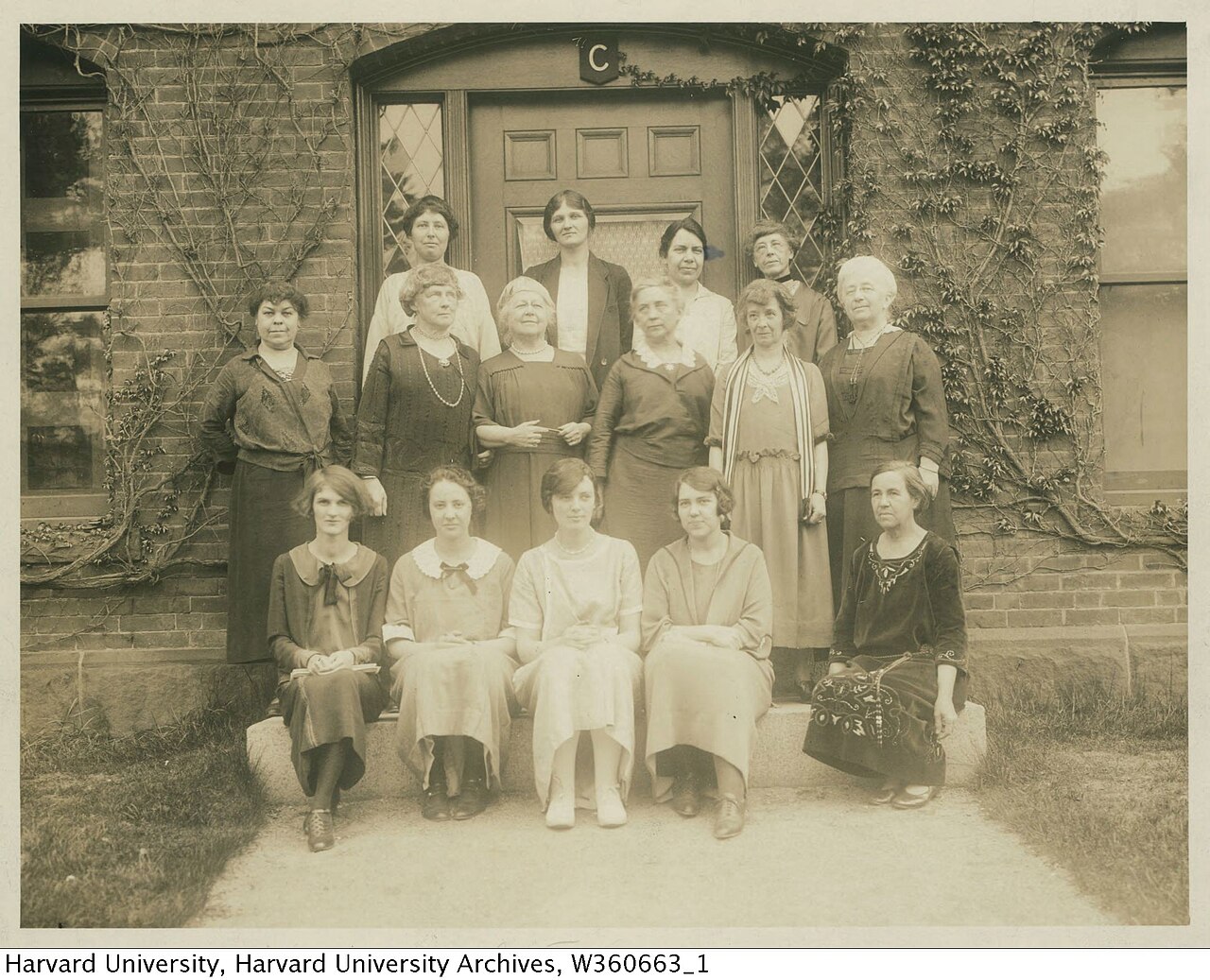

This page explains what stars are made of, the historical discovery of their composition and the exact origin of the atoms that make up our world and our bodies. (How a star is born and dies will be covered in detail later in this chapter).
In 1925, a young student discovers what stars are made of. Then she writes, in her own thesis, that her result is probably not real.1
She was right, and she knew it.
What was believed before
Astronomers thought that stars had roughly the same composition as the Earth: plenty of iron, rock, the same elements in comparable proportions. Simply much hotter.
The hypothesis seemed reasonable: the lines of elements known on Earth were observed in the light of the Sun, and they seemed to point the same way.
What Cecilia Payne understood
She works on the spectra of stars — light split into colours, in which dark lines appear that reveal the elements present.2
To them she applies a brand-new line of reasoning, borrowed from the Indian physicist Meghnad Saha, who had just established how heat strips atoms of their electrons. The theory was hardly four years old and was far from universally accepted.3
From it she deduces the following: the dark lines visible in a star’s light do not measure the number of atoms present, but only the number of atoms that are in the state required to absorb that precise colour. It is the heat that sets this proportion. Once this effect is corrected for, the weakness of the hydrogen lines no longer means “there is little of it”.
Her conclusion: hydrogen dominates the atmospheres of the stars.4
She was right. The values accepted today for the Sun, by mass, are as follows: about seventy-four per cent hydrogen, twenty-five per cent helium, and barely more than one per cent for absolutely everything else — including almost everything that makes up the human body. Seven elements alone make up 99.8% of the Sun’s mass. The “almost” refers to the body’s hydrogen: the only part of ourselves older than the stars, as we shall see below.5
What happened
Her thesis is reviewed externally by Henry Norris Russell, the influential Princeton astronomer — the former teacher of Harlow Shapley, who was then director of the Harvard observatory.6
Her measurement of temperatures is not at issue. But her reviewers judge that she goes beyond what her data prove, and she has to moderate her most disturbing conclusion: that hydrogen dominates the atmospheres of the stars.7
She gives way. In the published version, she writes that these quantities of hydrogen and helium are improbably high and almost certainly not real.
But she leaves all her calculations in place.
The historian David DeVorkin, who has studied this case closely, analyses it as follows: she gave way in a manner designed to record for posterity that she was the first to make this observation — right or wrong.8
This is not the act of a researcher reduced to silence, but that of someone who yields on form but keeps the evidence.
1929: Russell reaches the same result
In 1929, Russell publishes a long study, by another method, and reaches the same conclusion: hydrogen dominates.9
Four years have passed. The heart of the story fits in one sentence: the man who could validate this result did not believe it, and he had to arrive at it himself for it to be accepted.
What can be established
This story is widely told, and its most common version goes beyond what can be established.
One often reads that her discovery was “stolen” from her. We will not write that: we have found nothing that would establish it, and the historian who has worked most on this case describes something else — a demand for evidence, applied by reviewers who found the conclusion too strong for the data.10
A precise figure also circulates: Russell’s paper is said to have received about three times as many citations as her thesis. This figure has not been found in any historian’s work, any bibliometric study or any biography. A number that looks precise but cannot be traced to any source is worse than no number at all: it borrows the authority of a measurement without having made one.
So what should we remember?
This, which is established and is enough: a correct discovery was delayed by four years because those who could validate it did not believe it. The researcher who had made it had to write, in her own hand, that her result was probably not real — writing it in such a way that posterity would know who had seen it first.
This story is more interesting than a theft. It also has the merit of being verifiable.
Where the atoms we are made of come from
The phrase is famous: “we are made of stardust”.
It is true. It is also incomplete, and dated.
Three origins must be distinguished, and it is on the third that knowledge has changed.
One. Hydrogen and helium, with a little lithium, formed in the first minutes of the Universe. They never needed a star.
Two. From carbon up to iron, the elements are made by fusion, inside stars. It is for these that the phrase holds true.
Three. Beyond iron, fusion no longer produces energy — it consumes it. Another mechanism is needed.
This third case is not a marginal exception: half of all the elements heavier than iron were made by the fastest version of this mechanism.11
The mechanism and the origin of heavy elements
To go beyond iron, nuclei must capture neutrons. This capture can happen slowly, in the envelope of certain ageing stars. Or very rapidly — this is the “r-process”, which requires an enormous neutron flux.12
The theory of this rapid process was worked out six decades ago. But where does it happen? The question remained under debate all that time.13
Models and circumstantial evidence pointed to one candidate: the merger of two neutron stars — the meeting of two dead stars.14
In 2017, such a merger was detected through the gravitational waves it sent out into space. In the days that followed, a glow appeared at the same spot: a “kilonova”, the first for which detailed spectra were recorded. Re-examining them in 2019, a team identified strontium.15
It was the missing piece: a freshly made element, identified at the very site where it was made.
What this means for us
Some of our atoms do not come from stars in the ordinary sense. They come from the meeting of two dead stars.16
The same detection taught another lesson along the way: neutron stars are indeed made of neutron-rich matter, as their name implied without proving it.17
The phrase “stardust” dates from the mid-twentieth century, when fusion in stars was understood, and holds for the second origin. It has not kept up with the discovery of the third. That is no reason to abandon it: it is a reason to complete it rather than repeat it.
Note 1
this led her to realize that the light elements hydrogen and helium dominated in the atmospheres of the Sun and stars; and how she was counseled to reject this conclusion in her thesis by her external advisor, Henry Norris Russell (1877–1957) of Princeton, in January 1925.
DeVorkin, David H., “Extraordinary Claims Require Extraordinary Evidence: C. H. Payne, H. N. Russell and Standards of Evidence in Early Quantitative Stellar Spectroscopy”, Journal of Astronomical History and Heritage, vol. 13, no. 2, 2010, p. 139-144
Note 2
The ionization equilibrium theory of Meghnad Saha was hardly four years old, and still far from general acceptance, when a graduate student at Harvard University, Cecilia H. Payne, applied it to calibrate the Harvard spectral sequence as a temperature sequence.
DeVorkin, David H., “Extraordinary Claims Require Extraordinary Evidence: C. H. Payne, H. N. Russell and Standards of Evidence in Early Quantitative Stellar Spectroscopy”, Journal of Astronomical History and Heritage, vol. 13, no. 2, 2010, p. 139-144
Note 3
The ionization equilibrium theory of Meghnad Saha was hardly four years old, and still far from general acceptance
DeVorkin, David H., “Extraordinary Claims Require Extraordinary Evidence: C. H. Payne, H. N. Russell and Standards of Evidence in Early Quantitative Stellar Spectroscopy”, Journal of Astronomical History and Heritage, vol. 13, no. 2, 2010, p. 139-144
Note 4
her most provocative finding: that hydrogen dominated the atmospheres of the stars
DeVorkin, David H., “Extraordinary Claims Require Extraordinary Evidence: C. H. Payne, H. N. Russell and Standards of Evidence in Early Quantitative Stellar Spectroscopy”, Journal of Astronomical History and Heritage, vol. 13, no. 2, 2010, p. 139-144
Note 5
With the solar chemical composition we recommend here, the mass fractions of H, He and metals in the present-day photosphere become X = 0.7381, Y = 0.2485 and Z = 0.0134.
Asplund, Martin, Grevesse, Nicolas, Sauval, A. Jacques and Scott, Pat, “The Chemical Composition of the Sun”, Annual Review of Astronomy and Astrophysics, vol. 47, 2009, p. 481-522
Thus, 7 elements contribute 99.8% to the Sun's mass
Bergemann, Maria, Lodders, Katharina and Palme, Herbert, “The Chemical Composition of the Sun”, preprint, 2025
Note 6
her external reviewer for her Ph.D., Shapley's former teacher, the influential Princeton astronomer, Henry Norris Russell […] When Shapley (Figure 2) assumed the Directorship at Harvard later that year
DeVorkin, David H., “Extraordinary Claims Require Extraordinary Evidence: C. H. Payne, H. N. Russell and Standards of Evidence in Early Quantitative Stellar Spectroscopy”, Journal of Astronomical History and Heritage, vol. 13, no. 2, 2010, p. 139-144
Note 7
Her temperature calibration was, therefore, not at issue for her mentors at Harvard
DeVorkin, David H., “Extraordinary Claims Require Extraordinary Evidence: C. H. Payne, H. N. Russell and Standards of Evidence in Early Quantitative Stellar Spectroscopy”, Journal of Astronomical History and Heritage, vol. 13, no. 2, 2010, p. 139-144
Other conclusions she drew from her analysis, moreover, went beyond the evidence, they felt, and so she had to moderate her most provocative finding
DeVorkin, David H., “Extraordinary Claims Require Extraordinary Evidence: C. H. Payne, H. N. Russell and Standards of Evidence in Early Quantitative Stellar Spectroscopy”, Journal of Astronomical History and Heritage, vol. 13, no. 2, 2010, p. 139-144
Note 8
She did so, however, in a manner that was designed to record for posterity that she was the first to make this observation, right or wrong.
DeVorkin, David H., “Extraordinary Claims Require Extraordinary Evidence: C. H. Payne, H. N. Russell and Standards of Evidence in Early Quantitative Stellar Spectroscopy”, Journal of Astronomical History and Heritage, vol. 13, no. 2, 2010, p. 139-144
Note 9
The obvious explanation—that hydrogen is far more abundant than the other elements—appears to be the only one.
Russell, Henry Norris, “On the Composition of the Sun’s Atmosphere”, The Astrophysical Journal, vol. 70, July 1929, p. 11-82
Note 10
standards of evidence […] went beyond the evidence, they felt
DeVorkin, David H., “Extraordinary Claims Require Extraordinary Evidence: C. H. Payne, H. N. Russell and Standards of Evidence in Early Quantitative Stellar Spectroscopy”, Journal of Astronomical History and Heritage, vol. 13, no. 2, 2010, p. 139-144
Note 11
Half of all of the elements in the Universe that are heavier than iron were created by rapid neutron capture.
Watson, Darach et al., “Identification of Strontium in the Merger of Two Neutron Stars”, Nature, vol. 574, 24 October 2019, p. 497-500
Note 12
this astrophysical r-process […] requires an enormous neutron flux to make the bulk of the elements
Watson, Darach et al., “Identification of Strontium in the Merger of Two Neutron Stars”, Nature, vol. 574, 24 October 2019, p. 497-500
Note 13
The theory underlying this astrophysical r-process was worked out six decades ago […] Where this happens is still debated
Watson, Darach et al., “Identification of Strontium in the Merger of Two Neutron Stars”, Nature, vol. 574, 24 October 2019, p. 497-500
Note 14
Existing models and circumstantial evidence point to neutron-star mergers as a probable r-process site
Watson, Darach et al., “Identification of Strontium in the Merger of Two Neutron Stars”, Nature, vol. 574, 24 October 2019, p. 497-500
Note 15
the neutron-star merger GW170817 by gravitational-wave detectors
Watson, Darach et al., “Identification of Strontium in the Merger of Two Neutron Stars”, Nature, vol. 574, 24 October 2019, p. 497-500
The kilonova AT2017gfo […] was the first kilonova for which detailed spectra were recorded.
Watson, Darach et al., “Identification of Strontium in the Merger of Two Neutron Stars”, Nature, vol. 574, 24 October 2019, p. 497-500
Here we report the identification of the neutron-capture element strontium in a reanalysis of these spectra.
Watson, Darach et al., “Identification of Strontium in the Merger of Two Neutron Stars”, Nature, vol. 574, 24 October 2019, p. 497-500
Note 16
establishes the origin of r-process elements in neutron-star mergers
Watson, Darach et al., “Identification of Strontium in the Merger of Two Neutron Stars”, Nature, vol. 574, 24 October 2019, p. 497-500
Note 17
shows that neutron stars are made of neutron-rich matter
Watson, Darach et al., “Identification of Strontium in the Merger of Two Neutron Stars”, Nature, vol. 574, 24 October 2019, p. 497-500
Notes and sources
- ↑
Passage In 1925, a young student discovers what stars are made of.
this led her to realize that the light elements hydrogen and helium dominated in the atmospheres of the Sun and stars; and how she was counseled to reject this conclusion in her thesis by her external advisor, Henry Norris Russell (1877–1957) of Princeton, in January 1925.
Source DeVorkin, David H., “Extraordinary Claims Require Extraordinary Evidence: C. H. Payne, H. N. Russell and Standards of Evidence in Early Quantitative Stellar Spectroscopy”, Journal of Astronomical History and Heritage, vol. 13, no. 2, 2010, p. 139-144, p. 139, § 1 (Introduction), first sentence.
Open-access abstract open the source · checked on 9 September 2026
- ↑
Passage She works on the spectra of stars
The ionization equilibrium theory of Meghnad Saha was hardly four years old, and still far from general acceptance, when a graduate student at Harvard University, Cecilia H. Payne, applied it to calibrate the Harvard spectral sequence as a temperature sequence.
Source DeVorkin, David H., “Extraordinary Claims Require Extraordinary Evidence: C. H. Payne, H. N. Russell and Standards of Evidence in Early Quantitative Stellar Spectroscopy”, Journal of Astronomical History and Heritage, vol. 13, no. 2, 2010, p. 139-144, abstract, first sentence, p. 139.
Open-access abstract open the source · checked on 24 October 2026
- ↑
Passage a brand-new line of reasoning, borrowed from the Indian physicist Meghnad Saha […] The theory was hardly four years old and was far from universally accepted.
The ionization equilibrium theory of Meghnad Saha was hardly four years old, and still far from general acceptance
Source DeVorkin, David H., “Extraordinary Claims Require Extraordinary Evidence: C. H. Payne, H. N. Russell and Standards of Evidence in Early Quantitative Stellar Spectroscopy”, Journal of Astronomical History and Heritage, vol. 13, no. 2, 2010, p. 139-144, abstract.
Open-access abstract open the source · checked on 9 September 2026
- ↑
Passage Her conclusion: hydrogen dominates the atmospheres of the stars.
her most provocative finding: that hydrogen dominated the atmospheres of the stars
Source DeVorkin, David H., “Extraordinary Claims Require Extraordinary Evidence: C. H. Payne, H. N. Russell and Standards of Evidence in Early Quantitative Stellar Spectroscopy”, Journal of Astronomical History and Heritage, vol. 13, no. 2, 2010, p. 139-144, abstract.
Open-access abstract open the source · checked on 9 September 2026
- ↑
Passage about seventy-four per cent hydrogen, twenty-five per cent helium, and barely more than one per cent for absolutely everything else
With the solar chemical composition we recommend here, the mass fractions of H, He and metals in the present-day photosphere become X = 0.7381, Y = 0.2485 and Z = 0.0134.
Source Asplund, Martin, Grevesse, Nicolas, Sauval, A. Jacques and Scott, Pat, “The Chemical Composition of the Sun”, Annual Review of Astronomy and Astrophysics, vol. 47, 2009, p. 481-522, § 3.12, “Solar metallicity”.
Open-access preprint open the source · checked on 9 September 2026
Passage Seven elements alone make up 99.8% of the Sun’s mass.
Thus, 7 elements contribute 99.8% to the Sun's mass
Source Bergemann, Maria, Lodders, Katharina and Palme, Herbert, “The Chemical Composition of the Sun”, preprint, 2025, § 4, “Solar Composition”.
Open access open the source · checked on 9 September 2026
- ↑
Passage Her thesis is reviewed externally by Henry Norris Russell, the influential Princeton astronomer — the former teacher of Harlow Shapley, who was then director of the Harvard observatory.
her external reviewer for her Ph.D., Shapley's former teacher, the influential Princeton astronomer, Henry Norris Russell […] When Shapley (Figure 2) assumed the Directorship at Harvard later that year
Source DeVorkin, David H., “Extraordinary Claims Require Extraordinary Evidence: C. H. Payne, H. N. Russell and Standards of Evidence in Early Quantitative Stellar Spectroscopy”, Journal of Astronomical History and Heritage, vol. 13, no. 2, 2010, p. 139-144, abstract; p. 141, section 3 “Applying Saha’s Theory”.
Open-access abstract open the source · checked on 9 September 2026
- ↑
Passage Her measurement of temperatures is not at issue.
Her temperature calibration was, therefore, not at issue for her mentors at Harvard
Source DeVorkin, David H., “Extraordinary Claims Require Extraordinary Evidence: C. H. Payne, H. N. Russell and Standards of Evidence in Early Quantitative Stellar Spectroscopy”, Journal of Astronomical History and Heritage, vol. 13, no. 2, 2010, p. 139-144, abstract.
Open-access abstract open the source · checked on 9 September 2026
Passage her reviewers judge that she goes beyond what her data prove, and she has to moderate her most disturbing conclusion
Other conclusions she drew from her analysis, moreover, went beyond the evidence, they felt, and so she had to moderate her most provocative finding
Source DeVorkin, David H., “Extraordinary Claims Require Extraordinary Evidence: C. H. Payne, H. N. Russell and Standards of Evidence in Early Quantitative Stellar Spectroscopy”, Journal of Astronomical History and Heritage, vol. 13, no. 2, 2010, p. 139-144, abstract.
Open-access abstract open the source · checked on 9 September 2026
- ↑
Passage she gave way in a manner designed to record for posterity that she was the first to make this observation — right or wrong
She did so, however, in a manner that was designed to record for posterity that she was the first to make this observation, right or wrong.
Source DeVorkin, David H., “Extraordinary Claims Require Extraordinary Evidence: C. H. Payne, H. N. Russell and Standards of Evidence in Early Quantitative Stellar Spectroscopy”, Journal of Astronomical History and Heritage, vol. 13, no. 2, 2010, p. 139-144, abstract.
Open-access abstract open the source · checked on 9 September 2026
- ↑
Passage In 1929, Russell publishes a long study, by another method, and reaches the same conclusion: hydrogen dominates.
The obvious explanation—that hydrogen is far more abundant than the other elements—appears to be the only one.
Source Russell, Henry Norris, “On the Composition of the Sun’s Atmosphere”, The Astrophysical Journal, vol. 70, July 1929, p. 11-82, p. 22, section I, § 2 “Characteristics of the spectra of different elements” (see also the abstract: “This great abundance of hydrogen helps to explain a number of previously puzzling astrophysical facts.”).
Open access open the source · checked on 24 October 2026
- ↑
Passage the historian who has worked most on this case describes something else — a demand for evidence, applied by reviewers who found the conclusion too strong for the data
standards of evidence […] went beyond the evidence, they felt
Source DeVorkin, David H., “Extraordinary Claims Require Extraordinary Evidence: C. H. Payne, H. N. Russell and Standards of Evidence in Early Quantitative Stellar Spectroscopy”, Journal of Astronomical History and Heritage, vol. 13, no. 2, 2010, p. 139-144, title and abstract.
Open-access abstract open the source · checked on 9 September 2026
- ↑
Passage half of all the elements heavier than iron were made by the fastest version of this mechanism
Half of all of the elements in the Universe that are heavier than iron were created by rapid neutron capture.
Source Watson, Darach et al., “Identification of Strontium in the Merger of Two Neutron Stars”, Nature, vol. 574, 24 October 2019, p. 497-500, abstract, 1st sentence.
Open-access accepted version open the source · checked on 9 September 2026
- ↑
Passage this is the “r-process”, which requires an enormous neutron flux
this astrophysical r-process […] requires an enormous neutron flux to make the bulk of the elements
Source Watson, Darach et al., “Identification of Strontium in the Merger of Two Neutron Stars”, Nature, vol. 574, 24 October 2019, p. 497-500, abstract.
Open-access accepted version open the source · checked on 9 September 2026
- ↑
Passage The theory of this rapid process was worked out six decades ago. But where does it happen? The question remained under debate all that time.
The theory underlying this astrophysical r-process was worked out six decades ago […] Where this happens is still debated
Source Watson, Darach et al., “Identification of Strontium in the Merger of Two Neutron Stars”, Nature, vol. 574, 24 October 2019, p. 497-500, abstract.
Open-access accepted version open the source · checked on 9 September 2026
- ↑
Passage Models and circumstantial evidence pointed to one candidate: the merger of two neutron stars
Existing models and circumstantial evidence point to neutron-star mergers as a probable r-process site
Source Watson, Darach et al., “Identification of Strontium in the Merger of Two Neutron Stars”, Nature, vol. 574, 24 October 2019, p. 497-500, abstract.
Open-access accepted version open the source · checked on 9 September 2026
- ↑
Passage In 2017, such a merger was detected through the gravitational waves it sent out into space.
the neutron-star merger GW170817 by gravitational-wave detectors
Source Watson, Darach et al., “Identification of Strontium in the Merger of Two Neutron Stars”, Nature, vol. 574, 24 October 2019, p. 497-500, abstract.
Open-access accepted version open the source · checked on 9 September 2026
Passage a glow appeared at the same spot: a “kilonova”, the first for which detailed spectra were recorded
The kilonova AT2017gfo […] was the first kilonova for which detailed spectra were recorded.
Source Watson, Darach et al., “Identification of Strontium in the Merger of Two Neutron Stars”, Nature, vol. 574, 24 October 2019, p. 497-500, abstract.
Open-access accepted version open the source · checked on 9 September 2026
Passage Re-examining them in 2019, a team identified strontium.
Here we report the identification of the neutron-capture element strontium in a reanalysis of these spectra.
Source Watson, Darach et al., “Identification of Strontium in the Merger of Two Neutron Stars”, Nature, vol. 574, 24 October 2019, p. 497-500, abstract.
Open-access accepted version open the source · checked on 9 September 2026
- ↑
Passage Some of our atoms […] come from the meeting of two dead stars.
establishes the origin of r-process elements in neutron-star mergers
Source Watson, Darach et al., “Identification of Strontium in the Merger of Two Neutron Stars”, Nature, vol. 574, 24 October 2019, p. 497-500, abstract.
Open-access accepted version open the source · checked on 9 September 2026
- ↑
Passage neutron stars are indeed made of neutron-rich matter
shows that neutron stars are made of neutron-rich matter
Source Watson, Darach et al., “Identification of Strontium in the Merger of Two Neutron Stars”, Nature, vol. 574, 24 October 2019, p. 497-500, abstract.
Open-access accepted version open the source · checked on 9 September 2026
Bibliography
5
- Asplund, Martin, Grevesse, Nicolas, Sauval, A. Jacques and Scott, Pat, “The Chemical Composition of the Sun”, Annual Review of Astronomy and Astrophysics, vol. 47, 2009, p. 481-522, open-access preprint (mass fractions of hydrogen, helium and everything else). https://arxiv.org/abs/0909.0948
- Bergemann, Maria, Lodders, Katharina and Palme, Herbert, “The Chemical Composition of the Sun”, preprint, 2025, open access (the seven elements that make up 99.8% of the Sun’s mass). https://arxiv.org/abs/2503.05402
- DeVorkin, David H., “Extraordinary Claims Require Extraordinary Evidence: C. H. Payne, H. N. Russell and Standards of Evidence in Early Quantitative Stellar Spectroscopy”, Journal of Astronomical History and Heritage, vol. 13, no. 2, 2010, p. 139-144, open-access abstract (the context, the reviewers, the moderated conclusion and the way in which it was moderated). https://ui.adsabs.harvard.edu/abs/2010JAHH...13..139D/abstract
- Russell, Henry Norris, “On the Composition of the Sun’s Atmosphere”, The Astrophysical Journal, vol. 70, July 1929, p. 11-82, open access (the study that finds the predominance of hydrogen again four years later). https://ui.adsabs.harvard.edu/abs/1929ApJ....70...11R
- Watson, Darach et al., “Identification of Strontium in the Merger of Two Neutron Stars”, Nature, vol. 574, 24 October 2019, p. 497-500, open-access accepted version (half of the elements heavier than iron, the r-process, the kilonova AT2017gfo, strontium, neutron-rich matter). https://researchonline.ljmu.ac.uk/id/eprint/11782
Spotted an error or have a doubt? Write to us.