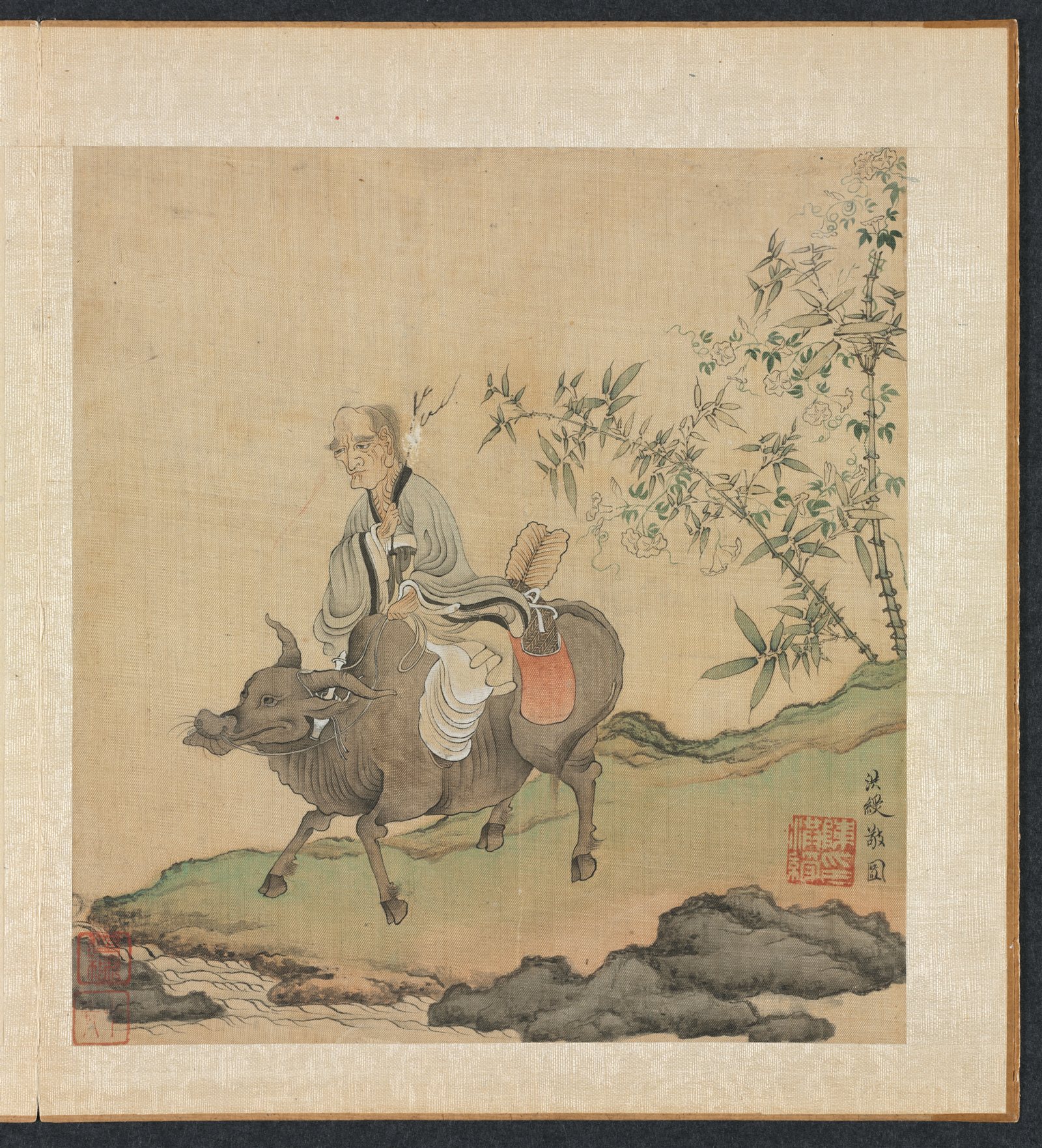
From one end of the world to the other, beliefs give very different answers. The questions, much less so.
Almost everywhere, and for a very long time, humans have devised explanations for what they did not understand, and rules for living together.
Rather than drawing up a list of the world’s religions, this page follows the questions.
First question: how to classify
The way all this is sorted deserves to be examined first, because it is not neutral.
People often speak of the “great religions”, and set apart the “beliefs” of others. What is this classification based on?
On two criteria, generally: the number of followers, and the existence of books. These two criteria did not come out of nowhere. They favour traditions that have many adherents and that write things down — and they disadvantage those that are passed on in other ways.
This is not a conspiracy but a form of sorting, and like any sorting, it produces its own results.
One observation makes this clear: a tradition without books is neither simpler nor older, nor on its way to becoming something else. It is different.
Second question: how to pass things on
Two ways of passing things on, each as demanding as the other, can be compared.
Without writing. In South Asia, very long texts were transmitted orally for centuries. To keep them from becoming distorted, people were not merely asked to repeat them: several interlocking ways of reciting them were invented — straight through, word by word, in pairs, then in braided forms in which the words come back in crossed orders. If someone forgets a word, the recitation in pairs shows a break. The error gives itself away.1
Writing, and teaching. One of the oldest places of learning still in operation today is al-Qarawiyyin, in Fez, Morocco, founded in the ninth century as a mosque and, over the centuries, turned into a major centre for the transmission of knowledge. Moroccan tradition attributes its founding to a woman, Fatima al-Fihri — an attribution we report, with its limits, in Entry 2.3, because it rests on a much later chronicle.2
Two opposite methods for one and the same requirement: that the text reach the following generations intact.
Third question: what we forbid ourselves
Almost all societies have rules about what is eaten and what is not. Some are religious, others are not.
The same holds in everyday life in France: certain animals eaten elsewhere are not eaten here, without any law forbidding it. These rules go unnoticed because they are familiar.
Where do they come from? One explanation is often put forward: the reason was supposedly hygiene, since meat used to spoil quickly.
Specialists dispute it strongly. First, because nothing at all was known about microbes at the time when these rules were laid down. Second, because the excluded animals are far from all being harmful to health: the camel, forbidden in the Bible, has long been enjoyed in the Arab world.3
An anthropologist, Mary Douglas, proposed another idea in 1966: that the excluded animals are those that do not fit neatly into the categories of the world as these societies conceive it. She made an old saying famous: dirt is matter out of place.4
Her explanation is debated as well, and in 1999, in Leviticus as Literature, she herself rejected most of it.5
So we do not know. That is an honest answer.
What matters is the shape of the trap: the hygiene explanation served to make what seemed strange look reasonable, by reducing it to something that we ourselves understand. It is the least noticeable way of being wrong about others, because we believe we are doing them a favour.
Fourth question: what is celebrated, and what is forbidden to others
A ceremony is not just a pleasant moment. It can also unsettle a ruling power, and that is worth saying.
On the northwest coast of North America, among Indigenous peoples (such as the Kwakwaka’wakw or the Haida), the potlatch is a ceremony at which wealth is given away and destroyed to mark a marriage, the passing on of a title or the naming of a child. Whoever gives a great deal gains in rank.
The government of Canada banned it for several decades, under the law that governed Indigenous peoples. Taking part was an offence. People were arrested, sometimes for dancing.6
A state, then, judged this way of doing things serious enough to outlaw it.
The potlatch continued in secret; once the ban was lifted, it was held openly again.7
Elsewhere, fire was used. In the sixteenth century, in Yucatán, Maya books were destroyed on the orders of a Spanish cleric — who himself recounted the scene in writing. Only three ancient Maya books survive today, four if one counts a long-disputed manuscript. How many there were is unknown.8
Fifth question: and those who do not believe
They deserve to be discussed, because they are numerous and often left out of this kind of page.
Many people, around the world and probably in everyone’s own circle, follow no religion. Some have never thought about it, others have considered it and decided against, and still others observe festivals and customs without believing the stories they tell.
This is not a failure to answer the opening questions, but a different answer. Nor is it a recent invention: such positions were already found in Antiquity, in India as well as in Greece.9
Philosophies, for their part, did not wait for people to stop believing in order to exist. Seeking how one should live, what is just, what can be known: this was not done only in Greece, but also in China (with Confucianism or Taoism), in India, in the Arab-Muslim world, in West Africa, and often within religious traditions themselves, by people who believed in them.10
Note 1
Le patrimoine védique rassemble de très nombreux écrits et interprétations répartis en quatre Veda couramment appelés « livres de la connaissance », bien qu’ils aient été transmis oralement. […] La valeur de cette tradition ne réside pas tant dans le riche contenu de sa littérature orale que dans les techniques ingénieuses employées par les brahmanes pour préserver les textes inchangés au fil des millénaires.
The Vedic heritage embraces a multitude of texts and interpretations collected in four Vedas, commonly referred to as “books of knowledge”, even though they have been transmitted orally. […] The value of this tradition lies not so much in the rich content of its oral literature as in the ingenious techniques employed by the Brahmin priests to preserve the texts unchanged over thousands of years.
UNESCO, “La tradition du chant védique”, Liste représentative du patrimoine culturel immatériel de l’humanité
In addition to the Padapāṭha and Saṃhitāpāṭha, the Prātiśākhya literature introduces 'modifications' (vikṛti) that are based upon the Padapāṭha, and that 'strengthen' the oral tradition, that is, minimize the chance of a single word being lost. […] At the same time, it becomes more difficult to forget a single word: for if a pair were forgotten, the continuity between the succession of pairs would show a break.
Staal, Frits, “The Fidelity of Oral Tradition and the Origins of Science”, Mededelingen der Koninklijke Nederlandse Akademie van Wetenschappen, vol. 49, no. 8, 1986
Note 2
University of Karueein […] founded in 859 AD in Fez, Morocco
Guinness World Records, “Oldest higher-learning institution”
On raconte aussi que Mohammed el-Fehery avait deux filles, Fathma Oumm el-Benïn et Meriem : Fathma bâtit la mosquée El-Kairaouyn, et Meriem la mosquée El-Andalous
It is also told that Mohammed el-Fehery had two daughters, Fathma Oumm el-Benïn and Meriem: Fathma built the El-Kairaouyn mosque, and Meriem the El-Andalous mosque
Ibn Abi Zar’, Rawd al-Qirtas, chronique de Fès
Note 3
And on the food prohibitions, Maimondies, known as Rambam, […] read into the food laws of Leviticus a logical underpinning based on sound hygiene. Rambam’s intuition of a rational basis for the food laws in Leviticus 11 has been challenged, affirmed and rechallenged over the centuries, emphasizing the difficulty in finding clear cut rational premises in the biblical classification of clean and unclean animals.
Sharon, Diane, “Sacred Distinctions”, commentary on Parashat Shemini, Jewish Theological Seminary, 28 April 1998
Despite its inherent attractiveness the hygienic explanation faces four grave difficulties.3 […] Second, it is far from clear that all unclean animals mentioned in Leviticus are harmful to health. For example, the Arabs have long enjoyed the camel and its products.
Wenham, Gordon J., “The Theology of Unclean Food”, The Evangelical Quarterly, vol. 53, no. 1, 1981, p. 6-15
Note 4
Mary Douglas, a structural anthropologist […] is well known to modern biblical scholarship for her 1966 work Purity and Danger, in which she examines the food prohibitions […] from an anthropological perspective. […] She concludes in this classic analysis that the distinctions between clean and unclean animals are based on the principle that clean animals stay well within the boundaries of their particular habitat, but unclean animals somehow cross boundaries from one habitat to another, and are thereby perceived as threatening.
Sharon, Diane, “Sacred Distinctions”, commentary on Parashat Shemini, Jewish Theological Seminary, 28 April 1998
The aphorism she used, that ‘dirt is matter out of place’, may have been borrowed, but it became memorable because of the insights she drew from it.
British Academy, “Great Thinkers: Richard Fardon FBA on Mary Douglas FBA”, podcast, introductory page
Note 5
In her influential essay "The Abominations of Leviticus," published in 1966 in the volume Purity and Danger, Mary Douglas introduced what I have chosen to call the holiness/wholeness paradigm, […] Though criticized in its details, the paradigm has been profitably elaborated and modified by biblical scholars, and core aspects of it remain influential.2
Olyan, Saul M., “Mary Douglas’s Holiness/Wholeness Paradigm: Its Potential for Insight and Its Limitations”, The Journal of Hebrew Scriptures, vol. 8, article 10, 2008
Purity and Danger was neither the first nor most recent occasion she had used Leviticus XI to illustrate anomaly and abomination […] Leviticus as Literature rejected most of this reading of the text.
Fardon, Richard, “Margaret Mary Douglas 1921–2007”, Proceedings of the British Academy, vol. 166, 2010, p. 135-158
Note 6
From 1885 to 1951, the Indigenous ceremony known as the Potlatch was banned by the federal government of Canada. […] The Indian Act was substantially revised in 1951. This revision included an end to the Potlatch ban.
Noakes, Taylor C., “Potlatch Ban”, The Canadian Encyclopedia, 14 June 2023
Every Indian or other person who engages in or assists in celebrating the Indian festival known as the ‘potlatch’ or in the Indian dance ‘tamananawas’ is guilty of a misdemeanor, and shall be liable to imprisonment… […] Application of the law led to odd situations, such as arrests for the crime of dancing.
Noakes, Taylor C., “Potlatch Ban”, The Canadian Encyclopedia, Historica Canada, 14 June 2023
Application of the law led to odd situations, such as arrests for the crime of dancing.
Noakes, Taylor C., “Potlatch Ban”, The Canadian Encyclopedia, 14 June 2023
Note 7
many Indigenous communities continued the Potlatch in secret […] Kwakwa̱ka̱’wakw Chief Mungo Martin held the first ‘legal’ Potlatch since 1885 in Victoria, British Columbia.
Noakes, Taylor C., “Potlatch Ban”, The Canadian Encyclopedia, 14 June 2023
Note 8
Diego de Landa (born 1524, Cifuentes, Spain—died 1579, Mérida, Yucatán, Mexico) was a Spanish Franciscan priest and bishop of Yucatán who is best known for his classic account of Mayan culture and language, most of which he was also responsible for destroying. […] Having determined that the precious and zealously guarded Mayan books he had been shown with great pride—precisely because of his evident empathy—contained “nothing in which there was not to be seen superstition and lies of the devil,” he ordered all of the books to be burned “…which [the Maya] regretted to an amazing degree and which caused them great affliction,” he wrote with what seems like genuine befuddlement.
Encyclopædia Britannica, article “Diego de Landa”
Dado lo anterior, el antiguo documento fue conocido como Códice Grolier, y durante décadas se consideró una falsificación, debido a su singularidad y a las misteriosas circunstancias en las que apareció a mediados de la década de 1960, como parte de una colección privada en México. […] Gracias a investigaciones científicas recientes, el Códice Maya de México ahora se considera el más antiguo de los cuatro que han pervivido, hechos por los mayas antes de la llegada de los europeos.
Given the above, the ancient document was known as the Grolier Codex, and for decades it was considered a forgery, because of its uniqueness and the mysterious circumstances in which it appeared in the mid-1960s, as part of a private collection in Mexico. […] Thanks to recent scientific research, the Maya Codex of Mexico is now considered the oldest of the four that have survived, made by the Maya before the arrival of the Europeans.
Instituto Nacional de Antropología e Historia (INAH), “El milenario Códice Maya de México protagoniza exposición en Los Ángeles”, bulletin no. 530, 18 October 2022
Note 9
The origin of the Cārvāka/Lokāyata materialist system is thus traced back to hoary antiquity,6 at the least to the first millennium BCE.7 […] The KUp (sometime after the fifth century BCE) is perhaps the first attempt to refute the heretical idea, namely, denial of the after-world, […]
Bhattacharya, Ramkrishna, “Development of Materialism in India: the pre-Cārvākas and the Cārvākas”, Esercizi Filosofici, vol. 8, 2013, p. 1-12
Although adherents and opponents alike today present it as an invention of the European Enlightenment, when the forces of science and secularism broadly challenged those of faith, disbelief in the gods, in fact, originated in a far more remote past. […] Homer’s epic poems of human striving, journeying, and passion were ancient Greece’s only “sacred texts,” but no ancient Greek thought twice about questioning or mocking his stories of the gods. Priests were functionaries rather than sources of moral or cosmological wisdom. The absence of centralized religious authority made for an extraordinary variety of perspectives on sacred matters, from the devotional to the atheos, or “godless.”
Whitmarsh, Tim, Battling the Gods: Atheism in the Ancient World, Knopf, 2015, publisher’s description (Penguin Random House)
Note 10
a superb introduction to all the world’s major philosophical and religious traditions. […] South Asian Philosophies […] Chinese Philosophies […] Philosophies of Greece, Rome and the Near East […] Islamic Philosophies
Smart, Ninian, World Philosophies, 2nd ed. revised by Oliver Leaman, Routledge, 2008, publisher’s description and table of contents
The culture of the Akan people of West Africa dates from before the 13th century. Like other long-established cultures the world over, the Akan have developed a rich conceptual system complete with metaphysical, moral, and epistemological aspects.
Wingo, Ajume, “Akan Philosophy of the Person”, Stanford Encyclopedia of Philosophy, Stanford University, 2006, revised 2024
Notes and sources
- ↑
Passage In South Asia, very long texts were transmitted orally for centuries.
Le patrimoine védique rassemble de très nombreux écrits et interprétations répartis en quatre Veda couramment appelés « livres de la connaissance », bien qu’ils aient été transmis oralement. […] La valeur de cette tradition ne réside pas tant dans le riche contenu de sa littérature orale que dans les techniques ingénieuses employées par les brahmanes pour préserver les textes inchangés au fil des millénaires.
Editors’ translation The Vedic heritage embraces a multitude of texts and interpretations collected in four Vedas, commonly referred to as “books of knowledge”, even though they have been transmitted orally. […] The value of this tradition lies not so much in the rich content of its oral literature as in the ingenious techniques employed by the Brahmin priests to preserve the texts unchanged over thousands of years.
Source UNESCO, “La tradition du chant védique”, Liste représentative du patrimoine culturel immatériel de l’humanité, description of the inscribed element.
Open access open the source · checked on 9 September 2026
Passage several interlocking ways of reciting them were invented […] If someone forgets a word, the recitation in pairs shows a break.
In addition to the Padapāṭha and Saṃhitāpāṭha, the Prātiśākhya literature introduces 'modifications' (vikṛti) that are based upon the Padapāṭha, and that 'strengthen' the oral tradition, that is, minimize the chance of a single word being lost. […] At the same time, it becomes more difficult to forget a single word: for if a pair were forgotten, the continuity between the succession of pairs would show a break.
Source Staal, Frits, “The Fidelity of Oral Tradition and the Origins of Science”, Mededelingen der Koninklijke Nederlandse Akademie van Wetenschappen, vol. 49, no. 8, 1986, pp. 265-266 of the volume (pp. 17-18 of the offprint), passage on the Kramapāṭha.
Open access (digitised by the Royal Netherlands Academy of Arts and Sciences) open the source · checked on 27 October 2026
- ↑
Passage One of the oldest places of learning still in operation today is al-Qarawiyyin, in Fez, Morocco, founded in the ninth century as a mosque
University of Karueein […] founded in 859 AD in Fez, Morocco
Source Guinness World Records, “Oldest higher-learning institution”, record entry; the ranking requires the institution to be still in operation, without interruption.
Open access open the source · checked on 24 October 2026
Passage Moroccan tradition attributes its founding to a woman, Fatima al-Fihri […] because it rests on a much later chronicle.
On raconte aussi que Mohammed el-Fehery avait deux filles, Fathma Oumm el-Benïn et Meriem : Fathma bâtit la mosquée El-Kairaouyn, et Meriem la mosquée El-Andalous
Editors’ translation It is also told that Mohammed el-Fehery had two daughters, Fathma Oumm el-Benïn and Meriem: Fathma built the El-Kairaouyn mosque, and Meriem the El-Andalous mosque
Source Ibn Abi Zar’, Rawd al-Qirtas, chronique de Fès, Beaumier’s translation, Paris, 1860, p. 89 (numbering of the digitised copy); see also p. 88, where the foundations are laid “an 266 (869 J. C.)”: an inconsistent date (the year 266 of the Hijra corresponds to 879-880), the date given elsewhere being 1 Ramadan 245, i.e. 859.
Open access (trans. A. Beaumier, 1860, public domain) open the source · checked on 27 October 2026
- ↑
Passage Specialists dispute it strongly.
And on the food prohibitions, Maimondies, known as Rambam, […] read into the food laws of Leviticus a logical underpinning based on sound hygiene. Rambam’s intuition of a rational basis for the food laws in Leviticus 11 has been challenged, affirmed and rechallenged over the centuries, emphasizing the difficulty in finding clear cut rational premises in the biblical classification of clean and unclean animals.
Source Sharon, Diane, “Sacred Distinctions”, commentary on Parashat Shemini, Jewish Theological Seminary, 28 April 1998, 1st paragraph, sentence on Maimonides, and 2nd paragraph, 1st sentence.
Open access open the source · checked on 27 October 2026
Passage Second, because the excluded animals are far from all being harmful to health: the camel, forbidden in the Bible, has long been enjoyed in the Arab world.
Despite its inherent attractiveness the hygienic explanation faces four grave difficulties.3 […] Second, it is far from clear that all unclean animals mentioned in Leviticus are harmful to health. For example, the Arabs have long enjoyed the camel and its products.
Source Wenham, Gordon J., “The Theology of Unclean Food”, The Evangelical Quarterly, vol. 53, no. 1, 1981, p. 6-15, p. 6, section I.1 (hygienic explanation), “Second…”.
Open access open the source · checked on 27 October 2026
- ↑
Passage An anthropologist, Mary Douglas, proposed another idea in 1966: that the excluded animals are those that do not fit neatly into the categories of the world
Mary Douglas, a structural anthropologist […] is well known to modern biblical scholarship for her 1966 work Purity and Danger, in which she examines the food prohibitions […] from an anthropological perspective. […] She concludes in this classic analysis that the distinctions between clean and unclean animals are based on the principle that clean animals stay well within the boundaries of their particular habitat, but unclean animals somehow cross boundaries from one habitat to another, and are thereby perceived as threatening.
Source Sharon, Diane, “Sacred Distinctions”, commentary on Parashat Shemini, Jewish Theological Seminary, 28 April 1998, 2nd and 3rd paragraphs.
Open access open the source · checked on 27 October 2026
Passage She made an old saying famous: dirt is matter out of place.
The aphorism she used, that ‘dirt is matter out of place’, may have been borrowed, but it became memorable because of the insights she drew from it.
Source British Academy, “Great Thinkers: Richard Fardon FBA on Mary Douglas FBA”, podcast, introductory page, introductory text, 4th paragraph (after the opening quotation from Henrietta Moore).
Open access open the source · checked on 27 October 2026
- ↑
Passage Her explanation is debated as well
In her influential essay "The Abominations of Leviticus," published in 1966 in the volume Purity and Danger, Mary Douglas introduced what I have chosen to call the holiness/wholeness paradigm, […] Though criticized in its details, the paradigm has been profitably elaborated and modified by biblical scholars, and core aspects of it remain influential.2
Source Olyan, Saul M., “Mary Douglas’s Holiness/Wholeness Paradigm: Its Potential for Insight and Its Limitations”, The Journal of Hebrew Scriptures, vol. 8, article 10, 2008, p. 2, 1st paragraph.
Open access open the source · checked on 27 October 2026
Passage and in 1999, in Leviticus as Literature, she herself rejected most of it
Purity and Danger was neither the first nor most recent occasion she had used Leviticus XI to illustrate anomaly and abomination […] Leviticus as Literature rejected most of this reading of the text.
Source Fardon, Richard, “Margaret Mary Douglas 1921–2007”, Proceedings of the British Academy, vol. 166, 2010, p. 135-158, section on the history and literature of religions, passage on Leviticus as Literature (1999).
Open access open the source · checked on 27 October 2026
- ↑
Passage The government of Canada banned it for several decades, under the law that governed Indigenous peoples.
From 1885 to 1951, the Indigenous ceremony known as the Potlatch was banned by the federal government of Canada. […] The Indian Act was substantially revised in 1951. This revision included an end to the Potlatch ban.
Source Noakes, Taylor C., “Potlatch Ban”, The Canadian Encyclopedia, 14 June 2023, introduction to the article; section on the revision of the Indian Act.
Open access open the source · checked on 24 October 2026
Passage Taking part was an offence. People were arrested, sometimes for dancing.
Every Indian or other person who engages in or assists in celebrating the Indian festival known as the ‘potlatch’ or in the Indian dance ‘tamananawas’ is guilty of a misdemeanor, and shall be liable to imprisonment… […] Application of the law led to odd situations, such as arrests for the crime of dancing.
Source Noakes, Taylor C., “Potlatch Ban”, The Canadian Encyclopedia, Historica Canada, 14 June 2023, section “Banning the Potlatch”: text of the 1884 law as quoted, then 2nd paragraph after the quotation (“Despite the vagueness of the law…”).
Open access open the source · checked on 27 October 2026
Passage People were arrested, sometimes for dancing.
Application of the law led to odd situations, such as arrests for the crime of dancing.
Source Noakes, Taylor C., “Potlatch Ban”, The Canadian Encyclopedia, 14 June 2023, section on the enforcement of the law.
Open access open the source · checked on 24 October 2026
- ↑
Passage The potlatch continued in secret; once the ban was lifted, it was held openly again.
many Indigenous communities continued the Potlatch in secret […] Kwakwa̱ka̱’wakw Chief Mungo Martin held the first ‘legal’ Potlatch since 1885 in Victoria, British Columbia.
Source Noakes, Taylor C., “Potlatch Ban”, The Canadian Encyclopedia, 14 June 2023, sections on the enforcement of the law and on the lifting of the ban.
Open access open the source · checked on 24 October 2026
- ↑
Passage In the sixteenth century, in Yucatán, Maya books were destroyed on the orders of a Spanish cleric — who himself recounted the scene in writing.
Diego de Landa (born 1524, Cifuentes, Spain—died 1579, Mérida, Yucatán, Mexico) was a Spanish Franciscan priest and bishop of Yucatán who is best known for his classic account of Mayan culture and language, most of which he was also responsible for destroying. […] Having determined that the precious and zealously guarded Mayan books he had been shown with great pride—precisely because of his evident empathy—contained “nothing in which there was not to be seen superstition and lies of the devil,” he ordered all of the books to be burned “…which [the Maya] regretted to an amazing degree and which caused them great affliction,” he wrote with what seems like genuine befuddlement.
Source Encyclopædia Britannica, article “Diego de Landa”, “Diego de Landa” article, 1st sentence, then the paragraph on the destructions (sentence beginning “Having determined”).
Open access open the source · checked on 27 October 2026
Passage Only three ancient Maya books survive today, four if one counts a long-disputed manuscript.
Dado lo anterior, el antiguo documento fue conocido como Códice Grolier, y durante décadas se consideró una falsificación, debido a su singularidad y a las misteriosas circunstancias en las que apareció a mediados de la década de 1960, como parte de una colección privada en México. […] Gracias a investigaciones científicas recientes, el Códice Maya de México ahora se considera el más antiguo de los cuatro que han pervivido, hechos por los mayas antes de la llegada de los europeos.
Editors’ translation Given the above, the ancient document was known as the Grolier Codex, and for decades it was considered a forgery, because of its uniqueness and the mysterious circumstances in which it appeared in the mid-1960s, as part of a private collection in Mexico. […] Thanks to recent scientific research, the Maya Codex of Mexico is now considered the oldest of the four that have survived, made by the Maya before the arrival of the Europeans.
Source Instituto Nacional de Antropología e Historia (INAH), “El milenario Códice Maya de México protagoniza exposición en Los Ángeles”, bulletin no. 530, 18 October 2022, 3rd and 10th paragraphs of the press release.
Open access open the source · checked on 27 October 2026
- ↑
Passage such positions were already found in Antiquity, in India
The origin of the Cārvāka/Lokāyata materialist system is thus traced back to hoary antiquity,6 at the least to the first millennium BCE.7 […] The KUp (sometime after the fifth century BCE) is perhaps the first attempt to refute the heretical idea, namely, denial of the after-world, […]
Source Bhattacharya, Ramkrishna, “Development of Materialism in India: the pre-Cārvākas and the Cārvākas”, Esercizi Filosofici, vol. 8, 2013, p. 1-12, p. 2 and p. 3.
Open access open the source · checked on 27 October 2026
Passage such positions were already found in Antiquity […] as well as in Greece
Although adherents and opponents alike today present it as an invention of the European Enlightenment, when the forces of science and secularism broadly challenged those of faith, disbelief in the gods, in fact, originated in a far more remote past. […] Homer’s epic poems of human striving, journeying, and passion were ancient Greece’s only “sacred texts,” but no ancient Greek thought twice about questioning or mocking his stories of the gods. Priests were functionaries rather than sources of moral or cosmological wisdom. The absence of centralized religious authority made for an extraordinary variety of perspectives on sacred matters, from the devotional to the atheos, or “godless.”
Source Whitmarsh, Tim, Battling the Gods: Atheism in the Ancient World, Knopf, 2015, publisher’s description (Penguin Random House), publisher’s description, 1st paragraph (2nd sentence) and 2nd paragraph (1st to 3rd sentences).
Open access open the source · checked on 27 October 2026
- ↑
Passage Seeking how one should live, what is just, what can be known: this was not done only in Greece, but also in China […] in India, in the Arab-Muslim world
a superb introduction to all the world’s major philosophical and religious traditions. […] South Asian Philosophies […] Chinese Philosophies […] Philosophies of Greece, Rome and the Near East […] Islamic Philosophies
Source Smart, Ninian, World Philosophies, 2nd ed. revised by Oliver Leaman, Routledge, 2008, publisher’s description and table of contents, publisher’s description and table of contents (chapters “South Asian Philosophies”, “Chinese Philosophies”, “Philosophies of Greece, Rome and the Near East”, “Islamic Philosophies”).
Open access open the source · checked on 27 October 2026
Passage Seeking how one should live, what is just, what can be known: this was not done only in Greece […] in West Africa
The culture of the Akan people of West Africa dates from before the 13th century. Like other long-established cultures the world over, the Akan have developed a rich conceptual system complete with metaphysical, moral, and epistemological aspects.
Source Wingo, Ajume, “Akan Philosophy of the Person”, Stanford Encyclopedia of Philosophy, Stanford University, 2006, revised 2024, introduction to the entry, 1st paragraph, 1st and 2nd sentences.
Open access open the source · checked on 27 October 2026
Bibliography
23
- Bhattacharya, Ramkrishna, “Development of Materialism in India: the pre-Cārvākas and the Cārvākas”, Esercizi Filosofici, vol. 8, 2013, p. 1-12, open access (the antiquity of Indian materialism). https://sites.units.it/eserfilo/art813/bhattacharya813.pdf
- British Academy, “Great Thinkers: Richard Fardon FBA on Mary Douglas FBA”, podcast, open-access introductory page (the borrowed aphorism “dirt is matter out of place”, made memorable by Mary Douglas). https://www.britac.ac.uk/podcasts/great-thinkers-richard-fardon-mary-douglas/
- Chattopadhyaya, Debiprasad, Lokāyata: A Study in Ancient Indian Materialism, People’s Publishing House, New Delhi, 1959, in libraries (the materialist currents of ancient India).
- Coe, Michael D., Breaking the Maya Code, Thames & Hudson, 2012, in libraries (the surviving Maya books, and the one whose authenticity was long disputed).
- Cole, Douglas and Chaikin, Ira, An Iron Hand upon the People: The Law Against the Potlatch on the Northwest Coast, Douglas & McIntyre, 1990, in libraries (the ban, the arrests, the enforcement of the law).
- Douglas, Mary, Purity and Danger: An Analysis of Concepts of Pollution and Taboo, Routledge & Kegan Paul, 1966; reprinted Routledge Classics, 2002, with a new preface by the author, in libraries. French translation: De la souillure, Maspero, 1971.
- Encyclopædia Britannica, article “Diego de Landa”, open access (the Spanish Franciscan, bishop of Yucatán, who ordered the Maya books burned and recounted it himself in his Relación de las cosas de Yucatán). https://www.britannica.com/biography/Diego-de-Landa
- Fardon, Richard, “Margaret Mary Douglas 1921–2007”, Proceedings of the British Academy, vol. 166, 2010, p. 135-158, open access (biographical memoir; Douglas’s revision of her reading of Leviticus). https://www.thebritishacademy.ac.uk/documents/1696/166p135.pdf
- Guinness World Records, “Oldest higher-learning institution”, open access (al-Qarawiyyin, in Fez, the oldest higher-education institution still in operation according to this ranking, which requires continuous operation). https://www.guinnessworldrecords.com/world-records/oldest-university
- Ibn Abi Zar’, Rawd al-Qirtas, chronique de Fès, in libraries (the chronicle, written long after the founding, that attributes al-Qarawiyyin to Fatima al-Fihri).
- Instituto Nacional de Antropología e Historia (INAH), “El milenario Códice Maya de México protagoniza exposición en Los Ángeles”, bulletin no. 530, 18 October 2022, open access (the four surviving Maya codices; the Grolier Codex, long considered a forgery). https://www.inah.gob.mx/images/boletines/2022/530/Boletin%20530.pdf
- Landa, Diego de, Relación de las cosas de Yucatán, vers 1566, éd. et trad. Alfred M. Tozzer, Peabody Museum, 1941, in libraries (the destruction of the Maya books, recounted by the man who ordered it).
- Noakes, Taylor C., “Potlatch Ban”, The Canadian Encyclopedia, 14 June 2023 (modifié le 11 January 2024), open access (the potlatch ban, its duration, the arrests and its lifting). https://thecanadianencyclopedia.ca/en/article/potlatch-ban
- Noakes, Taylor C., “Potlatch Ban”, The Canadian Encyclopedia, Historica Canada, 14 June 2023, open access. https://www.thecanadianencyclopedia.ca/en/article/potlatch-ban
- Olyan, Saul M., “Mary Douglas’s Holiness/Wholeness Paradigm: Its Potential for Insight and Its Limitations”, The Journal of Hebrew Scriptures, vol. 8, article 10, 2008, open access (the criticisms of Mary Douglas’s analysis of Leviticus). https://doi.org/10.5508/jhs.2008.v8.a10
- Sharon, Diane, “Sacred Distinctions”, commentary on Parashat Shemini, Jewish Theological Seminary, 28 April 1998, open access (Mary Douglas’s thesis on the unclean animals of Leviticus, and her later revision of it). https://www.jtsa.edu/torah/sacred-distinctions/
- Smart, Ninian, World Philosophies, 2nd ed. revised by Oliver Leaman, Routledge, 2008, open-access publisher’s description and table of contents. https://www.routledge.com/World-Philosophies/Leaman-Smart/p/book/9780415411899
- Smart, Ninian, World Philosophies, Routledge, 2008, in libraries (philosophical traditions outside Europe: China, India, the Arab-Muslim world, Africa).
- Staal, Frits, “The Fidelity of Oral Tradition and the Origins of Science”, Mededelingen der Koninklijke Nederlandse Akademie van Wetenschappen, vol. 49, no. 8, 1986, in libraries (interlocking recitations as a verification device).
- UNESCO, “La tradition du chant védique”, Liste représentative du patrimoine culturel immatériel de l’humanité, open access (the oral transmission of very long texts, preserved unchanged by recitation techniques). https://ich.unesco.org/fr/RL/la-tradition-du-chant-vedique-00062
- Wenham, Gordon J., “The Theology of Unclean Food”, The Evangelical Quarterly, vol. 53, no. 1, 1981, p. 6-15, open access (objections to explaining the food prohibitions of Leviticus by hygiene). https://biblicalstudies.org.uk/pdf/eq/1981-1_006.pdf
- Whitmarsh, Tim, Battling the Gods: Atheism in the Ancient World, Knopf, 2015, in libraries (religious scepticism in Greek Antiquity).
- Wingo, Ajume, “Akan Philosophy of the Person”, Stanford Encyclopedia of Philosophy, Stanford University, 2006, revised 2024, open access (Akan thought, in West Africa). https://plato.stanford.edu/entries/akan-person/
Spotted an error or have a doubt? Write to us.