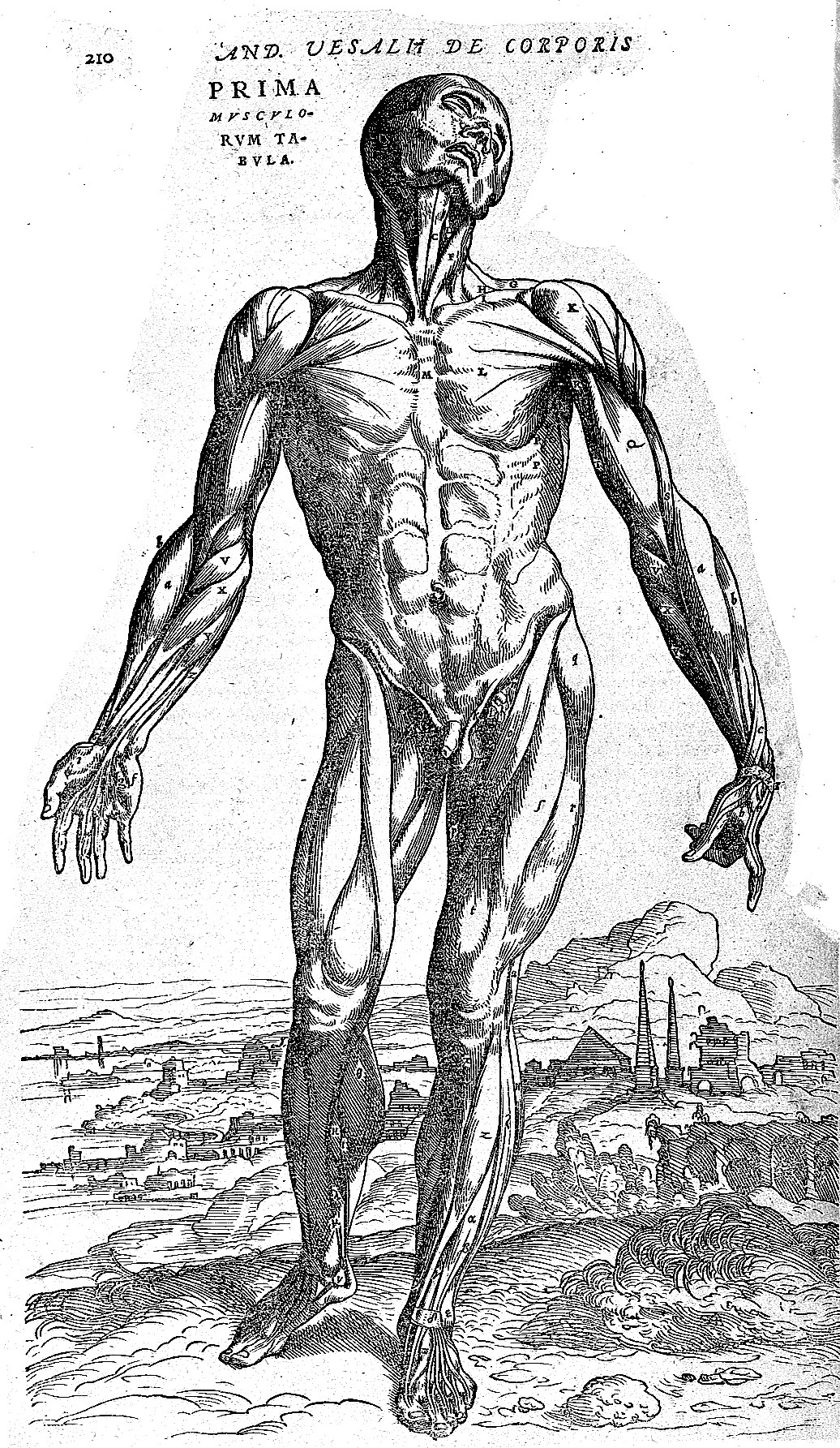

What is the most powerful muscle in the human body?
A search turns up several different answers, all given with confidence. The point to grasp is that several of them are correct, because everything depends on the criterion chosen.
The superlative trap: which muscle is “the most powerful”?
“The most powerful” means nothing until the criterion of measurement has been defined.
- By size (the volume of the muscle): the gluteus maximus is the largest muscle in the human body, which is not enough to make it the strongest.
- By strength relative to weight (the force produced in relation to its mass): the masseter (the jaw muscle), helped by the other chewing muscles, can produce a closing force of about 890 newtons on the molars — the equivalent of a 90-kilogram load.
- By absolute pulling force: the soleus, a calf muscle, is the one that can pull hardest; it works against gravity to keep the body upright.
- By work done: the myocardium — the heart — is the hardest-working muscle, since it never stops.1
Changing the criterion changes the ranking, while the biology stays the same.
What really decides a muscle’s strength
There is, however, one physical quantity that governs strength, and knowing it clears up a good part of the confusion.
It is neither the muscle’s length nor its weight. It is its cross-section: the area you would get by cutting it across, perpendicular to its fibres.2
The reason is simple. It is the fibres that pull. The more fibres there are side by side, the greater the total pull — whatever their length.3
Hence two consequences that anyone can check on their own body. A long, thin muscle is fast but not very powerful: its fibres, laid end to end, shorten a great deal. A short, thick muscle is powerful but moves little: many fibres in parallel, each shortening only slightly.4
A muscle is not strong or weak: it is built for force or for movement, and one is paid for with the other.
A muscle can do only one thing
A muscle contracts and shortens: it pulls, but never pushes. It cannot lengthen on its own.5
The need for antagonistic pairs
Since a muscle can only pull, every back-and-forth movement requires two opposing muscles:
- To bend the arm, the biceps contracts (the agonist muscle), while the triceps, its antagonist, has the opposite action.
- To straighten the arm, the triceps contracts to pull the other way, while the biceps lengthens.6
The three types of muscle tissue
| Type of muscle | Control | Main characteristics | Examples |
|---|---|---|---|
| Skeletal | Voluntary | Striated, attached to bones by tendons, tires with effort | Biceps, quadriceps, masseter |
| Smooth | Involuntary | Non-striated, slow and sustained contractions | Walls of the stomach, the intestines, the blood vessels |
| Cardiac | Involuntary | Striated, extremely rich in mitochondria, tireless | Myocardium (heart) |
Sources for the table7
Muscular autonomy: a heart that beats on its own
Cardiac muscle and some smooth muscle (that of the hollow organs, such as the intestine) have myogenic automaticity: they contract without any command from the nervous system.8
The nervous system does not trigger the heartbeat: together with hormones, it modulates its rate. An adult heart keeps the ability to generate by itself the electrical impulse that triggers its beat.9
The heartbeat therefore does not depend on a nervous command renewed at every moment.
⚠ Educational notice
This entry contains no training programme, performance target, strength scale or normative reference for muscle mass.
Presenting average figures or performance ideals can foster mistaken perceptions or body-comparison biases. The data presented here are exclusively anatomical and physiological.
Note 1
The gluteus maximus is the largest muscle in the human body.
Library of Congress, Everyday Mysteries, “What is the strongest muscle in the human body?”
The gluteus maximus is the largest muscle in the human body.
Library of Congress, Everyday Mysteries, “What is the strongest muscle in the human body?”
The strongest muscle based on its weight is the masseter […] With all muscles of the jaw working together it can close the teeth with a force as great as 55 pounds (25 kilograms) on the incisors […] 200 pounds (90.7 kilograms) on the molars.
Library of Congress, Everyday Mysteries, “What is the strongest muscle in the human body?”
If one assumes an average rate of contraction of 75 contractions per minute […] a human heart would contract approximately 108,000 times in one day […] nearly 3 billion times during a 75-year lifespan.
Betts, J. Gordon et al., Anatomy and Physiology, OpenStax, Rice University
The muscle that can pull with the greatest force is the soleus. […] because it pulls against the force of gravity to keep the body upright.
Library of Congress, Everyday Mysteries, “What is the strongest muscle in the human body?”
The hardest working muscle is the heart.
Library of Congress, Everyday Mysteries, “What is the strongest muscle in the human body?”
Note 2
The functional effect of muscle architecture can be simply stated as: muscle force is proportional to physiologic cross-sectional area (PCSA), and muscle velocity is proportional to muscle fiber length. PCSA is the sum of the areas of each fiber in the muscle.
UCSD Muscle Physiology Laboratory, University of California San Diego, “Skeletal Muscle Architecture”, adapted from Lieber, Richard L., Skeletal Muscle Structure, Function, and Plasticity
Note 3
However, because a pennate muscle generally can hold more muscle fibers within it, it can produce relatively more tension for its size.
Betts, J. Gordon et al., Anatomy and Physiology, OpenStax, Rice University
Note 4
muscle force is proportional to physiologic cross-sectional area (PCSA), and muscle velocity is proportional to muscle fiber length. […] However, after determining architectural properties, it is possible to understand how much force the muscle generates and how fast it contracts (or how far it contracts).
UCSD Muscle Physiology Laboratory, University of California San Diego, “Skeletal Muscle Architecture”, adapted from Lieber, Richard L., Skeletal Muscle Structure, Function, and Plasticity
Note 5
Contractility allows muscle tissue to pull on its attachment points and shorten with force.
Betts, J. Gordon et al., Anatomy and Physiology, OpenStax, Rice University
Muscles can only pull, they can't push
MSD Manual, Consumer Version, “Muscles” (Quick Facts), fully reviewed February 2026
Note 6
The biceps brachii flexes the forearm, whereas the triceps brachii extends it.
Betts, J. Gordon et al., Anatomy and Physiology, OpenStax, Rice University
Note 7
[…] the body contains three types of muscle tissue: skeletal muscle, cardiac muscle, and smooth muscle
Betts, J. Gordon et al., Anatomy and Physiology, OpenStax, Rice University
Note 8
This group of cells is self-excitable and able to depolarize to threshold and fire action potentials on their own […] visceral muscle in the walls of the hollow organs (except the heart) contains pacesetter cells. […] A pacesetter cell can spontaneously trigger action potentials and contractions in the muscle.
Betts, J. Gordon et al., Anatomy and Physiology, OpenStax, Rice University
visceral muscle in the walls of the hollow organs (except the heart) contains pacesetter cells. […] A pacesetter cell can spontaneously trigger action potentials and contractions in the muscle.
Betts, J. Gordon et al., Anatomy and Physiology, OpenStax, Rice University
Stimuli for multiunit smooth muscles come from autonomic nerves or hormones but not from stretching.
Betts, J. Gordon et al., Anatomy and Physiology, OpenStax, Rice University
Note 9
Even though cardiac muscle has autorhythmicity, heart rate is modulated by the endocrine and nervous systems.
Betts, J. Gordon et al., Anatomy and Physiology, OpenStax, Rice University
A fully developed adult heart maintains the capability of generating its own electrical impulse
Betts, J. Gordon et al., Anatomy and Physiology, OpenStax, Rice University
Notes and sources
- ↑
Passage the gluteus maximus is the largest muscle in the human body
The gluteus maximus is the largest muscle in the human body.
Source Library of Congress, Everyday Mysteries, “What is the strongest muscle in the human body?”, page “What is the strongest muscle in the human body?”.
Open access open the source · checked on 27 October 2026
Passage the gluteus maximus is the largest muscle in the human body
The gluteus maximus is the largest muscle in the human body.
Source Library of Congress, Everyday Mysteries, “What is the strongest muscle in the human body?”, page “What is the strongest muscle in the human body?”.
Open access open the source · checked on 24 October 2026
Passage the masseter (the jaw muscle), helped by the other chewing muscles, can produce a closing force of about 890 newtons on the molars — the equivalent of a 90-kilogram load
The strongest muscle based on its weight is the masseter […] With all muscles of the jaw working together it can close the teeth with a force as great as 55 pounds (25 kilograms) on the incisors […] 200 pounds (90.7 kilograms) on the molars.
Source Library of Congress, Everyday Mysteries, “What is the strongest muscle in the human body?”, page “What is the strongest muscle in the human body?”.
Open access open the source · checked on 24 October 2026
Passage since it never stops
If one assumes an average rate of contraction of 75 contractions per minute […] a human heart would contract approximately 108,000 times in one day […] nearly 3 billion times during a 75-year lifespan.
Source Betts, J. Gordon et al., Anatomy and Physiology, OpenStax, Rice University, chapter 19.1, “Heart Anatomy”, introductory paragraph (before “Location of the Heart”) (2nd ed.).
Open access open the source · checked on 27 October 2026
Passage the soleus, a calf muscle, is the one that can pull hardest; it works against gravity to keep the body upright
The muscle that can pull with the greatest force is the soleus. […] because it pulls against the force of gravity to keep the body upright.
Source Library of Congress, Everyday Mysteries, “What is the strongest muscle in the human body?”, page “What is the strongest muscle in the human body?”.
Open access open the source · checked on 26 October 2026
Passage the myocardium — the heart — is the hardest-working muscle, since it never stops
The hardest working muscle is the heart.
Source Library of Congress, Everyday Mysteries, “What is the strongest muscle in the human body?”, page “What is the strongest muscle in the human body?”.
Open access open the source · checked on 27 October 2026
- ↑
Passage It is its cross-section: the area you would get by cutting it across, perpendicular to its fibres.
The functional effect of muscle architecture can be simply stated as: muscle force is proportional to physiologic cross-sectional area (PCSA), and muscle velocity is proportional to muscle fiber length. PCSA is the sum of the areas of each fiber in the muscle.
Source UCSD Muscle Physiology Laboratory, University of California San Diego, “Skeletal Muscle Architecture”, adapted from Lieber, Richard L., Skeletal Muscle Structure, Function, and Plasticity, page “Skeletal Muscle Architecture”, section “Effect of Muscle Architecture on Muscle Function”, 1st paragraph.
Open access open the source · checked on 27 October 2026
- ↑
Passage The more fibres there are side by side, the greater the total pull
However, because a pennate muscle generally can hold more muscle fibers within it, it can produce relatively more tension for its size.
Source Betts, J. Gordon et al., Anatomy and Physiology, OpenStax, Rice University, chapter 11.1, “Interactions of Skeletal Muscles, Their Fascicle Arrangement, and Their Lever Systems”, subheading “Patterns of Fascicle Organization”, paragraph on pennate muscles (2nd ed.).
Open access open the source · checked on 27 October 2026
- ↑
Passage A long, thin muscle is fast but not very powerful […] A short, thick muscle is powerful but moves little
muscle force is proportional to physiologic cross-sectional area (PCSA), and muscle velocity is proportional to muscle fiber length. […] However, after determining architectural properties, it is possible to understand how much force the muscle generates and how fast it contracts (or how far it contracts).
Source UCSD Muscle Physiology Laboratory, University of California San Diego, “Skeletal Muscle Architecture”, adapted from Lieber, Richard L., Skeletal Muscle Structure, Function, and Plasticity, page “Skeletal Muscle Architecture”, section “Effect of Muscle Architecture on Muscle Function”, 1st paragraph.
Open access open the source · checked on 27 October 2026
- ↑
Passage A muscle contracts and shortens: it pulls
Contractility allows muscle tissue to pull on its attachment points and shorten with force.
Source Betts, J. Gordon et al., Anatomy and Physiology, OpenStax, Rice University, chapter 10.1, “Overview of Muscle Tissues”, paragraph beginning “A muscle can return to its original length when relaxed” (elasticity, extensibility, contractility) (2nd ed.).
Open access open the source · checked on 27 October 2026
Passage it pulls, but never pushes
Muscles can only pull, they can't push
Source MSD Manual, Consumer Version, “Muscles” (Quick Facts), fully reviewed February 2026, section “How do muscles work?”.
Open access open the source · checked on 27 October 2026
- ↑
Passage To bend the arm, the biceps contracts […], while the triceps, its antagonist, has the opposite action.
The biceps brachii flexes the forearm, whereas the triceps brachii extends it.
Source Betts, J. Gordon et al., Anatomy and Physiology, OpenStax, Rice University, § 11.1, Table 11.1.
Open access open the source · checked on 27 October 2026
- ↑
Passage Skeletal […] Smooth […] Cardiac
[…] the body contains three types of muscle tissue: skeletal muscle, cardiac muscle, and smooth muscle
Source Betts, J. Gordon et al., Anatomy and Physiology, OpenStax, Rice University, chapter 10.1, “Overview of Muscle Tissues”, 1st paragraph (2nd ed.).
Open access open the source · checked on 27 October 2026
- ↑
Passage Cardiac muscle and some smooth muscle […] have myogenic automaticity
This group of cells is self-excitable and able to depolarize to threshold and fire action potentials on their own […] visceral muscle in the walls of the hollow organs (except the heart) contains pacesetter cells. […] A pacesetter cell can spontaneously trigger action potentials and contractions in the muscle.
Source Betts, J. Gordon et al., Anatomy and Physiology, OpenStax, Rice University, chapter 10.7, “Cardiac Muscle Tissue”, 4th paragraph (pacemaker cells); chapter 10.8, “Smooth Muscle”, paragraph on visceral smooth muscle (2nd ed.).
Open access open the source · checked on 27 October 2026
Passage some smooth muscle (that of the hollow organs, such as the intestine) have myogenic automaticity
visceral muscle in the walls of the hollow organs (except the heart) contains pacesetter cells. […] A pacesetter cell can spontaneously trigger action potentials and contractions in the muscle.
Source Betts, J. Gordon et al., Anatomy and Physiology, OpenStax, Rice University, chapter 10.8, “Smooth Muscle” (2nd ed.).
Open access open the source · checked on 24 October 2026
Passage some smooth muscle
Stimuli for multiunit smooth muscles come from autonomic nerves or hormones but not from stretching.
Source Betts, J. Gordon et al., Anatomy and Physiology, OpenStax, Rice University, chapter 10.8, “Smooth Muscle” (2nd ed.).
Open access open the source · checked on 24 October 2026
- ↑
Passage The nervous system does not trigger the heartbeat: together with hormones, it modulates its rate.
Even though cardiac muscle has autorhythmicity, heart rate is modulated by the endocrine and nervous systems.
Source Betts, J. Gordon et al., Anatomy and Physiology, OpenStax, Rice University, chapter 19.2, “Cardiac Muscle and Electrical Activity” (2nd ed.).
Open access open the source · checked on 24 October 2026
Passage An adult heart keeps the ability to generate by itself the electrical impulse that triggers its beat.
A fully developed adult heart maintains the capability of generating its own electrical impulse
Source Betts, J. Gordon et al., Anatomy and Physiology, OpenStax, Rice University, chapter 19.2, “Cardiac Muscle and Electrical Activity” (2nd ed.).
Open access open the source · checked on 24 October 2026
Bibliography
6
- Betts, J. Gordon et al., Anatomy and Physiology, OpenStax, Rice University, open access (the three types of muscle tissue; antagonistic muscle pairs; cross-section as the determinant of strength; the trade-off between force and range of movement; the automaticity of cardiac muscle and visceral smooth muscle). https://openstax.org/details/books/anatomy-and-physiology
- Library of Congress, Everyday Mysteries, “What is the strongest muscle in the human body?”, open access (the masseter, the strongest muscle relative to its weight; the closing force of the jaw, all muscles together: about 55 pounds on the incisors and 200 pounds on the molars; the gluteus maximus, the largest muscle in the body; the soleus, the muscle that pulls hardest; the heart, the hardest-working muscle). https://www.loc.gov/everyday-mysteries/biology-and-human-anatomy/item/what-is-the-strongest-muscle-in-the-human-body/
- Marieb, Elaine N. and Hoehn, Katja, Anatomie et physiologie humaines, Pearson, 2019, chapitre sur le système musculaire, in libraries.
- Moore, Keith L., Dalley, Arthur F. and Agur, Anne M. R., Anatomie médicale : aspects fondamentaux et applications cliniques, De Boeck, 2018, section sur le système musculo-squelettique, in libraries (the gluteus maximus as the largest muscle).
- MSD Manual, Consumer Version, “Muscles” (Quick Facts), fully reviewed February 2026, open access (a muscle can only pull, never push; pairs of opposing muscles). https://www.msdmanuals.com/home/quick-facts-bone-joint-and-muscle-disorders/biology-of-muscles-and-bones/muscles
- UCSD Muscle Physiology Laboratory, University of California San Diego, “Skeletal Muscle Architecture”, adapted from Lieber, Richard L., Skeletal Muscle Structure, Function, and Plasticity, open access (a muscle’s force proportional to its physiological cross-sectional area, the sum of the areas of its fibres; its velocity proportional to the length of its fibres). https://muscle.ucsd.edu/refs/musintro/arch.shtml
Spotted an error or have a doubt? Write to us.