Le mouvement Beat : quand la littérature américaine prenait la route
Chapitres
Transcription
0:00 Some literary movements are born in drawing rooms, over tea, between people who already agree with each other. The Beat movement was not one of them. It was born in smoky San Francisco coffee houses and on the dusty back roads of America.
Here's what makes it different. Most writers want to write differently. The Beats wanted to live differently, and then turn that life directly into literature. The road, the jazz club, the all-night conversation — those weren't research. They were the raw material.
So today we're looking at how a handful of restless young writers shook American literature, and why their vocabulary is still sitting in your English today.
0:37 To understand the Beats, you have to picture the America they were reacting against. The 1950s were an era of triumphant conformity and economic boom.
Allen Ginsberg had a phrase for it. He called it the tranquillized Fifties. Think about that word — tranquillized. Not peaceful. Sedated. A decade of bourgeois comfort and silent obedience, where everyone had a lawn and nobody had a question.
But underneath that smooth surface, a younger generation was getting restless. And that restlessness is exactly where the Beat movement comes from.
1:12 Three names carry this movement, and each one breaks the rules in a completely different way. Let's take them one at a time.
Jack Kerouac, born 1922, died 1969, is the novelist of perpetual movement. His masterpiece is On the Road, published in 1957. And here's the detail everyone remembers: he wrote it in three weeks, on one continuous paper scroll. No pages to stop at. His style is breathless and spontaneous — jazz improvisation translated into words.
Allen Ginsberg, born 1926, died 1997, is the movement's prophetic poet. His poem Howl came out in 1956, and it was a frontal assault on American society. The publication triggered a famous obscenity trial, and that trial is what gave the Beats national notoriety. They were put on trial, and they became famous for it.
William Burroughs, born 1914, died 1997, is the most radical of the three. His novel Naked Lunch appeared in 1959, and he used what's called the cut-up technique — fragmented prose that reflects the effects of drugs and of social control. If Kerouac flows, Burroughs shatters.
2:23 Now here's the idea that ties all three of them together. What unites these books is a rejection of academicism.
Kerouac theorised something he called spontaneous prose. The principle is simple and slightly terrifying: you write without revising, following the stream of consciousness wherever it goes. First thought, best thought.
And the reason is not laziness. For the Beats, revising a text was a form of lying. If you go back and polish a sentence, you're replacing what you actually thought with something more presentable. Authenticity was the supreme value, and the messy version was the honest one.
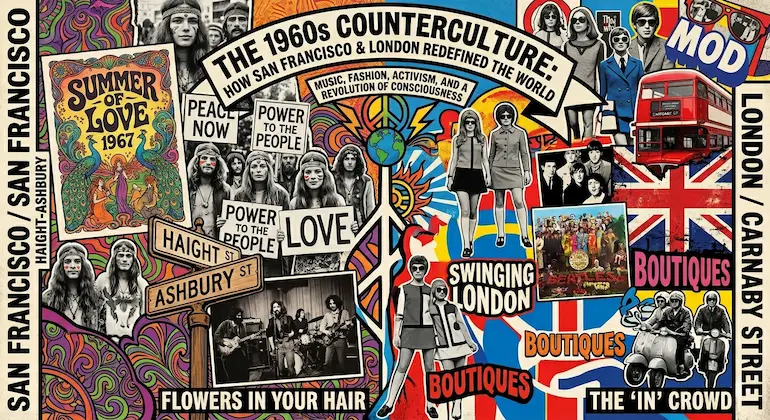
3:01 The Beat movement itself was brief, but its influence is enormous. It prepared the ground for the entire 1960s counterculture.
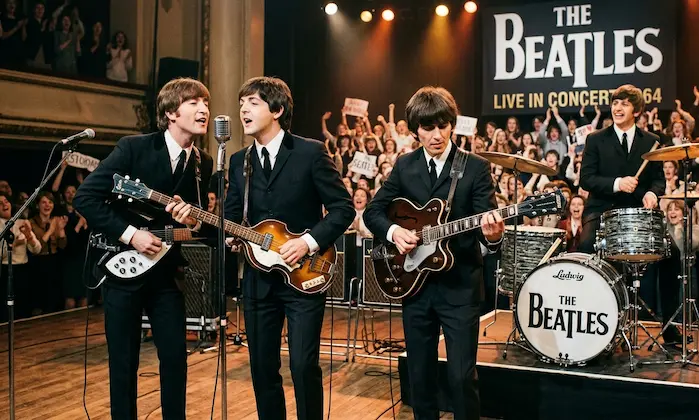
The hippies, the anti-war movement, the sexual revolution — all of that grows in soil the Beats turned over first. And the artists said so themselves. Bob Dylan and The Beatles both acknowledged the movement's profound impact on how they saw the world.
That's the twist with the Beats. A handful of writers nobody in the establishment took seriously ended up shaping the decade that followed.
3:34 Let's finish the ideas with the words, because several of these are still alive in everyday English.
Beat Generation is the name of the movement itself. Beatnik is the popular term for its members — and be careful with this one, because it's often pejorative. It was a label put on them from outside, not one they chose.
Spontaneous prose is Kerouac's method: writing without revision. Stream of consciousness is the narrative technique behind it, where the text follows thought as it actually moves.
And then there's hipster. Today it means something about coffee and beards, but originally it described the marginal, alert young men of that era. The word survived. The meaning drifted completely.
4:12 So here's the takeaway I want to leave you with. The Beat movement reminded literature of something easy to forget: words don't just describe life. They can be its direct equivalent — as imperfect and as alive as the experience itself.
Now I'm curious about you. Would you rather read the polished version of a story, or the raw first draft that's closer to what the writer actually felt? Tell me in the comments, and if you've read On the Road or Howl, tell me what it did to you.
And if you want to go further, there's a companion article for this video on the Erosophia blog, along with free resources to help you work through these texts in English. Go and take a look, and I'll see you in the next one.