The Beatles: The Band That Changed Everything
Chapters
Transcript
Four boys. A grey port city in the north of England. Cheap guitars. And ten years that changed everything. The Beatles aren't just an influential band. They're a founding myth. And today, we're telling that story.
So where does it start? Liverpool, 1956. John Lennon forms a skiffle group called the Quarrymen . Paul McCartney joins. Then George Harrison. Three kids from a working-class port city with no particular reason to believe they'd amount to anything. But then comes the turning point — Hamburg. In the early 1960s, the group is sent to play nightclubs in Germany. Marathon sets, night after night, for rowdy crowds. It's gruelling , unglamorous, and absolutely essential. That's where they become a band. By 1962, Ringo Starr joins on drums — and the lineup is complete.
Now let's talk about the rise — because it was fast. Manager Brian Epstein transformed the band from Liverpool rebels into professional stars. He landed them a contract with the major label EMI—a massive victory after they were turned away by Decca Records . The result was instantaneous : by 1963, Britain had surrendered to Beatlemania, defined by packed stadiums and a level of fan hysteria never seen before. In February 1964, the final frontier fell with The Ed Sullivan Show. An audience of 73 million watched as the British Invasion officially arrived on American shores. From that moment on, the conquest was complete.
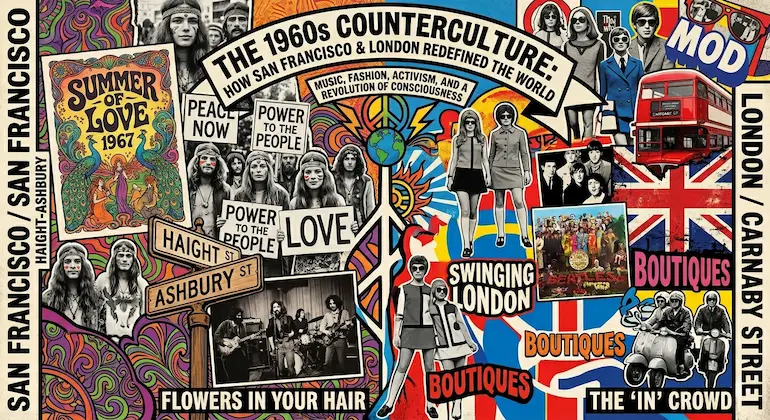
NOw the Fame is only half the story. Because they refused to stay the same. Witness their evolution. Between 1962 and 1970, they reinvented themselves completely, multiple times. They started with early rock and roll, moved into the sophisticated harmonies of Rubber Soul and Revolver , and then in 1967 they released Lonely Hearts Club Band — an album that redefined what a pop record could even be. Not a collection of singles. A coherent artistic statement.
What we now call a concept album. And they kept going — even through creative tensions, even after losing Brian Epstein in 1967 — right up to Abbey Road in 1969, before officially breaking up in 1970.
And a big part of why this worked was the chemistry between four very different people. John Lennon — sardonic , provocative, he was the political activist. Paul McCartney — the instinctive melodist , was the man who wrote Yesterday essentially in his sleep. George Harrison — quieter, deeper, the one who introduced Indian music and spirituality into the mix. And Ringo Starr — underrated — whose precise, unfussy drumming held everything together. Four personalities. One chemistry. Unrepeatable.
So after sixty years — why do the Beatles still matter? Because they proved something that nobody had proven before: that popular music could be both a demanding art form and a universal pleasure. That those two things are not in contradiction. That a song can be number one on the charts and still be a genuine spiritual tuning fork — the kind of rare magic that doesn't just climb the Top 40, but manages to teach three billion people how to speak 'peace' in the same key. If you want the full breakdown — the vocabulary, the whole story — it's all on erosophia.eu. See you in the next one!