Proverbs and idiomatic expressions: why literal translation is doomed to fail in such cases
Chapters
Transcript
0:00 Picture yourself translating a French text, and you hit the sentence "Il pleut des cordes." You look up every word and proudly write: "It's raining ropes."
Your English reader stares back, completely lost. Welcome to the world of proverbs and idioms, where literal translation leads straight to disaster.
0:17 Idioms and proverbs are fixed constructions whose meaning doesn't come from the sum of their parts. They're units of meaning in their own right, inherited from a language's cultural history.
Translating them word by word is like understanding a joke by analysing each word separately. You define every term and miss the whole point.
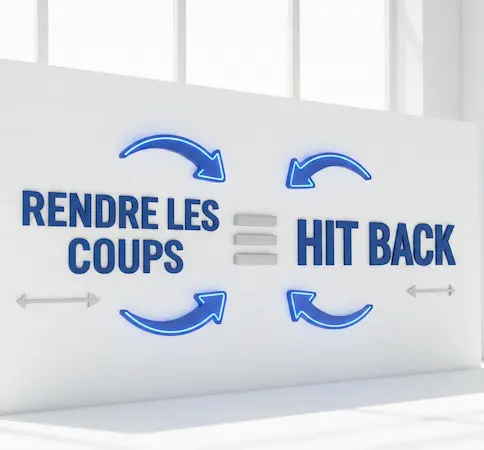
The solution is to hunt for the functional equivalent. Not the same words, not the same image. The same idea, the same force, the same effect.
0:57 Proverbs state universal truths, and that's exactly why they trick us. Every culture agrees that like attracts like, and every culture uses its own metaphor for it.
"Birds of a feather flock together" becomes "Qui se ressemble s'assemble," those who resemble each other gather together. English gives you matching plumage. French gives you the bare principle.
"The early bird catches the worm" becomes "Le monde appartient à celui qui se lève tôt," the world belongs to the one who gets up early. A tiny scene with a bird, versus a grand truth about owning the world. Translate it literally and a French speaker understands every word while recognising absolutely nothing.
1:26 With idioms, the gap gets even wider. English makes it rain cats and dogs, for reasons nobody has fully explained. French makes it rain ropes. Two absurd images, both saying: it's pouring.
English waits for pigs to fly. French waits for hens to grow teeth. Two different biological impossibilities meaning never in a million years.
And sometimes one language offers a whole menu. English sleeps like a log; French sleeps like a dormouse, a stump, a mass, or a groundhog. English is proud as a peacock; French is proud as a rooster, the national bird, or as Artaban, a literary character so arrogant his name became a benchmark. Different references, identical idea.
2:28 All of this points to one truth: we don't translate words, we translate effects.
When an English speaker says it's raining cats and dogs, they're not picturing animals falling from the sky. They're communicating intensity, hyperbole, an image their culture instantly decodes.
So you reproduce three things: the meaning, the register, and the effect. That's dynamic equivalence rather than formal equivalence. Flying pigs become toothed hens, logs become dormice, peacocks become roosters. That's not a loss. It's what keeps the message alive.
2:45 So next time you meet an idiom, resist the word-by-word reflex and ask three questions. What does it really mean? What's its register? And which expression in my target language lands the same way?
Because a good translator doesn't make it rain cats and dogs in French. They make it rain ropes.
Drop a comment with an untranslatable idiom from your own language, and tell me what it literally says. The strangest images are always the best. And there's a companion article on the Erosophia blog with free resources to help you build your own collection of equivalents.